

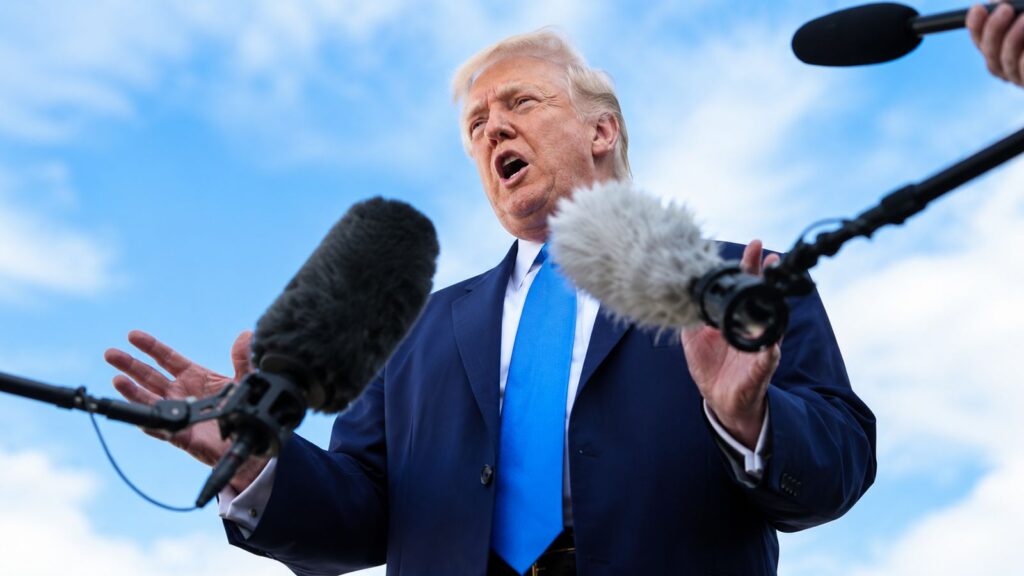
US President Donald Trump said he could “run for prime minister in Israel” while discussing rising tensions between Israel and Iran, comments that came as regional security concerns intensified over the possibility of renewed military confrontation.
“I’m right now at 99% in Israel. I could run for prime minister,” Trump said while speaking about Israeli Prime Minister Benjamin Netanyahu and the ongoing Iran crisis.
The remarks drew immediate international attention as Israel reportedly prepared contingency plans for possible renewed military operations involving Iran, while diplomatic negotiations continued over Tehran’s nuclear programme and regional activity.
Trump’s comments added to growing scrutiny surrounding his close political relationship with Netanyahu and his expanding role in shaping debate around the Middle East crisis.
Iran Crisis
Regional tensions have escalated sharply amid fears that stalled diplomacy with Iran could lead to broader military confrontation.
Israeli officials have signalled increasing readiness for potential military action if negotiations fail to restrain Iran’s nuclear ambitions. Western governments and Gulf allies have simultaneously intensified diplomatic efforts aimed at preventing escalation.
Trump recently said the Iran conflict could end “very quickly” if Tehran agreed to a deal, while warning that time for negotiations was limited.
The crisis has raised concerns across global energy markets because of the strategic importance of the Strait of Hormuz, a key route for international oil shipments. Analysts warn that direct confrontation between Israel and Iran could disrupt shipping routes, increase oil prices, and deepen instability across the Middle East.
Against that backdrop, Trump’s remarks on Israel carried wider geopolitical significance beyond domestic political messaging.
Netanyahu Ties
Trump and Netanyahu have maintained close political relations for years, with both leaders frequently presenting themselves as strong nationalist figures confronting regional security threats.
During his presidency, Trump implemented several major policy decisions welcomed by Netanyahu’s government, including recognising Jerusalem as Israel’s capital, moving the US embassy to Jerusalem, recognising Israeli sovereignty over the Golan Heights, and supporting the Abraham Accords.
Those moves significantly altered longstanding US policy in the region and strengthened Trump’s standing among Israeli conservatives.
Trump has continued to publicly support Netanyahu during the current regional tensions. He recently described Netanyahu as a “wartime prime minister” and argued Israel faced serious security threats from Iran.
The relationship has also attracted criticism from analysts who argue Trump’s rhetoric increasingly personalises US-Israel diplomacy. Trump recently claimed Netanyahu would “do whatever I want him to do,” comments that drew criticism from foreign policy observers concerned about the implications for US influence over Israeli military strategy.
Political Messaging
Trump’s “99%” approval claim in Israel was not supported by publicly available polling data, but political analysts said the statement reflected his longstanding use of exaggerated political messaging to project strength and popularity.
The remarks also targeted key political audiences supportive of Israel, particularly conservative Republicans and evangelical Christian voters in the United States.
Trump has repeatedly positioned himself as one of the most pro-Israel American presidents in modern history, using Middle East policy as a central part of his foreign policy identity.
Although Israeli law requires prime ministers to hold Israeli citizenship and serve in the Knesset, Trump’s comments dominated political discussion because of their broader symbolic and geopolitical implications.
Israeli Pressure
The comments came at a time of mounting political pressure inside Israel.
Netanyahu continues to face domestic criticism linked to wartime leadership decisions, intelligence failures, and the prolonged Gaza conflict. At the same time, support for tougher action against Iran remains strong among sections of the Israeli public who view Tehran as the country’s primary long-term security threat.
The Iran issue has become increasingly central to Israeli political debate as military tensions rise across the region.
Trump’s openly supportive rhetoric toward Israel and Netanyahu continues to resonate strongly among Israeli conservatives, particularly during periods of heightened national security concern.
Regional Stakes
The Israel-Iran confrontation is being closely monitored internationally because of its potential economic and security consequences.
The United States has expanded military coordination with regional allies while continuing diplomatic engagement aimed at preventing escalation. Gulf countries have also reportedly urged restraint amid fears that wider conflict could destabilise regional economies and energy markets.
Analysts say the crisis reflects a broader shift in global diplomacy, where personal relationships between political leaders increasingly influence strategic decision-making.
Trump’s latest remarks reinforced perceptions that he views himself as a central actor in shaping Middle East security policy, particularly regarding Israel and Iran.
Political Implications
Trump’s comments underscored how political rhetoric surrounding Israel and Iran is increasingly intertwined with wider geopolitical tensions.
Supporters argue Trump’s policies strengthened Israel’s security position and increased pressure on Iran during his presidency. Critics contend that his approach deepened regional divisions and weakened Washington’s role as a neutral diplomatic actor.
The latest remarks also highlighted the growing overlap between political spectacle and international diplomacy during periods of military tension.
With negotiations over Iran’s nuclear programme continuing and fears of regional escalation persisting, statements from major political figures are being examined not only for domestic political impact, but also for potential diplomatic consequences.
Trump’s suggestion that he could “run for prime minister in Israel” may have been intended humorously, but it arrived during a period in which even informal political remarks are carrying increasing international significance.


