

New Delhi woke up to history on July 25, 2026. Union Education Minister Dharmendra Pradhan announced his resignation on X, bowing to a month long, youth led agitation that had refused to leave Jantar Mantar until he stepped down. What began as anger over a leaked medical entrance exam paper had, by Saturday, turned into one of the sharpest challenges Prime Minister Narendra Modi’s government has faced in years, and a defining moment for a movement that started out as an internet joke and ended up rewriting the rules of protest politics in India.
At the centre of it all stood the Cockroach Janta Party, a campaign born from a stray courtroom remark that was meant to belittle India’s unemployed youth and instead became their rallying cry. Over four weeks, the party turned Jantar Mantar into the beating heart of a nationwide movement, pulling in students, exam aspirants, working professionals, a hunger striking activist from Ladakh, and eventually the country’s opposition benches, all demanding one thing, accountability for a system that had failed millions of young Indians not once but repeatedly. That the government finally blinked on Saturday is being read across the country not as a defeat for one minister, but as proof of what a united, leaderless, and relentless public movement can force even the most powerful government to do.
This is not just a story about one minister losing his chair. It is a story about what happens when students, activists, opposition leaders and ordinary citizens stop fighting each other and start fighting the same problem together.
The Resignation That Shook Delhi
The trouble began with the NEET UG 2026 paper leak, which forced the cancellation of results and a retest affecting close to two million young people preparing for medical college. Anger over the leak quickly widened into a bigger conversation about unemployment, government accountability and the fairness of India’s exam system.
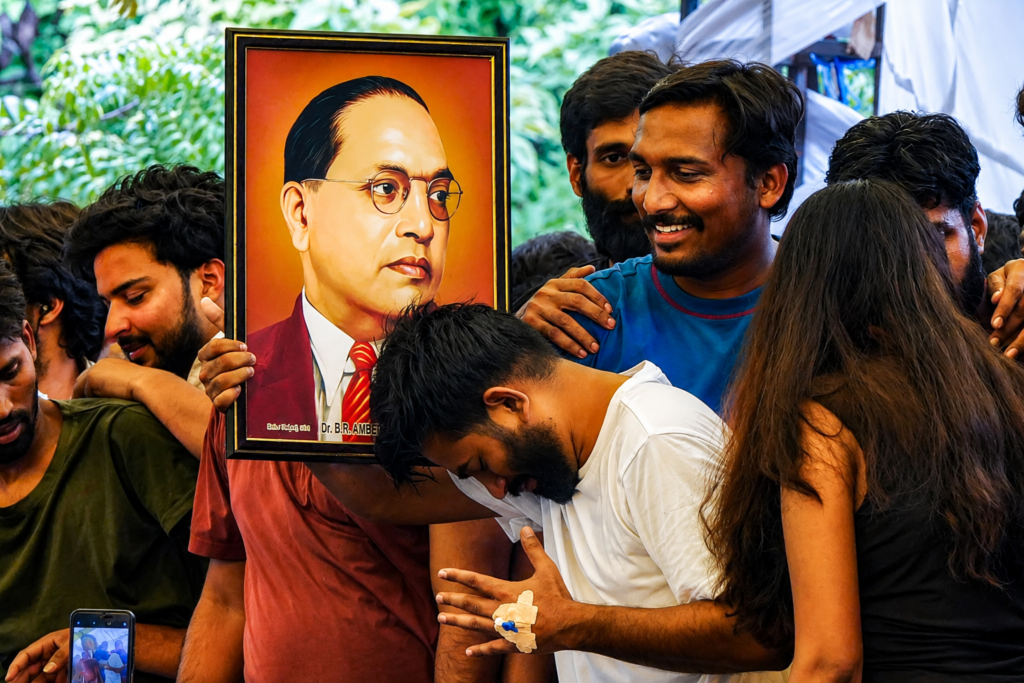
For weeks, thousands camped at Jantar Mantar, enduring tear gas and baton charges, refusing to budge. The government tried fast track courts and promises of new anti cheating legislation, but protesters said none of it addressed the core demand, Pradhan’s exit. On Saturday, hours before another round of talks, the minister posted his resignation letter, and the protest site erupted in celebration, with the tricolour waving above the crowd.
What The Letter Really Said
Pradhan’s letter, addressed to the Prime Minister, framed the decision as one of conscience rather than compulsion. He wrote that the resignation was not about individual prestige, but about ensuring that anti national forces could not exploit the unrest and that not even a single student’s future should get entangled in legal complications.
He said students deserved to spend their time studying and building careers instead of being caught in political crossfire. The letter closed with gratitude toward the Prime Minister, cabinet colleagues and ministry staff, and a line that summed up his four decade public life, that serving the nation remained the highest priority of my life.
Notably, Pradhan had for weeks pushed back against critics, accusing the opposition of trying to shamelessly exploit students as political tools. His resignation letter dropped that combative tone entirely, choosing instead to speak directly to students.
Voices From The Protest Ground
The movement was led by the Cockroach Janta Party, or CJP, a youth campaign that started online as satire and grew into a genuine political force. Its founder, Abhijeet Dipke, addressed the crowd within minutes of the news breaking. He thanked the very institution that had unintentionally named the movement, referencing a Supreme Court remark about jobless youth being compared to cockroaches. Thanks for calling us cockroaches, he told supporters, adding that the phrase had ended up building the very movement it mocked.
But Dipke was clear that the fight was not fully over. This is democracy. He has resigned. We have two more demands. We won’t go like this, he said, calling for compensation for families of students who died by suicide after the exam turmoil, and action against police personnel involved in the crackdown on protesters.
Educationist and activist Sonam Wangchuk, whose 26 day hunger strike became a turning point for the movement, reacted from his hospital bed with a victory sign. It’s a victory of peace, patience and perseverance, he wrote, calling it a win for direct democracy that came straight from the streets. He urged the movement to now shift focus from accountability to structural reform of the exam system itself.
Opposition And BJP React Differently
Leader of Opposition Rahul Gandhi welcomed the resignation as a step toward rebuilding India’s education system, praising students for standing firm in what he called the defence of democracy and the Constitution. He said two demands still remained on the table, an apology from the Prime Minister and accountability for those responsible for the paper leak.
Congress leaders across states echoed the sentiment. In Telangana, the state party chief called the resignation a result of sustained pressure and a victory belonging to the protesting students rather than any one politician. The broader opposition used the moment to argue that sustained, peaceful public pressure, not backroom politics, had forced the government’s hand.
The ruling BJP told a different story. National president Nitin Nabin said Pradhan’s decision to step down reflects the highest standards of integrity and selfless service in public life, adding that the party stood firmly behind him. Separately, in a post on X apart from his formal letter, Pradhan struck a softer, more personal note, writing, I hold deep respect for the aspirations, sentiments, and rightful expectations of the youth of this country. He added that realising the dreams of India’s young generation had always been the moral resolve of his political and social life.
Social Media Erupts Overnight
By Saturday afternoon, hashtags around the resignation, the CJP and Sonam Wangchuk were trending across Indian social media, with users sharing videos of celebrations at Jantar Mantar, students hugging strangers and dancing with flags. The CJP’s own social channels kept it short and electric, Cockroaches won. Democracy won!, a post that was reshared thousands of times within the hour.
Commentators pointed out something rarer than the resignation itself, a genuine, non partisan coalition. Students, a Ladakhi hunger striker, opposition politicians and ordinary office workers who joined the sit ins after work had all pushed in the same direction without a single unifying party banner. Many online posts framed it simply, this is what happens when a country’s youth refuse to stay divided.
Whether the government meets the two remaining demands will decide how this chapter ends. But Saturday already proved something bigger than one resignation letter, that when citizens, students and leaders choose unity over noise, even the most powerful chairs in the country are not out of reach.
One resignation, one movement, and a million reminders that together, nothing stays untouchable for long!


