

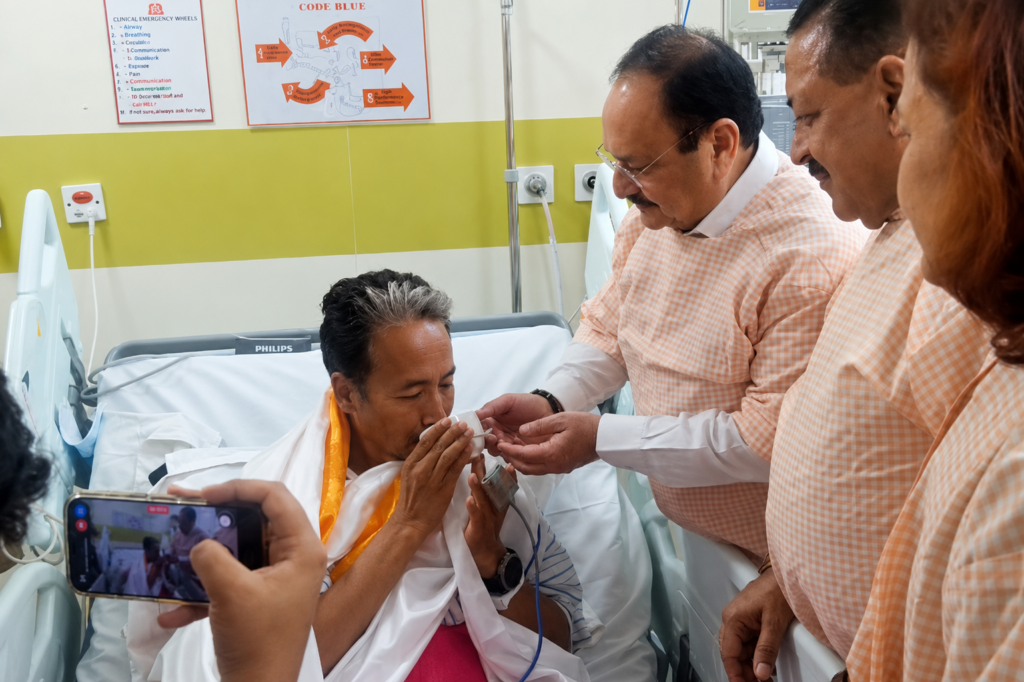
The 26-day hunger strike that transformed Sonam Wangchuk into the face of India’s examination reform movement has ended, but the political storm surrounding it is only growing stronger. What began as a peaceful protest in solidarity with students alleging irregularities in competitive examinations has now evolved into a national flashpoint, testing the government’s credibility, Parliament’s resolve and public trust in India’s examination system.
Wangchuk called off his indefinite fast from his hospital bed at Medanta Hospital in Gurugram after meeting Union Ministers J.P. Nadda and Jitendra Singh. The Centre reportedly assured him that the concerns raised by protesting students would receive serious consideration, including discussions on reforms aimed at strengthening transparency and accountability in public examinations.
However, the end of the fast did not bring an end to the controversy. Instead, it sparked an intense online backlash, with sections of social media accusing Wangchuk of ending his protest prematurely. Within hours, the veteran activist found himself defending not only his decision but also his decades-long commitment to public service.
As the debate shifted from protest sites to digital platforms and political corridors, one question began dominating the national conversation: will the government’s assurances finally translate into meaningful examination reforms, or will they remain another unfulfilled promise?
Exam Crisis Turns Into National Movement
The protests were triggered by allegations of paper leaks, examination irregularities and administrative lapses that disrupted the future of thousands of students preparing for competitive examinations. Public anger quickly escalated as aspirants questioned the credibility of institutions responsible for conducting some of the country’s most important entrance and recruitment tests.
Students gathered at New Delhi’s Jantar Mantar demanding sweeping reforms, stricter action against those responsible for examination malpractice and complete transparency in the functioning of national testing agencies. The movement rapidly expanded beyond Delhi, drawing support from youth organizations, civil society groups and education activists across the country.
It was during this growing wave of protests that Sonam Wangchuk joined the agitation, lending his moral authority to a movement that had become a symbol of frustration among India’s youth.
Known for his work in education, environmental conservation and social reform, Wangchuk’s participation elevated the protests from a student-led demonstration to a nationwide campaign demanding systemic accountability. His hunger strike became one of the strongest moral challenges the government had faced over the examination controversy, attracting widespread public attention and intensifying pressure on the Centre to respond.
As the days passed, the movement increasingly reflected a larger crisis of confidence in public institutions, with students insisting that isolated arrests or temporary administrative measures would not restore trust unless structural reforms followed.
Hunger Strike Ends After Government Intervention
The turning point came as Wangchuk’s health deteriorated following nearly four weeks without food.
Medical concerns mounted after reports of significant weight loss and physical weakness, eventually leading to his transfer from a Delhi hospital to Medanta Hospital in Gurugram for specialized treatment. Doctors kept him under continuous medical supervision as concerns grew over the risks associated with prolonging the fast.
Behind closed doors, political negotiations gathered momentum.
Senior Union Ministers J.P. Nadda and Jitendra Singh met Wangchuk at the hospital, urging him to end the hunger strike while assuring him that the government was prepared to engage seriously with the demands raised by protesting students.
According to those familiar with the discussions, the Centre agreed to consider measures aimed at strengthening examination governance, enhancing accountability mechanisms and ensuring that students who participated in peaceful demonstrations would not face punitive action.
Following these assurances, Wangchuk announced that he would end his fast, emphasizing that the decision was made in the larger interest of maintaining peace and preventing the movement from turning volatile.
Yet the announcement failed to satisfy every section of the protest movement.
Several student groups welcomed the government’s willingness to negotiate but maintained that demonstrations would continue until concrete reforms replaced verbal assurances.
Troll Storm Erupts As Wangchuk Breaks Silence
If the government believed the end of the hunger strike would calm tensions, social media quickly proved otherwise.
Soon after Wangchuk ended his fast, a section of online users accused him of compromising with the government and abandoning the movement before its core demands had been achieved. Critics questioned why the protest concluded without immediate action on every major issue raised by students.
The criticism rapidly escalated into personal attacks, prompting Wangchuk to respond through an emotional video message recorded from his hospital bed in Gurugram.
Addressing those questioning his integrity, he asked:
“Do I need a Character Certificate from Anyone after 26 days long fast?”
The statement immediately became one of the defining moments of the controversy.
Wangchuk said he was deeply hurt by the trolling and abuse directed at him after weeks of risking his health for the cause of students. He insisted that ending the fast should not be interpreted as surrender but as a conscious effort to prevent violence and protect the movement from being hijacked by disruptive elements.
He also reminded critics of his decades-long work in education, environmental conservation and the development of remote Himalayan communities, saying his commitment to public causes had never been driven by political ambition or personal gain.
His remarks sparked another wave of debate online. While supporters rallied behind him, arguing that no individual should be expected to sacrifice their life indefinitely, critics maintained that the movement should have continued until every demand was accepted.
The episode exposed the growing divide between ground-level activism and social media expectations, where complex political negotiations are often reduced to narratives of victory or betrayal.
Centre Faces Mounting Pressure On Exam Reforms
Even as the hunger strike ended, political pressure on the Centre showed no signs of easing.
The government has indicated that it is working on legislative measures aimed at tackling examination malpractice, paper leaks and institutional corruption. Officials have spoken of introducing stronger legal provisions, faster prosecution of offenders and stricter oversight of examination agencies responsible for conducting national-level tests.
The proposed reforms are expected to focus on rebuilding public confidence in a system that millions of students depend upon every year for admissions and government employment opportunities.
However, opposition leaders, education experts and student organizations argue that the credibility crisis extends far beyond punitive legislation.
They contend that restoring trust will require comprehensive reforms covering examination security, digital infrastructure, recruitment processes, transparency in evaluation and independent accountability mechanisms capable of preventing future controversies.
For many students, the issue is no longer limited to one examination.
Instead, it has become a broader demand for fairness, institutional integrity and equal opportunity within India’s education and recruitment ecosystem.
Battle Moves From Streets To Parliament
With Sonam Wangchuk’s fast now over, the movement enters a critical new phase.
The focus has shifted from hospital wards and protest camps to Parliament, where the Centre will face growing scrutiny over whether its promises result in measurable reforms. Student organizations have made it clear that ending one hunger strike does not signal the end of the campaign.
Instead, they view this as the beginning of a larger battle for accountability.
For Wangchuk, the last 26 days have once again demonstrated the power of peaceful civil resistance in shaping national discourse. Yet his emotional response to online criticism has also highlighted the immense personal cost of leading mass movements in an age where every decision is instantly judged through the lens of social media.
Whether the government’s assurances evolve into meaningful policy changes—or fade into another political controversy—will determine how this chapter is remembered.
For millions of students watching closely, the real test has only just begun.


