

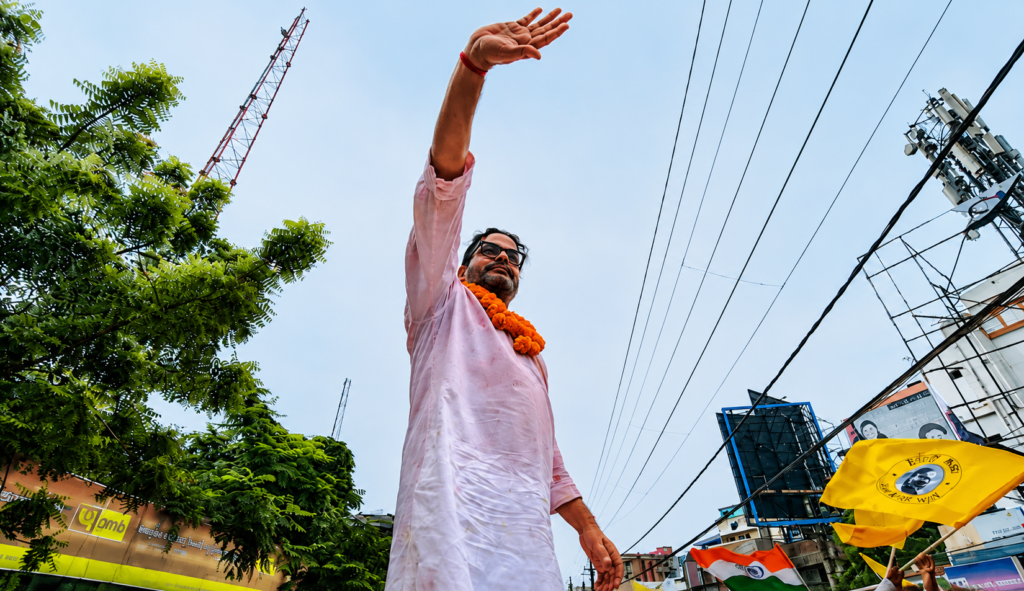
Jan Suraaj Party founder Prashant Kishor has won the Bankipur assembly bypoll in Patna, breaking a stronghold the Bharatiya Janata Party had held without interruption since 1995. The result, declared on Monday, August 3, 2026, is being described by political observers as one of the most significant upsets in recent Bihar politics, not least because it comes barely nine months after Kishor’s own party was virtually wiped off the state’s electoral map. For a strategist who built his reputation shaping other people’s victories, the win in Bankipur is his first as a candidate himself, and it arrives in a constituency his rivals considered unwinnable.
Kishor, popularly known as PK, defeated BJP candidate Neeraj Kumar Sinha by a margin of 18,953 votes, according to figures released by the Election Commission of India. RJD candidate Rekha Gupta finished a distant third, unable to make a serious dent in what turned into a straight fight between the ruling party and the newcomer Jan Suraaj outfit. The scale of the defeat has stunned local BJP cadres, who had not seriously prepared for the possibility of losing a seat the party had treated as safe for three decades, and it has given Kishor’s fledgling party its first real foothold in the Bihar assembly.
A historic verdict in Patna
The Bankipur seat fell vacant after sitting BJP MLA Nitin Nabin resigned to take up a Rajya Sabha berth earlier this year. For the BJP, retaining the seat should have been a formality given its unbroken run since 1995. Instead, the bypoll turned into a referendum on governance in Bihar, with Kishor’s maiden electoral contest drawing national attention.
Counting began at 8 am under tight security at AN College in Patna, and Kishor’s lead widened steadily through the day. Early rounds suggested a closer contest than the final numbers ultimately showed, and BJP workers at the counting centre grew visibly anxious as round after round failed to narrow the gap. By the twenty fifth round, Kishor was ahead by close to 15,000 votes, and the margin kept growing until the final tally confirmed his win by nearly 19,000 votes, a scale of victory few had predicted even among Jan Suraaj’s own supporters before polling day.
From strategist to politician
Kishor’s route to Bankipur has been anything but straightforward. He first made his name in 2014 as the architect of the campaign that swept Narendra Modi to power, before switching sides to script Nitish Kumar’s decisive win in the 2015 Bihar assembly election. He briefly joined the JD(U) as national vice president, fell out with Nitish Kumar within two years, and spent much of the following decade advising a rotating cast of regional parties across the country.
He began the Jan Suraaj padyatra in October 2022, walking more than 3,000 kilometres across Bihar’s villages, and converted the movement into a full fledged political party two years later, on October 2, 2024. The 2025 Bihar assembly election was meant to be the moment of reckoning. Jan Suraaj contested 238 of the 243 seats, but the result was a rout. The party failed to win a single constituency, finished behind the None of the Above option in several seats, and ended with a vote share of roughly four percent. Kishor himself did not contest that election, choosing instead to focus on organisation building, a decision opposition leaders mocked at the time as an admission of defeat before the battle had even begun.
Bankipur is therefore Kishor’s first personal test at the ballot box, and coming so soon after a near total washout, the win carries a weight well beyond one assembly seat. It gives him standing to argue that Jan Suraaj’s ground game has improved since November, and it hands the party a working example it can point to the next time it asks voters elsewhere in Bihar to take a chance on it.
How the numbers stacked up
The Bankipur constituency has around 3.8 lakh registered voters, but turnout was noticeably subdued this time. The Election Commission recorded a turnout of 34.24 percent, more than seven percentage points lower than the 41.45 percent seen during the 2025 Bihar assembly elections. Polling for the bypoll had taken place on July 30.
Two independent candidates who contested using names associated with former chief ministers Nitish Kumar and Lalu Prasad failed to make any real impact, together polling less than 120 votes after 24 rounds of counting. The contest, in effect, remained a two cornered fight between Kishor and the BJP, with the RJD trailing well behind in third place.
Breaking a three decade stronghold
What makes the result significant is not just the margin but the symbolism. Bankipur, an urban constituency in the heart of Patna, had never elected anyone but a BJP candidate since 1995. For Jan Suraaj, a party that made its electoral debut only in the 2025 assembly elections and struggled to open its account then, a win in a BJP bastion carries outsized political weight.
Ahead of the counting, the Jan Suraaj Party had approached the Election Commission alleging that Patna Police had illegally detained 54 of its workers and supporters during the 48 hour silence period before polling. Kishor claimed the action was carried out at the BJP’s instance, an allegation the police attributed instead to routine law and order measures.
Prashant Kishor speaks after the win
Reacting to his victory, Kishor was quick to frame the result as a message to the BJP leadership rather than a personal triumph. He acknowledged that the National Democratic Alliance still commanded a comfortable majority in the Bihar assembly and would continue to govern the state.
Speaking to reporters, Kishor said, “This is not an election to make an MLA, this is a message to the top leadership.”
He went on to say that voters wanted a chief minister who could focus on education and jobs rather than short term populism. In his words, “Bihar’s voters want a good chief minister who can improve education and create employment.”
Kishor also took a sharper tone while describing the scale of the upset, remarking that “the 30 year fort has collapsed in just 30 days,” a reference to how quickly the political mood shifted once campaigning intensified in the constituency. He expanded on why he believed the result had come about, saying voters were tired of being offered handouts instead of real development. In his own words, “people of Bihar now want governments to rise above four or five kilos of free ration and caste politics.”
He added that his party’s candidates were not interested in contracts or patronage politics, saying the objective of Jan Suraaj was development, not personal gain for its representatives.
Kishor was also gracious toward those who had not voted for him, extending an olive branch to the constituency’s other voters. He told reporters, “I want to thank the people who voted, and those who did not, I will try to win them over.”
Looking back at the campaign itself, Kishor recalled the confidence he had projected even before a single vote was counted. During his final push in Bankipur, he had predicted a landslide, telling supporters at a rally that “the BJP will lose by such a big margin that they won’t have the audacity to say they can win” with any candidate they choose to field. At the time, the remark was dismissed by BJP leaders as bravado from a first time candidate. In hindsight, it reads as one of the more accurate predictions of the campaign.
What this means for Bihar politics
For the BJP, the loss in Bankipur is a symbolic blow even though it does not threaten its overall hold on the Bihar government. The seat had long been considered unassailable, and its loss so soon after the 2025 assembly elections raises questions about complacency and local leadership choices within the party unit in Patna.
For the RJD, finishing third in an urban seat it has contested repeatedly without success suggests the opposition space in city constituencies may be shifting toward newer players rather than traditional rivals of the BJP. Party workers on the ground privately admitted that the contest never really involved them once it became clear the fight was between Kishor and the BJP.
For Jan Suraaj, the win offers proof of concept after a debut in the 2025 assembly election that left the party with nothing to show for its effort. It gives Kishor his first seat in the Bihar assembly and a direct platform to challenge the ruling alliance on governance issues such as education, employment and migration, themes that dominated his campaign speeches in Bankipur. It also gives his party a template, an urban, relatively young and more politically literate electorate that appears more open to a newcomer than Bihar’s rural heartland, where caste loyalties still run deep and where Jan Suraaj struggled to gain traction in 2025.
The road ahead for Jan Suraaj
Kishor has repeatedly said his party’s ambitions extend well beyond a single constituency. The Bankipur result will likely be used by Jan Suraaj to recruit more workers, expand its organisational base in urban Bihar and position itself as a credible alternative ahead of future elections.
Whether this victory marks the beginning of a broader shift in Bihar’s political landscape or remains an isolated bypoll upset will depend on how Jan Suraaj builds on the momentum in the months ahead. For now, Kishor’s win in Bankipur stands as a rare instance of a decades old political fortress giving way to a first time contestant, and it has firmly placed Jan Suraaj on Bihar’s political map.


