

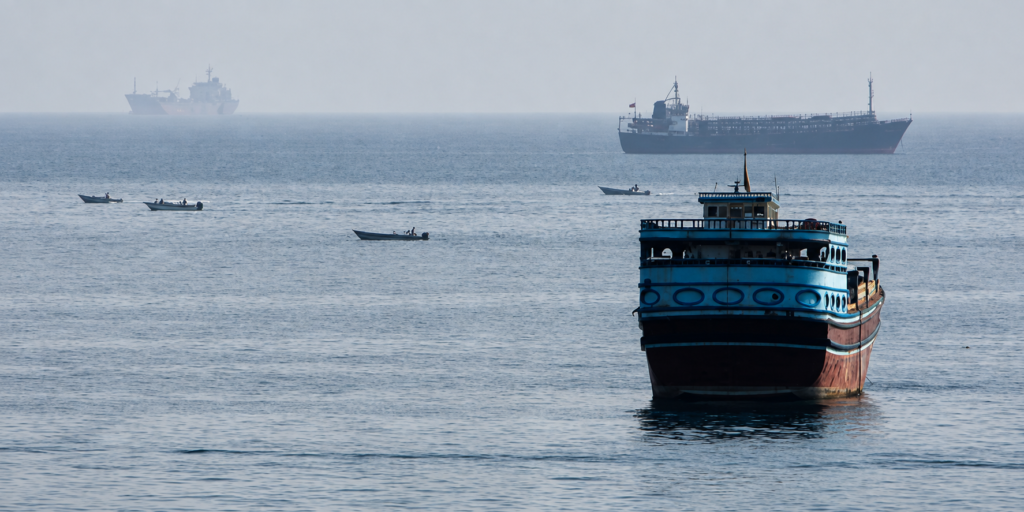
Iran has put forward a fresh proposal to Oman under which it would control all inbound shipping through the Strait of Hormuz while retaining oversight and intervention rights over outbound vessels. The plan marks the latest turn in a five month standoff over one of the world’s most important oil corridors, and it has already drawn a sharp rebuttal from Washington.
The strait, which separates Iran from Oman, carries roughly a fifth of global oil and gas supplies on a normal day. It has been largely shut since late February, when war broke out between the United States, Israel, and Iran. Even after a ceasefire and an interim agreement in June, the waterway has opened and closed repeatedly, and the question of who ultimately governs it remains the hardest issue left to resolve.
What Iran Is Proposing
According to a senior Iranian source who spoke to Reuters on Tuesday, Tehran wants full control over ships entering the strait, along with the ability to monitor and, if needed, intervene in outbound traffic. The outbound lane under discussion would run along a route between Iranian and Omani waters, with exit clearance granted through Oman only after Iran has been notified.
“Tehran is unlikely to change its position,” the source told Reuters, adding that Iran had already softened its stance from an earlier demand for complete control over traffic in both directions.
Separate reporting from the New York Times describes a similar structure taking shape, with a service fee split evenly between Tehran and Muscat. It marks a shift from Iran’s position over the summer, though it still falls short of the open access that existed before the war.
Gharibabadi Lays Out Iran’s Red Lines
Deputy Foreign Minister Kazem Gharibabadi has provided much of the public detail on Iran’s thinking. Speaking on state television in late July, he said Tehran’s offer requires one shipping lane to remain entirely under Iranian control, with partial control of a second lane.
“Our proposal is that one shipping lane through the strait must be entirely under Iran’s control, with part of the other lane also under Iranian control. This is our definitive position, and Iran will accept no other formula,” Gharibabadi said.
He rejected an earlier Omani proposal to split a shared route evenly, a model reportedly drawn from the Strait of Malacca, where passing vessels voluntarily fund navigation and safety costs.
“We said this does not address Iran’s concerns,” he said, adding Tehran had no plans to negotiate directly with Washington.
“The Strait of Hormuz will not revert to the pre-war arrangements, and this is the absolute policy of the regime,” he said, adding that responsibility for clearing mines Iran laid during the conflict rests solely with Tehran.
Washington Pushes Back
The United States has rejected the idea that Iran will end up controlling the strait under any final settlement. A senior US official told the New York Times that any temporary routes established would not involve permissions granted by Iran and would not include tolls, directly contradicting Tehran’s account.
Secretary of State Marco Rubio, who has led the American side of the diplomacy, has repeatedly said Washington will not accept permanent Iranian control of the waterway.
“The US will not allow Iran to permanently control the Strait of Hormuz or establish a toll system,” Rubio said. On Tuesday he told reporters talks had produced “progress made, but not finality,” on an agreement for free transit.
US Central Command has taken an even more direct line, stating plainly that Iran does not control the Strait of Hormuz and that American forces had helped facilitate the passage of hundreds of commercial vessels through the corridor in recent months. President Trump made a similar argument in blunter terms, telling reporters the strait is “already completely controlled by the United States Navy,” directly contradicting Iran’s claim of sovereign authority over the passage.
Treasury Secretary Scott Bessent struck a more optimistic tone on Tuesday, telling CNBC a deal could be reached within a day or two. “I think there is a chance we may have a deal today or tomorrow to open the strait and move towards a more normalized position in this conflict,” he said.
The gap between Rubio’s insistence on no permanent Iranian control and Gharibabadi’s insistence that the strait will never revert to its pre-war status shows how far apart the two sides remain, even as both describe the talks as nearing completion.
The Disputed Memorandum Clause
The dispute traces back to the memorandum signed by Trump and Iranian President Masoud Pezeshkian in June, which paused the fighting and set terms for reopening the strait. Under its Article 5, Iran committed to safe, cost free passage of commercial ships for sixty days, after which the waterway’s future administration was to be defined through talks with Oman.
American officials argue the clause obliges Iran to hand over meaningful control to a neutral or shared authority, while Iranian officials maintain it preserves their exclusive authority over navigation, demining, and security. The disagreement has not stayed confined to statements. Fighting has flared repeatedly since June, including American strikes on Iranian naval assets in July and a reported strike on a cargo ship off the Omani coast this week, according to the UK Maritime Trade Operations agency.
Why Oman’s Role Matters
Oman sits on the southern bank of the strait and has emerged as the principal mediator, shuttling proposals between the two sides. Several details remain unresolved even as both governments call a deal close, including the exact lane trajectories, service fees, and demining responsibilities.
Paul Musgrave, a professor at Georgetown University in Qatar, has said Oman’s mediation offers a genuine path to reopening the strait, but cautioned it remains uncertain whether hardliners in Iran will accept any arrangement short of Tehran’s original demands.
Impact on Oil Markets
Roughly one fifth of the world’s oil and gas moves through the corridor in normal times, and prolonged disruption has repeatedly pushed prices higher over the course of the war, with Brent crude spiking above $114 a barrel in March before easing as ceasefire talks progressed. Prices swung sharply again this week: Brent fell roughly 3 percent to around $81 a barrel on Tuesday after Bessent’s comments on a possible imminent deal, having traded higher earlier in the day, while US benchmark crude lost nearly 4 percent.
Shipping analytics firm Kpler reports that only a handful of vessels, often fewer than ten a day, are currently transiting the strait, a far more subdued picture than the optimistic tone from American officials this week. Analysts caution that much of the recent price movement is sentiment driven, reflecting expectations of a deal rather than confirmed changes on the water, and traders remain wary after earlier announcements of a close resolution stalled. Tanker operators have echoed that caution, saying a signed agreement will need to translate into real conditions in the strait, including full clearance of mines, before shipping lines feel comfortable resuming normal routes.
What Comes Next
Iran’s public position suggests Tehran sees the negotiations as a chance to lock in lasting influence over the strait rather than restore the pre-war arrangement. Washington’s position suggests the United States is unwilling to formally recognise such an arrangement, even if it tolerates a temporary Iranian role in practice. Whether Oman can bridge that gap will shape regional oil markets and how other powers judge the durability of American commitments to freedom of navigation elsewhere.


