

The Middle East conflict widened sharply this week as Yemen’s Houthi rebels claimed a missile attack on Saudi Arabia, the United States disabled a tanker attempting to breach its blockade on Iran, and President Donald Trump signalled cautious optimism over negotiations with Tehran even as bombing campaigns continued for a thirteenth consecutive night.
The developments unfolded within hours of one another, underscoring how a war that began with strikes on Iranian nuclear and military sites has since spread into new theatres, drawing in Saudi Arabia, Yemen and international shipping lanes across the Gulf and the Red Sea. With diplomatic channels still open even as military activity intensifies, the region now finds itself balanced between the possibility of a negotiated de-escalation and the risk of a much wider confrontation.
Houthis Claim Missile Strike On Jizan
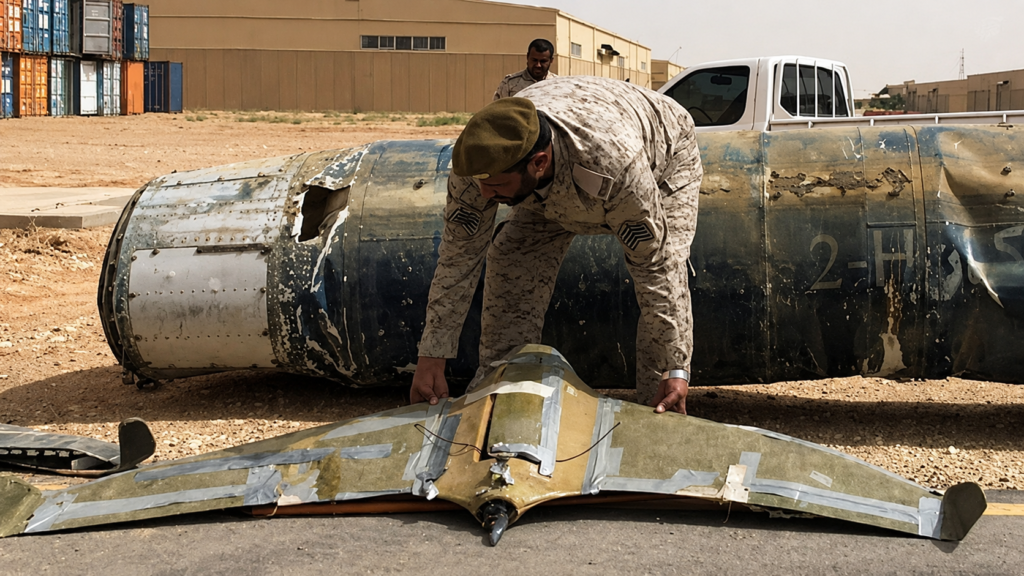
Yemen’s Iran backed Houthi movement said it had fired a missile at the southern Saudi city of Jizan, claiming the attack after vowing retaliation against the kingdom for strikes carried out earlier in the week. The group’s Ansarollah media outlet reported on Telegram that fires had broken out in the city following what it called a Yemeni missile attack.
Saudi authorities issued brief public warnings for residents of Jizan and the western port city of Yanbu, cautioning of “potential danger” before lifting the alerts minutes later. The Houthis accused Riyadh of a dangerous escalation and warned that Saudi actions would not go unanswered.
The strike follows a pattern of maritime confrontation in the Red Sea. The Houthis had earlier claimed to have targeted the Saudi flagged tankers Encelia and Layla with ballistic missiles, cruise missiles and drones, saying the vessels had violated a naval blockade the group had declared against Saudi Arabia. Saudi state media confirmed the Encelia was struck while sailing in the Red Sea, causing a fire near the vessel’s bow, though it did not name those responsible for the attack.
Saudi Arabia Strikes Back
The latest exchange began after Saudi Arabia, a close US ally, struck Houthi military positions inside Yemen in response to the group’s declared blockade and its attacks on shipping. The Houthi missile fired toward Jizan was framed by the rebels as direct retaliation for that Saudi campaign.
The confrontation marks a new front in a regional war that has spread rapidly since American and Israeli strikes on Iranian targets earlier this year. It comes alongside a separate blockade that Iran has imposed on the Strait of Hormuz, Saudi Arabia’s only other major maritime route for oil exports, leaving the kingdom squeezed from two directions at once.
Gulf states have moved to show solidarity with Riyadh. Regional governments have repeatedly condemned Houthi missile and drone attacks on Saudi territory as acts that threaten the stability of the wider region and have backed Saudi Arabia’s right to respond militarily to what they describe as continued provocations by the Iran aligned group.
US Disables Tanker Evading Iran Blockade
Far to the east, in the waters around the Strait of Hormuz, American forces intervened against a vessel attempting to breach Washington’s naval blockade on Iranian ports. A US Central Command spokesman, Navy Captain Tim Hawkins, said American forces disabled the tanker after its crew attempted to run the blockade at least four times. He said the crew was repeatedly warned, did not comply, and that US forces on the scene disabled the ship by firing into its engine room, adding that the vessel was no longer heading toward Iran.
The incident is the latest in a series of confrontations at sea since Washington reinstated its blockade on Iranian oil shipments. American forces have previously used fighter jets to cripple tankers bound for Iranian terminals, including strikes on vessels heading toward Kharg Island, Iran’s main oil export hub. Officials have said the blockade has already cost Iran billions of dollars in lost oil revenue.
The tanker incident came as a US bombing campaign against Iran continued for a thirteenth consecutive night after a ceasefire agreement collapsed earlier this month, and as Saudi Arabia said it had launched strikes against the Houthis after the group attacked another Saudi vessel in the Red Sea.
Trump Calls Iran Talks The Most Serious Yet
Amid the intensifying military activity, President Trump told reporters at the White House that back channel negotiations with Iran were showing unusual signs of progress. Trump said Iran was showing its strongest commitment yet in the talks, though he added that he had not decided whether to launch major military strikes against the country.
“We’re talking to them right now. I think they’re getting more and more serious as the days go by, for maybe the obvious reason,” Trump told reporters in the Oval Office. He went further, describing the current round of contacts as unprecedented in tone. “I think they are being by far the most serious that we’ve seen. But that doesn’t mean we get there,” he said.
Asked who was leading the negotiations on behalf of Washington, Trump said it was “sorta everybody,” naming Vice President JD Vance and Secretary of State Marco Rubio among those involved. He also indicated that he was in no hurry to force a deal ahead of the midterm elections, suggesting the administration was prepared to let talks play out at their own pace despite the continuing strikes.
Region Braces For Wider Conflict
The overlapping crises, a new Houthi front against Saudi Arabia, an active US blockade around Iran, and fragile diplomatic contacts between Washington and Tehran, have left the region on edge. Oil markets have reacted to the uncertainty, with global crude prices retreating from levels near one hundred dollars a barrel reached earlier this week, even as military activity shows no sign of slowing.
Analysts and regional officials have warned that further escalation, particularly any large scale Houthi attack on Saudi infrastructure or a serious disruption at Hormuz, could derail the diplomatic track entirely. For now, Washington appears to be pursuing a dual approach, maintaining pressure through its naval blockade and nightly strikes on Iranian targets while leaving the door open to a negotiated settlement.
Whether that balance holds may determine if the current flashpoints in Jizan and the Gulf remain contained incidents or the opening moves of a broader regional war.


