

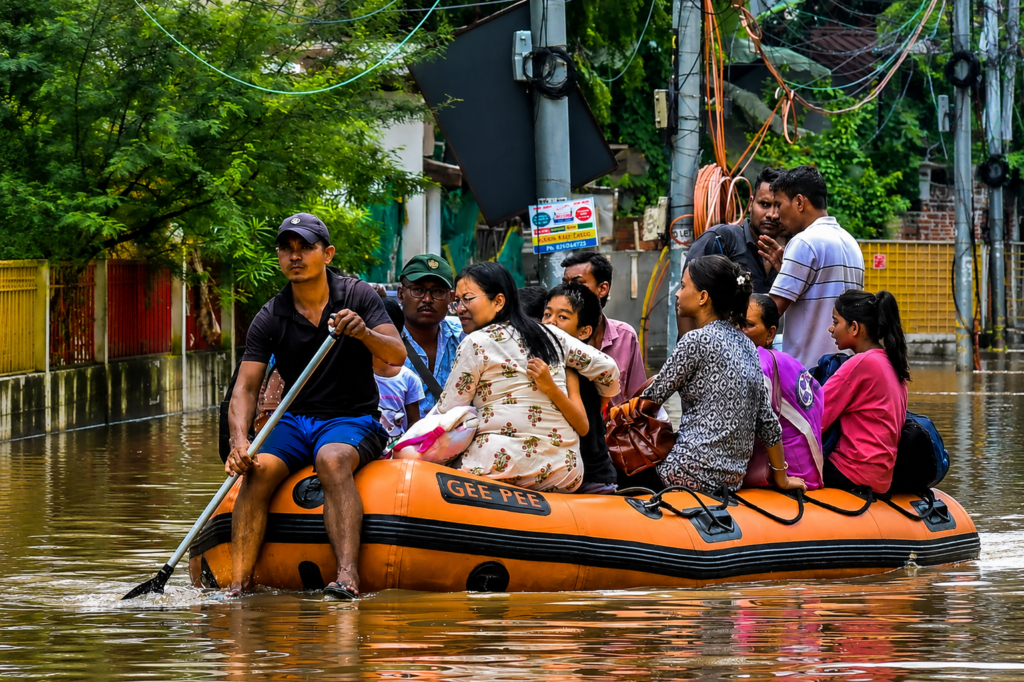
The flood situation in Assam showed marginal improvement on Monday, with no fresh fatalities reported in the previous 24 hours. Even so, close to 4.45 lakh people remain affected across six districts, according to the latest bulletin issued by state disaster management officials. The overall death toll for this year’s flood season stands at 68, making it one of the more severe monsoon crises the state has faced in recent years.
This year’s deluge has followed a familiar yet punishing pattern for Assam. Weeks of relentless rain, both within the state and in the neighbouring hills, pushed rivers and their tributaries well past danger levels, breaching embankments that had already been weakened by years of deferred maintenance. Upper Assam districts such as Sivasagar, Charaideo, Golaghat and Jorhat bore the brunt of the damage, with entire villages submerged, homes buried under silt, and families displaced almost overnight. For thousands of residents, the last few weeks have meant living in relief camps, on highways, or with relatives in unaffected areas, uncertain of when they will be able to return home or what will be left to salvage.
While floodwaters have started to recede in several pockets, authorities caution that the situation remains fragile, with key rivers still flowing above danger levels in parts of Upper Assam. Relief camps, rescue teams and central agencies continue to operate across the worst-hit districts as the state works toward a full recovery. Behind the official figures on deaths and displacement lie stories of loss, endurance and survival that capture the true scale of the disaster, even as political leaders, legislators and citizens rally to organise relief and plan a long road to rehabilitation.
Death Toll Holds at 68
According to official figures, Assam’s flood-related death toll has climbed to 68 this monsoon season, with two of the most recent fatalities recorded in Charaideo district, which has also emerged as the worst affected region in the state. Golaghat, Jorhat, Nagaon and Sivasagar remain among the other districts grappling with the aftermath of swollen rivers and breached embankments.
Disaster management officials noted that no new deaths were reported over the last day, a small but welcome sign after weeks of relentless rain and rising water levels. Multiple agencies, including the Army, the National Disaster Response Force, the State Disaster Response Force, Fire and Emergency Services and local police, have been coordinating rescue and relief operations across the affected belt.
5 Lakh Still Displaced
Even as the overall picture improves, the human cost remains significant. Officials say more than 4.45 lakh people continue to be affected across six districts, while several hundred relief camps and distribution centres remain operational to support displaced families. Thousands of residents are currently sheltering in these camps, relying on the state administration for food, drinking water and medical care.
Embankments, roads, bridges and other public infrastructure have suffered extensive damage, and restoration work is underway in parallel with relief efforts. Agricultural land across the affected districts has also gone under water, raising fresh concerns for farmers ahead of the coming harvest season.
Ground Report: Lost Everything
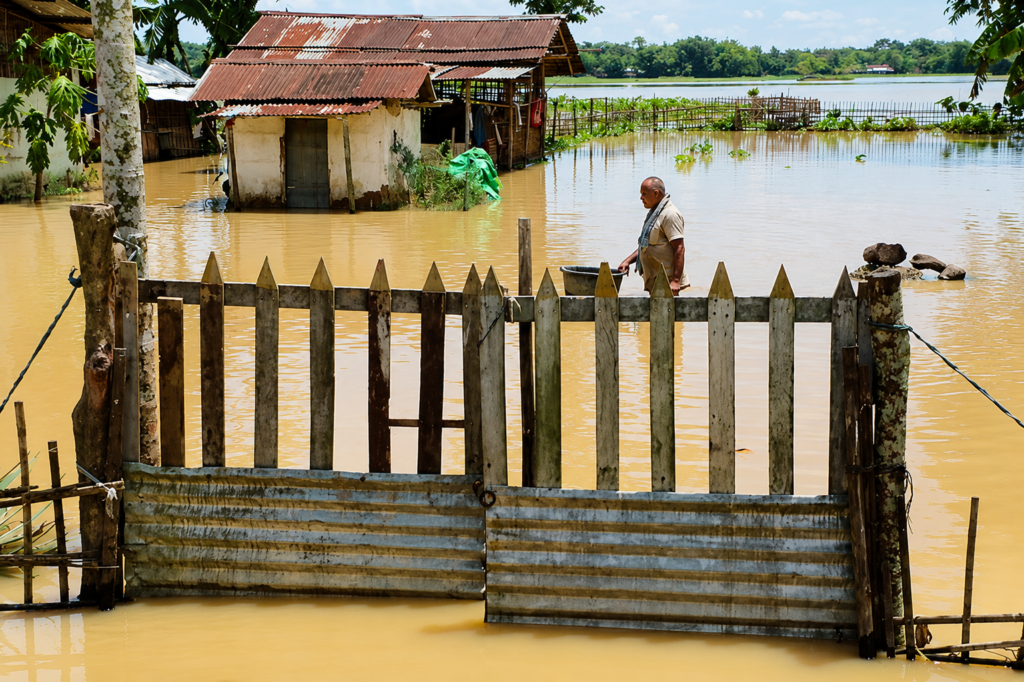
Behind the official numbers lie deeply personal stories of survival, loss and quiet resilience. In Nazira, a town in Sivasagar district that has emerged as the epicentre of this year’s devastation, retired college professor Mukul Bezbora and his wife Bonti spent 12 harrowing hours clinging to a floating wooden divan as floodwaters swallowed their home on the night of July 19. The septuagenarian couple, cut off from the outside world after their phone batteries died, were eventually rescued by boat the next morning.
When the couple returned home after the water receded, they found their rooms buried under thick layers of mud and silt, with truckloads of debris needing to be cleared before they could even assess what remained of their belongings. Having lived in Nazira since the early 1990s, Bezbora said he had never witnessed flooding on this scale before, and despite his own losses, he expressed greater concern for neighbouring families who had lost both their homes and their sources of livelihood, urging the administration to speed up rehabilitation work.
Not far away, in Sivasagar’s ONGC Colony, Madhusmita Borthakur faced a different kind of terror. With her husband away on field duty, she was left alone with her nine year old and three year old daughters as floodwaters rapidly engulfed the colony. Fearing for her children’s safety, she managed to secure a spot in an open van and fled to a friend’s house in an unaffected area, carrying little beyond the clothes on their backs.
In the Khat Pathar area, families from Namtial Darikapar watched helplessly as a sudden flash flood swept away homes, livestock and possessions built up over decades, even after residents had tried to move their belongings to higher ground. Many were left stranded in chest deep water for nearly eight hours before a local villager risked his own safety to ferry them out by boat. “Our house is completely flooded. We are facing severe shortages of food, drinking water, and other essential items,” one resident told reporters, capturing the desperation felt by hundreds of families across the district.
Elsewhere, an elderly man in the same belt spent an entire night perched atop his granary after rising waters surrounded his home, waiting until daybreak for another villager to reach him by boat. Such accounts have become common across Assam’s flood affected districts this year, where residents describe hard earned savings, livestock and years of memories being washed away within hours. Communication breakdowns compounded the panic for families outside the affected zones as well. A police officer posted in Guwahati said he was unable to reach relatives near Simaluguri railway station for two days after phone networks failed, before finally learning they were safe.
These ground realities underline why relief measures, from clothing distribution to MLA salary contributions, are being closely watched by communities still trying to piece their lives back together.
MLAs Pledge Salaries
In a significant show of political unity, legislators across party lines in the Assam Legislative Assembly have agreed to donate one month’s salary toward flood relief and rehabilitation efforts. The announcement was welcomed on the floor of the House, with the Speaker confirming that he and the Deputy Speaker would also contribute a month’s salary, while assembly secretariat staff volunteered to donate a day’s wages.
Congress MLA from Srijangram, Nurul Islam, welcomed the move but suggested the decision should have come sooner, reflecting a broader sentiment among opposition members that relief efforts needed to be expedited given the scale of the disaster. Legislators from the BJP, AIUDF, Trinamool Congress and other parties also confirmed their participation, signalling rare cross party consensus on the issue.
PM Modi Assures Support
The floods have also drawn attention at the national level, with Prime Minister Narendra Modi meeting Assam’s Members of Parliament to discuss the ground situation and assess the scale of the damage. During the meeting, the Prime Minister assured continued central support for relief, rehabilitation and long term flood mitigation efforts in the state.
“Prime Minister Narendra Modi and Union Home Minister Amit Shah called me and assured of all help to deal with the situation,” Chief Minister Himanta Biswa Sarma had earlier said, describing the coordination between the state and central government as the floods intensified. The state government has continued providing food, drinking water and medicines to affected families while working to restore damaged roads, power supply and communication networks in the hardest hit areas.
Mekhela Chadors For Relief
Beyond food and shelter, the state government and the ruling party have also turned their attention to a more personal aspect of relief: clothing. Chief Minister Sarma announced that the Assam BJP would distribute mekhela chadors, the traditional attire worn by Assamese women, to two lakh women, along with clothing for two lakh children in the worst affected districts.
“From the Assam State BJP, we have decided to provide two lakh Mekhela Chador to two lakh women and clothes to two lakh children who have been affected by the flood,” Sarma said, adding that the initiative is expected to cost around Rs 12 crore. The Chief Minister appealed to party workers to contribute toward the fund, with smaller donations to be routed through local MLAs and larger contributions deposited directly into the party’s designated account.
Why Assam Floods Every Year
The recurring nature of Assam’s floods raises an uncomfortable question that resurfaces every monsoon: why does a state with decades of embankments and flood control infrastructure continue to face such devastating inundation year after year. Much of Assam is inherently flood prone, and the Brahmaputra river alone erodes thousands of hectares of land annually, reshaping the landscape and displacing communities in the process.
Ageing embankments, many of which have gone without proper maintenance for years, continue to breach under pressure, compounding the damage caused by heavy rainfall. Notably, this year’s floods did not originate solely from the Brahmaputra overflowing its banks. Instead, swelling tributaries fed by heavy rain in neighbouring Nagaland and Arunachal Pradesh played a major role, a reminder that Assam’s flood problem extends well beyond the management of a single river system.
The Road Ahead
As the state moves from emergency response toward recovery, the focus is expected to shift toward rebuilding damaged infrastructure, restoring agricultural land and strengthening embankments ahead of future monsoon seasons. With political parties, the central government and citizens all stepping forward with contributions, the coming weeks will test how effectively Assam can translate this collective effort into lasting relief for its flood battered communities.
For now, officials say the priority remains stabilising the situation in the six districts still under water, ensuring no further loss of life, and restoring basic services to the hundreds of thousands of people whose lives have been upended by this year’s floods.


