

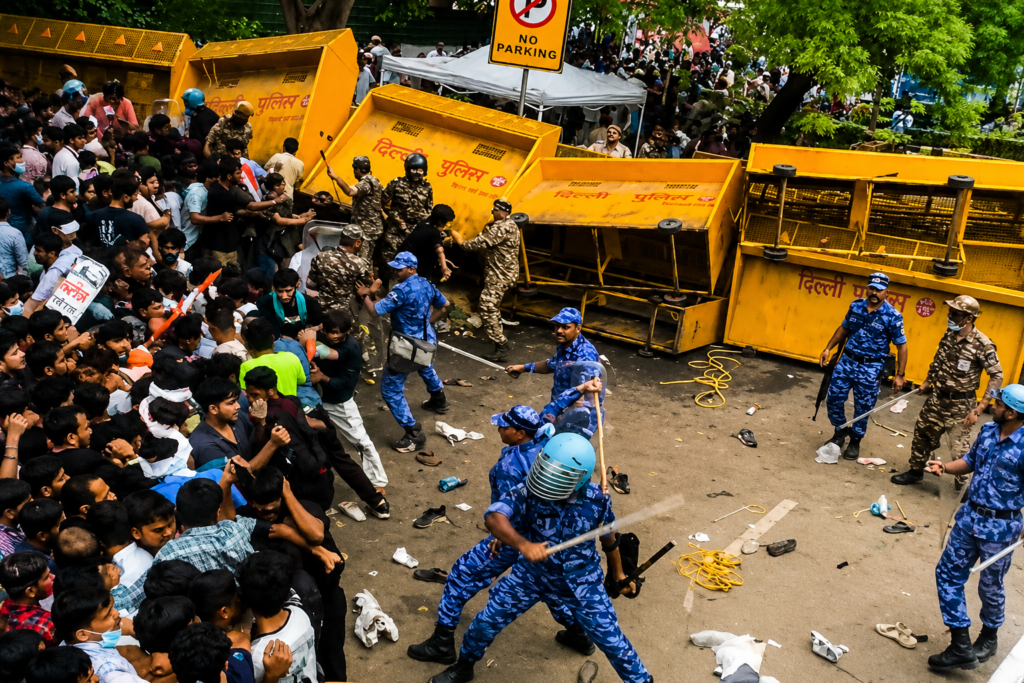
The heart of India’s capital became a site of intense confrontation on Monday as thousands of students and youth activists participated in the Cockroach Janta Party (CJP) led “Chalo Sansad” march. The protest, which sought to bring grievances over NEET-UG 2026 examination irregularities to the doorstep of Parliament, was met with a heavy-handed security response that saw police use tear gas and batons to disperse demonstrators. The day’s events have ignited a sharp political firestorm, with opposition leaders accusing the government of stifling democratic dissent and failing to address the systemic crises plaguing the national education system.
The protests followed weeks of mounting tension over alleged paper leaks and examination failures. Activist Sonam Wangchuk, currently under medical supervision at Safdarjung Hospital after being moved from the Jantar Mantar protest site, had earlier called on supporters to continue the agitation. In a message from the hospital, which he characterized as a site of forced detention, Wangchuk urged his followers to make the “Chalo Sansad” march a turning point for educational reform. He framed the march as a fight for a fear-free and injustice-free India, urging the youth to ensure the event was a massive success.
Clashes and Security Lockdown
From the early hours of Monday, Delhi was placed under a massive security blanket. Authorities enforced prohibitory orders under Section 163 of the Bharatiya Nagarik Suraksha Sanhita (BNSS), effectively cordoning off the area around Parliament and Jantar Mantar. Strategic metro stations were shuttered by the Delhi Metro Rail Corporation, and paramilitary companies were deployed to reinforce police units across central Delhi.
As demonstrators attempted to push toward the Parliament House, security forces utilized tear gas shells and baton charges at key locations like Raisina Road and the Parliament Street area. The ensuing chaos resulted in several injuries to protesters. Eyewitnesses and CJP representatives reported that some demonstrators suffered head wounds and broken limbs during the dispersal.
A particularly contentious allegation surfaced regarding the treatment of Gitanjali Agmo, wife of activist Sonam Wangchuk. CJP spokespersons alleged that Agmo was physically assaulted by police personnel, claiming she was dragged by her hair during the march. The Delhi Police has categorically denied these allegations, terming them as false and misleading. The police stated that the protest was handled with professional restraint and requested that the public avoid spreading unverified information. Officials further reported that their personnel also sustained injuries, citing a Sub-Inspector who was allegedly hit by stones thrown by protesters near Parliament Street.
Digital Solidarity and Online Mobilization
While the streets of Delhi were a site of physical resistance, the digital landscape served as an equally potent battlefield. Throughout Monday, hashtags related to the #CJPProtest and #ChaloSansad trended across major social media platforms, with hundreds of thousands of users sharing footage of the police crackdown. This surge in digital activism transformed the local protest into a nationwide discourse, as students from across India uploaded videos and messages of support for the movement.
Social media users have been instrumental in amplifying the demands of the protesters, with digital creators and student influencers documenting the events in real-time. This online wave of solidarity provided a counter-narrative to official government statements, effectively forcing the systemic failures of the NEET-UG examination into the center of national debate. By the afternoon, the digital movement had transcended borders, with supporters from across the country rallying behind the CJP, turning the struggle for educational integrity into a viral symbol of contemporary youth resistance.
Political Leaders Condemn Police Action
The state response to the student-led march has drawn condemnation from prominent political figures, who suggest the government’s actions demonstrate an increasing intolerance for public dissent.
Samajwadi Party President Akhilesh Yadav slammed the administration, questioning the democratic validity of the police crackdown. “Our MPs have been kept at the police station while children are being beaten up outside,” Yadav stated. “You aspire to be a Vishwaguru, yet you do not want to listen to the children.”
Congress MP Priyanka Gandhi expressed her solidarity with the students, questioning the necessity of force. “There are massive issues, but you are firing tear gas at children and beating them up? For what? These are our children,” she said.
Shiv Sena (UBT) leader Aaditya Thackeray labeled the current regime as “anti-India,” stating that the use of force against youth seeking educational reform is a hallmark of a dictatorial government. Meanwhile, Congress MP Renuka Chowdhury pointed to the irony of the violence occurring while Parliament is in session, criticizing the government for jamming communication networks and closing gates instead of engaging in dialogue.
Meeting with Union Health Minister
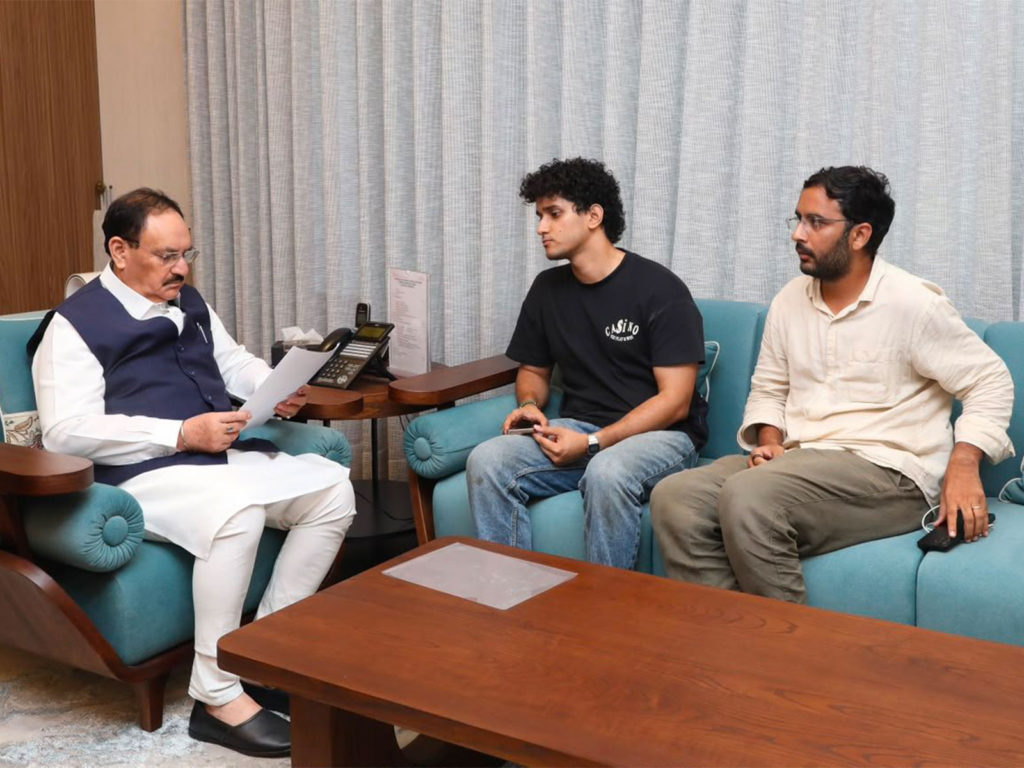
Amidst the escalating tensions, a delegation of the CJP, led by spokespersons Saurav Das and Ashutosh Ranka, held a meeting with Union Health Minister JP Nadda at his residence. The delegation submitted a formal petition containing three core demands: the immediate release of Sonam Wangchuk, the resignation of Union Education Minister Dharmendra Pradhan, and a compensation package of ₹1 crore for the families of each NEET-UG 2026 aspirant who has died by suicide.
While Minister Nadda described the discussion as cordial and appealed to the protesters to restore normalcy by ending their sit-in, the CJP leadership stated that the government offered no concrete commitments. They emphasized that the protest would continue until their demands for accountability are addressed.
By late evening, police had cleared the primary protest site at Jantar Mantar, though small groups of demonstrators remained in the vicinity. As the national capital returns to a semblance of calm, the standoff between the CJP and the state appears far from over. The events of July 20 have cemented the “Chalo Sansad” march as a significant episode in the ongoing movement for educational integrity in India.


