

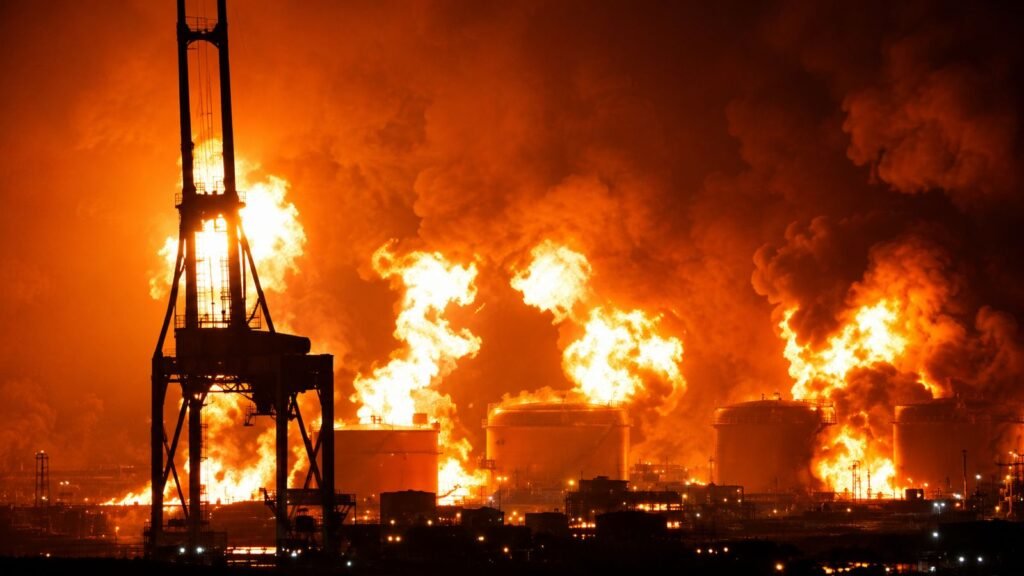
A deadly explosion at Qatar’s Ras Laffan Industrial City has killed 13 workers, including 12 Indian nationals, in one of the most serious industrial accidents to hit the Gulf’s gas sector in years. The blast erupted late Sunday at the Barzan gas processing facility during restart operations, injuring at least 66 others and briefly leaving 18 workers unaccounted for before rescue teams located most of them.
Qatari authorities have described the incident as a technical accident and ruled out sabotage. Officials said the fire was brought under control within hours and that there was no environmental leak or public threat outside the plant. But the scale of the blast has renewed concerns over worker safety inside one of the world’s most important energy hubs.
The tragedy has sent shockwaves through India, where families of the victims are awaiting formal identification and repatriation. It has also drawn international attention because of Ras Laffan’s strategic importance to Qatar’s wider gas network and global energy stability.
Blast Hits During Critical Restart Phase
The explosion took place inside the Barzan gas facility, a major domestic gas processing plant within the wider Ras Laffan industrial complex. According to Qatari officials, the unit had resumed operations just 48 hours earlier after being offline since December 2025 for maintenance and safety checks.
That timing has become central to the investigation.
Industrial restart operations are considered among the riskiest stages in gas processing. Systems that have been shut down for months must be repressurised carefully, and any imbalance in gas flow or pressure can quickly escalate.
Witnesses described seeing a massive fireball rise over the plant, followed by thick black smoke across the industrial zone. Some residents in Doha, nearly 60 kilometres away, reported hearing the blast and feeling vibrations.
Qatar’s Energy Minister Saad al-Kaabi said preliminary findings point to an internal malfunction.
“Initial investigations indicate a technical failure during restart operations. There is no evidence of sabotage or any external interference,” he said.
Emergency crews later secured the site, while technical teams began examining the damaged sections of the plant.
Indian Embassy Confirms Heavy Casualties
The heaviest toll from the disaster has fallen on Indian workers.
The Embassy of India in Doha confirmed that 12 of the 13 workers killed were Indian nationals, while the remaining victim was reported to be Pakistani. Most of those who died were contract workers involved in technical and maintenance roles at the facility.
In an official statement, the Indian mission said:
“We are deeply saddened by the tragic loss of Indian lives in the Ras Laffan industrial accident. The Embassy is in close contact with Qatari authorities and hospitals to extend all possible support to the affected families and injured workers.”
Indian diplomats are now working to verify identities, coordinate with local authorities and begin repatriation procedures.
The incident has once again highlighted the risks faced by thousands of migrant workers employed across Gulf energy infrastructure. Workers from Indian states such as Kerala, Bihar, Tamil Nadu and Uttar Pradesh make up a large share of Qatar’s industrial workforce, often taking up high-risk operational roles.
For families back home, the uncertainty has turned into grief as they wait for official updates.
Why the Barzan Plant Matters
Although Qatar has said LNG exports remain unaffected, the accident has raised wider concerns because of Barzan’s role in the country’s domestic energy system.
Unlike the export-focused LNG terminals at Ras Laffan, Barzan mainly processes natural gas for internal use. It supplies fuel for electricity generation, water desalination and industrial production across Qatar.
That distinction is important because it explains why officials insist export shipments will continue.
Still, Barzan remains a vital part of Qatar’s broader energy network. The facility processes around 1.4 billion cubic feet of gas per day and plays a central role in maintaining domestic supply.
The project is majority-owned by QatarEnergy, with U.S. energy giant ExxonMobil holding a minority stake.
The involvement of ExxonMobil has brought wider international attention to the incident, especially as energy markets remain highly sensitive to disruptions in the Gulf.
Traders reacted sharply when news of the blast first emerged, although markets stabilised after Qatar confirmed exports would not be affected.
Fresh Pressure on Ras Laffan After Months of Crisis
The explosion comes at a difficult moment for Qatar’s energy sector.
In March, parts of Ras Laffan were damaged during Iranian missile strikes linked to the wider Gulf conflict. Those attacks disrupted around 17 percent of Qatar’s LNG export capacity and forced temporary shutdowns across parts of the industrial city.
Repairs from that damage are still ongoing.
While Sunday’s explosion is unrelated to those strikes, it has intensified concerns about the resilience of Ras Laffan, long seen as one of the world’s most secure and efficient gas hubs.
For Qatar, this is now the second major crisis at Ras Laffan in just a few months. First came external military damage. Now a deadly internal accident.
For India, the immediate focus remains on the victims and their families.
But for the wider energy market, the bigger question is whether repeated disruptions at Ras Laffan could delay Qatar’s recovery and place new pressure on global gas supplies.
The investigation now underway is expected to determine not just what caused the explosion, but whether deeper operational weaknesses exist inside one of the world’s most strategically important energy centres.


