

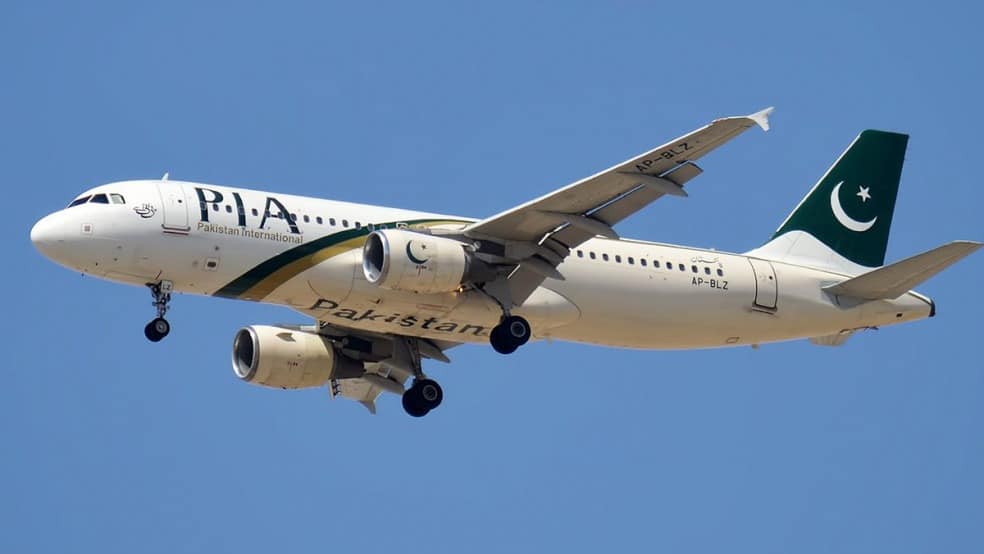
Pakistan has entered the final stretch of a landmark restructuring effort as it prepares to privatise its debt-laden national carrier, Pakistan International Airlines, with bidding scheduled for December 23. The process, which has drawn interest from business conglomerates and a military-linked entity, is being presented by the government as a turning point for an airline long synonymous with losses, safety concerns, and stalled reforms.
Prime Minister Shehbaz Sharif has framed the privatisation drive as an economic necessity tied closely to Pakistan’s stabilisation roadmap and its international financial commitments.
A Crucial Privatisation Moment
The government has pre-qualified four bidders to submit final offers for a 51 to 100 per cent stake in PIA. These include groups led by Lucky Cement, Arif Habib Corporation, Fauji Fertiliser Company, and private carrier Air Blue.
The list has drawn attention for one prominent reason. The Fauji consortium, which is backed indirectly by Pakistan’s sprawling military-linked business network, is being viewed as the strongest contender. This has triggered wider debate about the future shape of PIA if the carrier returns to quasi-state influence even through a private ownership route.
The bidding will be televised live. According to the Prime Minister, this is aimed at demonstrating “complete transparency” and instilling confidence among investors and the public. Federal ministers have been instructed to accelerate all pending legal and financial clearances so that the sale is concluded before year-end.
A Past Failure Haunts the Process
This is not Pakistan’s first attempt at selling PIA. An earlier round failed last year after the only bidder offered just PKR 10 billion for a 60 per cent stake, dramatically short of the PKR 85 billion reserve price. The failure embarrassed the government and cast doubt on investor confidence in a carrier that once symbolised Pakistan’s upward trajectory.
Analysts note that the upcoming round carries far higher stakes because Pakistan cannot afford another collapse at this stage of its IMF-linked recovery plan.
IMF Pressure and Economic Imperatives
Pakistan is currently operating under a USD 7 billion IMF-supported programme that requires decisive restructuring of loss-making state enterprises, with PIA at the forefront. The airline has accumulated billions in liabilities and has been unable to recover from operational setbacks, safety ratings downgrades, and route restrictions imposed in recent years.
The Finance Ministry has informed potential investors that the transaction must be completed within the current calendar year to unlock the next phase of IMF financing. This makes the December 23 bidding more than a commercial event; it becomes a fiscal deadline for Pakistan’s broader macroeconomic plans.
Privatisation Minister Abdul Aleem Khan has stressed this urgency, stating that PIA’s sale is essential to meeting “IMF-supported economic reforms” and ensuring the continuity of the next programme. Without success in this round, the government risks losing momentum in negotiations with the Fund and derailing stabilisation progress.
A Carrier in Need of Deep Reform
PIA’s problems have compounded over a decade. Operational inefficiencies, aging aircraft, inflated staffing, and repeated government bailouts have only postponed deeper structural changes. A damaging safety scandal in 2020, when a minister disclosed that a large number of pilots possessed questionable licences, led to temporary bans on PIA flights into the European Union and the United Kingdom.
Despite attempts at partial restructuring, the airline continues to post losses. Its survival has depended on government guarantees and injections, which Pakistan can no longer sustain while attempting to stabilise public finances.
Officials hope that privatisation will reset PIA’s governance model, attract capital, restore safety compliance, and rebuild Pakistan’s aviation credibility. For the country’s sizeable overseas diaspora, a revived and reliable national carrier remains a matter of both economic and emotional significance.
What the Government Expects From the Sale

Prime Minister Shehbaz Sharif has underscored that the sale aims to restore confidence, stabilise finances and modernise governance across the public sector. He views transparent privatisation as a signal to international investors that Pakistan is prepared for long-term structural reforms.
The government believes that a successful sale will help the tourism sector, widen connectivity, and reduce the fiscal strain of maintaining a loss-making airline. Officials have also hinted that the new owners will have operational autonomy to restructure routes, modernise fleets, and renegotiate workforce terms.
Concerns Over Military-Linked Bidders
The possible involvement of a military-affiliated business house has generated intense public debate. Critics argue that the privatisation could create merely a shift in control from civilian bureaucracy to another form of institutional influence. Supporters counter that the military’s commercial arms have historically run efficient enterprises and could bring much-needed discipline to an airline marred by managerial instability.
Regardless of who wins, analysts agree that restoring PIA’s credibility will require strict safety reforms, fleet upgrades, and a workforce overhaul.
All Eyes on December 23
The televised bidding is expected to attract nationwide viewership, reflecting how deeply PIA is woven into Pakistan’s economic and cultural identity. The sale represents both an end and a beginning the end of decades of public sector mismanagement and the beginning of a new chapter, one that Pakistan hopes will place its aviation sector on a sustainable path.
With IMF deadlines looming and confidence in Pakistan’s economic recovery still fragile, the outcome of the December 23 bid could well become one of the most consequential economic decisions of the year.


