

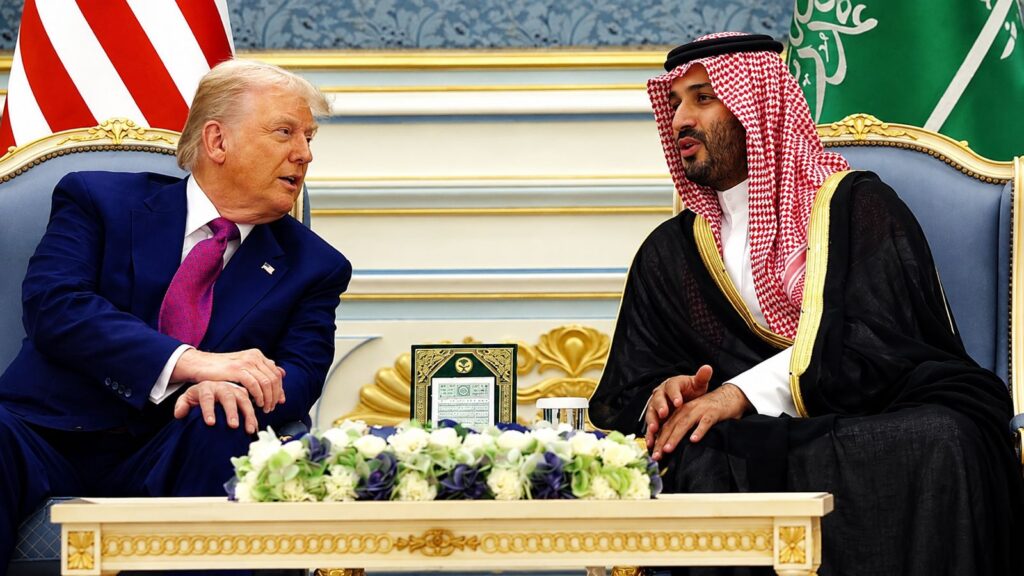
US President Donald Trump is attempting to dramatically expand the Abraham Accords across the Muslim world as part of a wider effort to redesign the geopolitical architecture of West Asia, strengthen a regional coalition aligned with Washington and Israel, and isolate Iran diplomatically and strategically. But the initiative is now encountering growing resistance from key Muslim-majority countries led by Saudi Arabia and Pakistan, both of which have publicly refused normalization with Israel without irreversible progress toward Palestinian statehood.
Trump’s latest diplomatic push comes during one of the most volatile periods in the Middle East in recent years. The Gaza war has intensified anti-Israel sentiment across the Arab and Muslim world, increased domestic political pressure on regional governments, and revived the Palestinian issue as the central fault line in Middle Eastern diplomacy. At the same time, tensions involving Iran, maritime security risks in the Gulf, and fragile ceasefire negotiations have further complicated Washington’s regional calculations.
What was once presented as a transformative diplomatic breakthrough under the original Abraham Accords is now facing deep political, ideological, and strategic resistance. Regional analysts increasingly believe the current Middle East environment is far less favourable for normalization than it was in 2020, when the first agreements were signed.
Trump’s Push
Trump’s effort to revive and expand the Abraham Accords reflects a much larger regional strategy than the normalization agreements originally signed during his first presidency. The accords established formal diplomatic ties between Israel and several Arab countries including United Arab Emirates, Bahrain, Morocco and Sudan, reshaping regional diplomacy by prioritizing security cooperation, trade, investment, and shared concerns over Iran.
Trump is now attempting to build a far broader coalition involving additional Muslim-majority countries across West Asia and beyond. According to multiple regional reports, the initiative is directly connected to wider negotiations involving Iran, Gulf security, ceasefire diplomacy, and long-term American influence in the region.
Trump reportedly discussed the issue during a conference call involving leaders and senior officials from Bahrain, Egypt, Jordan, Pakistan, Qatar, Saudi Arabia, Turkey and the UAE. His remarks came during sensitive negotiations involving Tehran and amid rising tensions surrounding renewed American military pressure on southern Iran.
During discussions surrounding regional normalization, Trump argued that participation in the Abraham Accords should become part of a broader Middle East peace framework. “It should be mandatory,” Trump said while discussing the possibility of more Muslim-majority nations joining the agreements.
The statement immediately triggered concern among several regional governments that remain politically cautious about formal ties with Israel, particularly during the Gaza war.
Washington’s broader objective appears to involve creating a long-term diplomatic and security architecture linking Israel with key Arab and Muslim-majority states while countering Iranian regional influence. The strategy also includes economic dimensions involving trade corridors, infrastructure connectivity, technology partnerships, energy cooperation, and maritime security coordination across the Gulf and wider Middle East.
However, analysts say the political environment that enabled the original Abraham Accords no longer exists in the same form. The Gaza conflict has fundamentally reshaped public opinion across much of the Muslim world, making normalization significantly more politically sensitive than it was four years ago.
Saudi Stance
Saudi Arabia has emerged as the most important obstacle to Trump’s regional ambitions. For years, Riyadh was viewed by both Washington and Israel as the ultimate diplomatic prize of Arab-Israeli normalization due to its religious authority, economic influence, and leadership role across the Sunni Muslim world.
But the Gaza war has dramatically altered Saudi calculations.
Saudi officials have repeatedly stated that normalization with Israel cannot move forward without a clear and irreversible pathway toward the creation of an independent Palestinian state. Riyadh has publicly rejected attempts to separate diplomatic normalization from Palestinian statehood, particularly while the Gaza conflict continues to dominate public opinion across the Arab world.
One Saudi position communicated publicly stated: “There will be no normalization with Israel without an irreversible pathway to an independent Palestinian state.”
The kingdom’s position reflects a combination of strategic, political, and religious considerations. Saudi Arabia is home to Islam’s two holiest sites and sees itself as a leading voice across the Muslim world. Any perception that Riyadh abandoned the Palestinian issue without meaningful political concessions would carry serious reputational risks for Crown Prince Mohammed bin Salman and the Saudi leadership.
The Gaza war has intensified those sensitivities. Images of destruction and civilian casualties in Gaza have fuelled anger across Arab societies and increased pressure on regional governments to maintain strong public support for Palestinian statehood.
At the same time, Saudi Arabia continues to share strategic security concerns with the United States and Israel regarding Iran, regional militias, missile threats, and maritime security. Riyadh therefore faces a difficult balancing act between maintaining security partnerships and managing public opinion across the Arab and Islamic world.
Analysts say Saudi Arabia is unlikely to abandon normalization permanently, but the political conditions required for such a breakthrough have become significantly more difficult under the current regional climate.
Gaza Deadlock
The Gaza war has become the single biggest factor reshaping the future of the Abraham Accords and broader normalization efforts across the Middle East.
Before the conflict, several regional governments had quietly deepened cooperation with Israel on intelligence sharing, cybersecurity, defence technology, energy projects, and regional security issues linked to Iran. Economic incentives and strategic coordination increasingly drove regional diplomacy behind the scenes.
But the war fundamentally changed the political atmosphere.
Public anger over Gaza spread rapidly across Arab and Muslim-majority societies through protests, political campaigns, and social media mobilization. Governments that once explored normalization more openly suddenly faced much stronger domestic political constraints.
According to Gaza health authorities, tens of thousands of Palestinians have been killed since the war began, turning the conflict into one of the defining political issues across the Muslim world.
At the centre of the diplomatic impasse is Israeli Prime Minister Benjamin Netanyahu and his coalition government. Saudi Arabia’s primary demand remains a credible pathway toward Palestinian statehood, but Netanyahu and several hardline members of his governing coalition continue to oppose the creation of a Palestinian state under current conditions.
That contradiction has become one of the biggest barriers facing Trump’s regional strategy.
Netanyahu’s coalition includes nationalist and far-right political factions that strongly reject territorial concessions linked to Palestinian sovereignty. Their position directly conflicts with Saudi Arabia’s normalization conditions and significantly narrows diplomatic space for any future agreement.
Regional analysts increasingly believe normalization efforts may remain frozen unless there is either a major de-escalation in Gaza or meaningful political movement on the Palestinian issue.
Some experts have also questioned whether Trump’s proposal is realistic under current regional conditions. Middle East analyst Yossi Mekelberg described the push as “no more than a sweetener for Israel.”
Other analysts argue Washington’s current approach reflects a serious disconnect from political realities across the region. H.A. Hellyer, a Middle East expert at the Royal United Services Institute, said: “That tells you a great deal about how disconnected the DC policy conversation remains from regional political calculus.”
The remarks reflect growing skepticism among regional observers who believe normalization efforts cannot move forward while Gaza remains at the centre of regional politics.
Pakistan And Qatar
Pakistan has also rejected normalization with Israel without Palestinian statehood, but Islamabad faces a uniquely complicated strategic position.
Pakistan maintains close political and economic ties with Gulf countries while also balancing relations with Iran and managing strong domestic political support for the Palestinian cause. Successive Pakistani governments have maintained that recognition of Israel can only occur after the establishment of an independent Palestinian state based on internationally accepted parameters.
The Gaza war has made any diplomatic shift even more politically difficult for Islamabad.
Analysts say Pakistan now faces competing pressures involving Gulf diplomacy, domestic political sentiment, economic vulnerabilities, and broader regional security calculations. While Pakistan is unlikely to support normalization under current conditions, it also remains heavily dependent on Gulf financial support and strategic partnerships.
Trump’s broader push for Muslim-majority participation in the Abraham Accords has therefore placed Islamabad in a sensitive diplomatic position.
Qatar also represents a major complication for Trump’s strategy. Unlike the UAE and Bahrain, Qatar has positioned itself as a central mediator in Gaza negotiations and maintains ties with Hamas political leadership while simultaneously hosting major American military facilities.
Qatar also balances relations with Iran and plays a key diplomatic role in ceasefire negotiations involving Gaza and hostage discussions. Analysts say this makes Doha far less likely to pursue UAE-style normalization under current conditions.
Turkey presents another challenge. Although Turkey already maintains formal relations with Israel, ties between the two countries remain deeply strained over Gaza and broader regional tensions.
Together, these dynamics highlight the widening gap between Washington’s diplomatic ambitions and the political realities confronting Muslim-majority governments across the region.
Regional Reality
Trump’s effort to expand the Abraham Accords represents one of the most ambitious diplomatic projects currently unfolding in the Middle East. The strategy seeks to combine normalization, anti-Iran coordination, regional security integration, economic partnerships, and long-term geopolitical restructuring into a single US-backed framework.
But the realities of the Gaza war have exposed the limits of that vision.
For many governments across the Muslim world, normalization with Israel is no longer viewed simply through the lens of strategy or economics. The Palestinian issue has returned to the centre of regional politics, public legitimacy, and diplomatic calculations.
Saudi Arabia and Pakistan have now drawn clear political red lines around Palestinian statehood, while Netanyahu’s government continues to reject key conditions demanded by Arab states. Qatar and Turkey also remain politically cautious amid escalating regional tensions and widespread public anger over Gaza.
The result is a growing clash between Washington’s strategic ambitions and the political realities shaping the modern Middle East.
Trump’s allies continue to believe shared concerns over Iran will eventually push more governments toward deeper cooperation with Israel. However, analysts increasingly argue that the Middle East of 2026 is fundamentally different from the region in which the original Abraham Accords were signed.
The Gaza war, rising regional instability, ceasefire tensions, and renewed focus on Palestinian statehood have transformed normalization into one of the most politically sensitive issues across the Muslim world. Whether Trump can overcome those realities may ultimately determine the future of the Abraham Accords and the broader direction of Middle Eastern geopolitics in the years ahead.


