

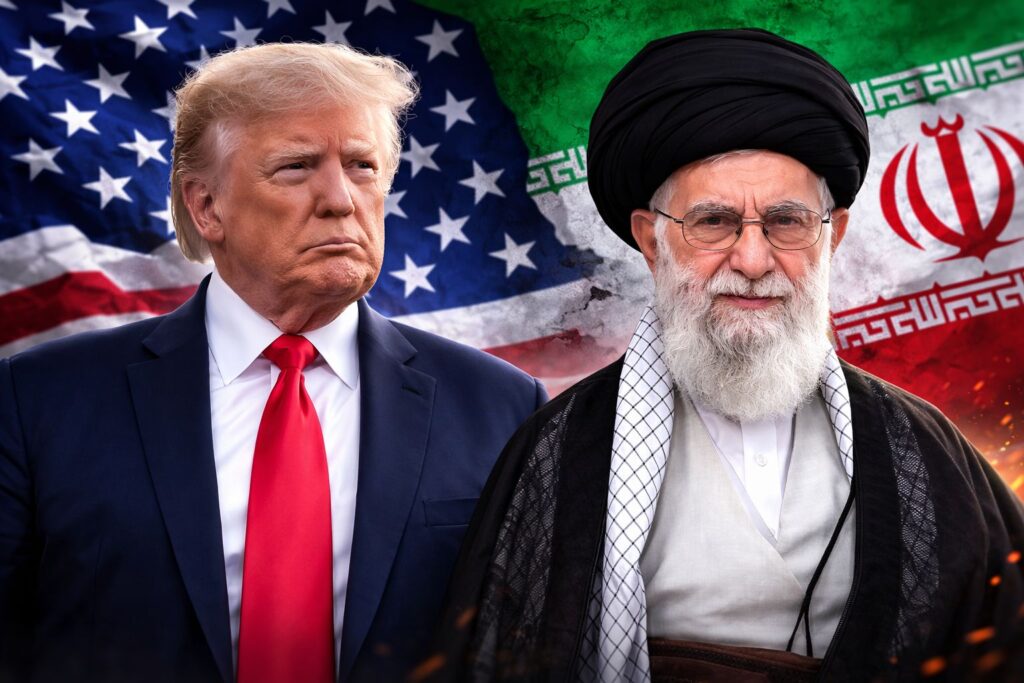
The Ultimatum
Tensions between the United States and Iran have entered a dangerous new phase after President Donald Trump declared that Tehran has “10 to 15 days” to reach a nuclear agreement or face consequences.
Speaking at the White House, Trump left little room for ambiguity. “They have 10 to 15 days,” he said. “If we don’t make a deal, bad things are going to happen.” He added that the United States is prepared to act if Iran refuses what he described as a serious and verifiable agreement.
The compressed deadline has transformed months of indirect diplomacy into a high-risk countdown. What was once a drawn-out negotiation is now a rapidly approaching moment of decision.
Military Pressure
Trump’s warning comes alongside a visible US military buildup in the region. Additional warships, advanced fighter aircraft and missile defence systems have been positioned across the Gulf.
Officials have described the deployments as defensive, but the scale and timing signal deterrence. Reports indicate that limited strike options are being reviewed should diplomacy collapse. The presence of carrier strike groups near Iranian waters is widely seen as a strategic message that Washington’s warnings are backed by capability.
The administration insists it prefers a diplomatic resolution. “We want peace,” Trump said, “but it has to be a deal that works.” The message is clear: negotiate quickly, or face escalation.
Tehran’s Defiance
Iran’s leadership responded with sharp and uncompromising language. Supreme Leader Ayatollah Ali Khamenei rejected negotiations under pressure, declaring that Iran “will not surrender to coercion.”
In remarks carried by state media, Khamenei said, “The Iranian nation does not bow to threats. Negotiation under pressure is meaningless.” The statement signalled that Tehran views the ultimatum not as diplomacy, but as intimidation.
Iran’s foreign ministry went further, warning that any US military action would trigger retaliation. An Iranian official stated that American bases in the region would be considered “legitimate targets” if Iran is attacked. The warning underscores how rapidly a limited strike could widen into a regional confrontation.
Tehran continues to insist that its nuclear programme is peaceful and intended for civilian energy purposes. Officials argue that sanctions relief must accompany any agreement and reject what they describe as artificial deadlines imposed by Washington.
Talks Continue
Despite the heated rhetoric, diplomatic channels remain open. Indirect talks mediated through intermediaries have continued, though no breakthrough has been announced.
Washington is seeking stricter enrichment limits, expanded inspections and longer-term guarantees that Iran will not pursue nuclear weapons capability. Tehran, meanwhile, demands meaningful sanctions relief and security assurances.
Trump has expressed cautious optimism that a deal is still possible within the deadline. “I think they want to make a deal,” he said, while repeating that time is short. Iranian officials have responded by saying they are prepared for serious negotiations, but not under threats of force.
The contradiction defines the current moment. Both sides claim to want diplomacy, yet both are escalating pressure to gain leverage.
Regional Alarm
The standoff has unsettled governments across the Middle East. Gulf states fear being caught between the two powers, particularly if US facilities in their territories become targets.
Israel, long vocal about preventing Iran from acquiring nuclear capability, has supported firm US pressure. European leaders have urged restraint, warning that a military confrontation would destabilise an already fragile region.
Russia and China have called for dialogue, criticising the use of threats and urging all parties to avoid actions that could ignite broader conflict.
The involvement of global powers reflects how the dispute extends beyond bilateral tensions. The outcome will influence regional alliances, energy markets and the broader balance of power.
Oil Shock
Energy markets reacted quickly to the escalating rhetoric. Oil prices rose amid fears that conflict could disrupt supply routes, particularly through the Strait of Hormuz, a corridor critical to global energy trade.
Any disruption in that narrow waterway could have immediate global consequences. Higher oil prices would feed inflation, strain economies and intensify political pressures worldwide.
The economic dimension increases the urgency of de-escalation. For many governments, preventing war is as much about economic stability as it is about security.
A Narrow Window
With days remaining in Trump’s deadline, the risk of miscalculation looms large. A diplomatic breakthrough would require rapid compromise and political will on both sides. Failure could trigger targeted military action or a prolonged confrontation marked by retaliation and counter-retaliation.
For ordinary citizens in Iran and across the region, the stakes are immediate. Economic hardship, uncertainty and fear of conflict shape daily life. For Washington, the decision carries global implications.
The coming days will determine whether this confrontation ends in agreement or escalation. The rhetoric is hardening, the forces are deployed, and the deadline is fixed.
The world now watches a ten-day clock that could redefine Middle Eastern geopolitics.


