

The United States is preparing to finalize a trade agreement with India, but senior officials in the administration of Donald Trump say Washington will avoid repeating what they describe as the policy mistakes that helped turn China into a powerful economic rival.
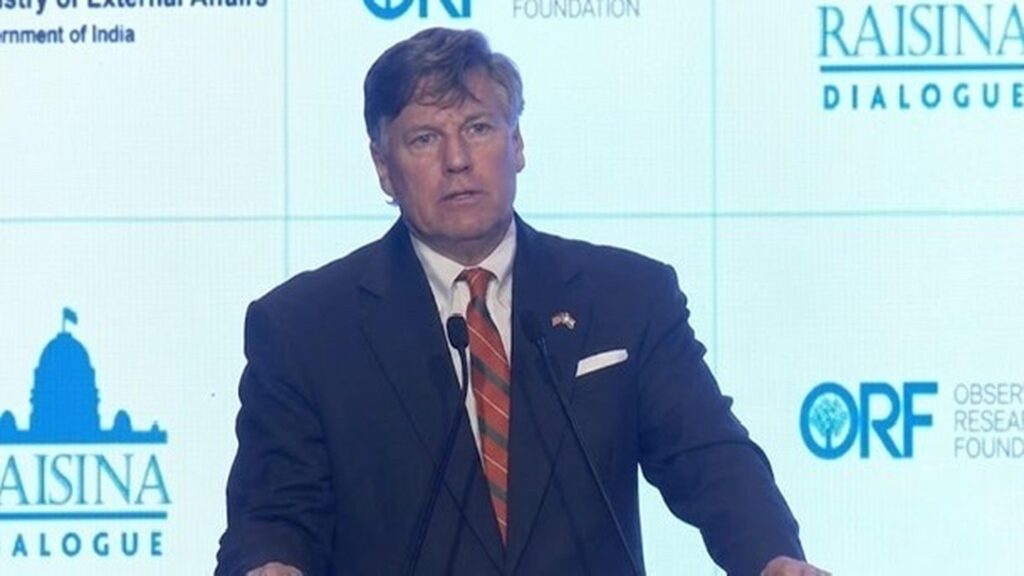
Speaking at the Raisina Dialogue in New Delhi, U.S. Deputy Secretary of State Christopher Landau said the United States supports deeper economic ties with India but will structure the relationship carefully to protect American interests.
His remarks underline a broader shift in Washington’s trade policy. The United States now views trade agreements not only as economic arrangements but also as instruments of strategic competition.
Officials say the lessons drawn from decades of engagement with China are shaping how Washington approaches negotiations with India.
China Lesson
American policymakers increasingly believe earlier trade policies helped accelerate China’s economic rise and ultimately created a strategic competitor.
The United States supported China’s integration into the global trading system in the late 1990s and early 2000s, culminating in China’s accession to the World Trade Organization in 2001.
At the time, many officials in Washington believed deeper economic engagement would open Chinese markets to American businesses while integrating Beijing into the global economic order.
Instead, China used global trade access to expand its manufacturing power and dominate key industrial sectors.
Today China is one of the United States’ largest economic rivals, competing directly with American companies in technology, manufacturing and global supply chains.
U.S. officials now say this experience has forced Washington to rethink how it negotiates trade partnerships.
Trade Talks Near Finish
Negotiations between India and the United States have accelerated in recent months as both governments attempt to finalize a bilateral trade agreement.
According to American officials, discussions are approaching their final stage and a deal could be concluded soon if remaining issues are resolved.
The agreement is expected to address tariffs, market access and supply chain cooperation across several sectors including technology, manufacturing and energy.
For Washington, the talks represent an opportunity to deepen economic engagement with India while reshaping supply chains that have long depended on Chinese production.
For New Delhi, improved access to the American market could boost exports and attract greater foreign investment.
Both sides view the agreement as part of a broader strategic partnership that has expanded steadily over the past decade.
America First Approach
The negotiations are being guided by the economic doctrine associated with President Donald Trump.
Under the America First approach, trade agreements are designed to deliver clear economic benefits to American workers and industries.
Officials say the United States will remain open to trade with partners such as India but will avoid broad concessions that could weaken domestic manufacturing or create long term strategic risks.
Christopher Landau said the United States wants strong relations with India but must ensure that economic cooperation does not repeat the mistakes made in earlier decades.
He also stressed that America First does not mean the United States is turning inward or abandoning international partnerships.
Instead, it reflects a strategy in which trade relationships are structured to ensure balanced benefits and protect national economic interests.
India Partnership
Despite the warnings about past policy errors, Washington views India as an important partner rather than a rival.
India is the world’s largest democracy and an increasingly influential power in the Indo Pacific region.
The United States sees closer ties with India as essential for maintaining economic stability and strategic balance in Asia.
Unlike China’s state driven economic system, India’s market structure is more decentralized and dominated by private enterprise.
American officials believe this creates a more compatible foundation for economic cooperation.
At the same time, the United States wants to avoid granting trade advantages that could eventually produce a competitor similar to China.
Strategic Supply Chains
One of the central goals of the new trade framework is to reshape global supply chains.
The COVID pandemic and geopolitical tensions exposed the risks of heavy dependence on Chinese manufacturing.
Washington has since encouraged companies to diversify production into other countries.
India has emerged as a key candidate for this shift because of its large workforce, expanding industrial base and growing domestic market.
A trade agreement could accelerate this transition by reducing barriers to investment and manufacturing collaboration between the two countries.
American officials say the goal is not to replace China entirely but to create more resilient and diversified supply networks.
Talent and Competition
The debate over trade policy also intersects with concerns about talent and workforce competition.
Christopher Landau noted that the United States benefits from international students who study in American universities, but policymakers must also ensure that domestic workers are not disadvantaged in the labor market.
The United States hosts one of the largest populations of foreign students in the world, and Indians represent the biggest group among them.
Discussions around education, skilled immigration and technology cooperation therefore form an important backdrop to broader economic negotiations.
India’s Negotiating Position
For India, the trade talks represent both opportunity and caution.
The government led by Narendra Modi is seeking greater access to American markets for Indian goods while protecting sensitive domestic sectors.
Indian negotiators remain particularly careful about agriculture and dairy, where domestic producers fear increased foreign competition.
At the same time, New Delhi hopes deeper economic engagement with the United States will accelerate industrial growth and strengthen India’s role in global supply chains.
India has also maintained a broader strategy of balancing relationships with multiple global partners while expanding its strategic partnership with Washington.
Geopolitical Stakes
The evolving trade negotiations reflect a larger shift in how major powers view economic policy.
Trade agreements are increasingly tied to questions of technology, security and geopolitical influence.
For the United States, the rise of China has transformed trade policy into a tool of strategic competition.
For India, closer economic ties with Washington could boost investment and manufacturing while strengthening its position in the global economy.
Yet both countries appear determined to structure the partnership carefully.
American officials say the lesson of China remains central. Economic engagement can generate enormous growth, but it can also reshape the global balance of power.
As the United States and India move toward a new trade agreement, that lesson is shaping every stage of the negotiations.


