

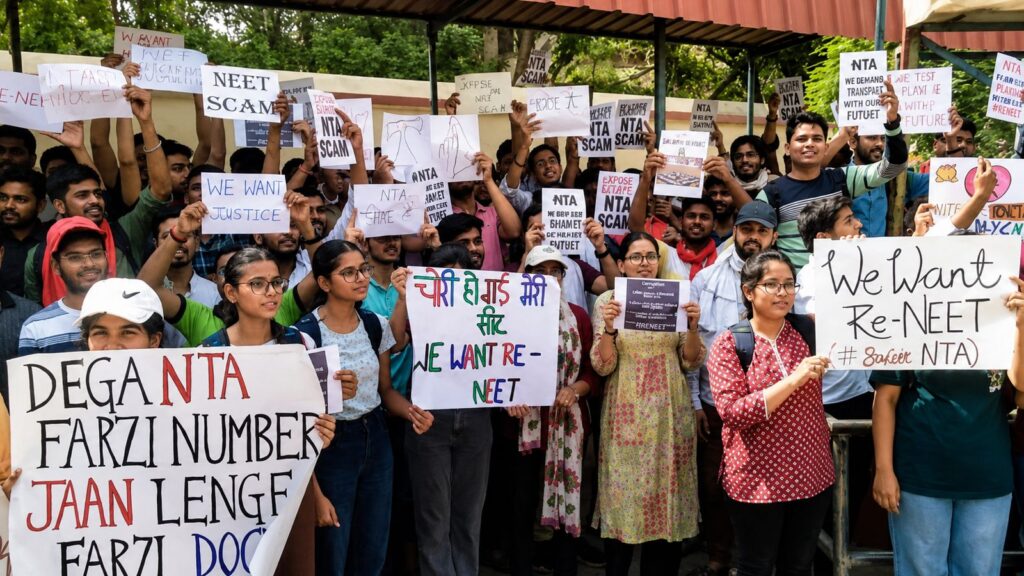
India’s biggest medical entrance examination has been pushed into one of its most serious controversies in recent years after NEET-UG 2026 was cancelled amid allegations of a paper leak, organised cheating networks and fraudulent admission rackets operating across multiple states. What initially appeared to be isolated complaints over a suspicious guess paper has since developed into a far wider investigation involving the arrest of an alleged Bihar-based solver gang, the detention of an RJD leader in a separate fake NEET case, and raids by central agencies searching for the source of the breach.
For more than 20 lakh students who sat the examination hoping to secure admission into MBBS and other medical courses, the scandal has created fresh uncertainty after years of preparation, coaching expenses and intense competition. Parents and education experts have also raised questions over the security of high-stakes national examinations and whether enough safeguards exist to protect merit. As investigators trace digital trails, money transactions and possible interstate links, the NEET-UG 2026 controversy has become more than an exam dispute. It is now a test of public trust in one of India’s most important gateways to higher education.
How the Allegations Began
Suspicion first intensified when a so-called guess paper reportedly circulated before the NEET-UG 2026 examination. Such material is common during competitive exam season, but concern grew after claims that several questions closely matched those asked in the actual test.
As complaints spread among students and coaching circles, authorities were urged to verify whether confidential content had been accessed before the exam. Reports of whistleblower inputs and overlapping questions added to pressure on officials.
The National Testing Agency later cancelled the examination, an unusual step that reflected the seriousness of concerns surrounding exam integrity. For lakhs of candidates, the decision meant renewed uncertainty after years of preparation.
Investigators are now examining whether the alleged leak involved unauthorised copying of question papers, digital circulation of content or the sale of advance material through middlemen.
Bihar Solver Gang and Key Arrests
One of the most significant developments emerged from Bihar, where police reportedly uncovered an alleged solver gang in Nalanda district. Such gangs are usually accused of arranging impersonators, proxy candidates or subject experts to fraudulently assist students in competitive examinations.
Officials are examining whether this network had any direct or indirect connection to the wider NEET-UG 2026 controversy. If links are established, the Bihar case could become central to understanding how organised exam fraud networks operate across states.
In Delhi, police separately arrested an RJD leader along with others in an alleged fake NEET paper and fraudulent MBBS admission racket. Families were reportedly promised guaranteed medical seats or access to confidential material in exchange for large payments.
While investigators have indicated that the Delhi case may be distinct from the core paper leak probe, it has added to concerns that criminal groups are exploiting desperate aspirants during the admissions season.
The Central Bureau of Investigation has also conducted searches and arrests in Rajasthan, Haryana and Maharashtra as part of the broader inquiry.
Political Fallout Grows
The NEET controversy has quickly become a major political issue, particularly in states that have long criticised the national entrance exam model.
Tamil Nadu has consistently argued that the examination disadvantages many students, especially those from rural and state-board backgrounds, while favouring expensive coaching ecosystems.
Actor and political leader Vijay also criticised the latest developments.
Vijay said the scandal had revealed structural weaknesses and that students should not be forced to suffer because of administrative failures.
Opposition parties at the national level have demanded accountability from the National Testing Agency and the Union government, arguing that recurring exam controversies are weakening trust among young people.
The government has said those found guilty will face strict legal action and that honest candidates will be protected through a fair re-examination process.
Students Pay the Highest Price
While agencies investigate and political leaders exchange accusations, students remain the most affected group. Many NEET aspirants prepare for years, balancing school studies, coaching schedules and repeat attempts in the hope of securing a limited number of medical seats.
The cancellation has forced students back into preparation mode after many believed the most difficult stage of the process was over. Parents have also raised concerns over additional coaching expenses, travel costs and prolonged emotional stress.
For candidates from smaller towns and lower-income households, the disruption may be even more severe. Families often make significant sacrifices to support preparation, and uncertainty over new dates adds further pressure.
Teachers and counsellors have advised students to avoid rumours, maintain routines and wait for official announcements on the revised examination schedule.
What Happens Next
The immediate focus is on two fronts: the criminal investigation and the announcement of a fresh NEET-UG 2026 date. Students, colleges and institutions will also be watching for clarity on counselling timelines and admissions calendars.
Beyond the re-test, the scandal has reopened a wider debate over the security of high-stakes examinations in India. Experts have called for stronger paper protection systems, encrypted handling procedures, tighter vetting of staff, improved surveillance and faster response mechanisms when complaints emerge.
Some specialists have also renewed calls for computer-based testing models to reduce dependence on physical paper movement. Others argue that transparency after any irregularity is equally important, as delayed communication can deepen distrust.
India’s medical admission system depends on one principle: that merit alone determines success. The NEET-UG 2026 scandal has shaken that confidence. Whether authorities can restore it now may shape public trust in national examinations for years to come.


