

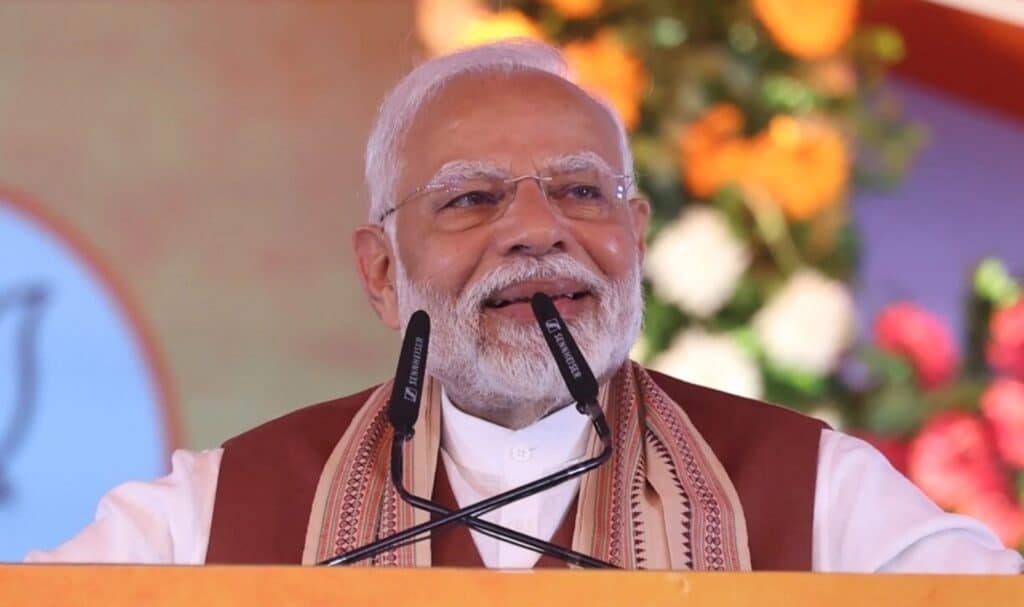
Prime Minister Narendra Modi’s seven appeals to Indian citizens have emerged as one of the most significant public economic messages issued by his government in recent years. Framed as a call for national discipline during a period of rising global uncertainty, the Prime Minister urged people to reduce fuel consumption, postpone non-essential foreign travel, avoid unnecessary gold purchases, consume less edible oil, buy Swadeshi products, support natural farming and adopt work from home practices where possible.
The remarks came at a time when conflict in West Asia has raised fears of higher crude oil prices, supply chain disruption and renewed pressure on import-dependent economies such as India. Financial markets reacted sharply, with investors interpreting the unusually direct message as a sign that policymakers are preparing for possible external economic stress. While no restrictions were announced, the speech has triggered debate over whether India is entering a precautionary phase to shield itself from a worsening global environment.
Why Now
India remains one of the world’s largest importers of crude oil, gold and edible oils, making it highly sensitive to global price shocks. Any sustained rise in commodity prices increases the country’s import bill, weakens the rupee and raises inflation risks for households and businesses. The renewed crisis in West Asia has intensified concerns over energy security, shipping routes and global market volatility.
Against that backdrop, Modi’s message appeared aimed at preparing the public before economic pressures become more visible. Rather than announcing formal controls, the Prime Minister chose behavioural appeals that could reduce import demand and conserve foreign exchange reserves.
“We must save foreign exchange for the nation and use resources with restraint,” Modi said while outlining the appeals. The wording was notable because Indian leaders rarely ask citizens to alter consumption habits unless they see a broader challenge ahead.
The Appeals
The Prime Minister’s seven appeals covered both household behaviour and long-term resilience.
On fuel use, Modi urged citizens to rely more on public transport, metros, railways and carpooling to reduce petrol and diesel demand. For India, imported oil remains a major burden, and lower demand can ease pressure during periods of high crude prices.
He also called for wider use of work from home models where feasible. “If meetings can be held online, if work can be done from home, then it should be considered,” he said. The suggestion drew attention because it linked workplace flexibility to economic management.
On foreign travel, Modi urged citizens to postpone non-essential overseas trips and destination weddings for a year. Such travel increases outbound spending in foreign currencies, while domestic tourism keeps money circulating inside India.
Perhaps the most market-sensitive appeal was on gold. India is among the world’s biggest consumers of gold, driven by weddings, festivals and savings habits. Modi asked people to avoid unnecessary gold buying, even for social occasions.
The Prime Minister also asked households to reduce edible oil consumption, a move carrying both economic and health implications.
His call to buy Swadeshi products reinforced the government’s self-reliance agenda. Supporting domestically made goods can reduce imports, strengthen manufacturing and create employment.
Finally, Modi urged farmers to embrace natural farming and reduce dependence on imported fertilisers and chemicals.
Market Impact
Indian equity markets saw sharp pressure after the speech, with weakness in jewellery, aviation and travel-linked stocks. The reaction reflected concern over both sector-specific demand and the broader tone of the message.
The appeal to avoid gold purchases raised fears of weaker jewellery demand. Calls to delay foreign travel created pressure on airlines, tourism companies and premium spending segments.
The speech also signalled that inflation, fuel prices and currency pressures are being closely watched by policymakers. If oil prices remain elevated for a prolonged period, India could face higher logistics costs, rising consumer prices and slower discretionary spending.
What It Means
For households, the Prime Minister’s message encourages financial caution. Families may consider delaying luxury purchases, monitoring fuel expenses, increasing savings and prioritising essentials over discretionary spending.
For businesses, the impact may differ by sector. Travel companies, airlines, jewellers and premium consumer brands may face softer sentiment if citizens respond to the appeals. Domestic manufacturers, rail transport, renewable energy providers and efficient logistics firms could benefit from a stronger push toward self-reliance and cost efficiency.
Corporate India may also revisit hybrid work structures if fuel costs rise further.
What Next
At present, the government has announced no emergency measures. There are no restrictions on gold buying, no travel bans and no fuel rationing. The speech therefore appears to be a preventive step rather than a crisis announcement.
By speaking early, Modi may be trying to prepare public expectations before inflation or global shocks become more severe. It also allows the government to frame economic restraint as national responsibility rather than emergency management.
Opposition leaders have criticised the appeals, saying they reflect deeper economic vulnerabilities. Supporters argue the Prime Minister is being transparent about global risks and encouraging prudent behaviour.
If tensions in West Asia ease and commodity prices stabilise, the appeals may be remembered as a precaution. But if oil prices surge and markets remain volatile, Modi’s seven appeals could be seen as the moment India was first asked to prepare for a tougher economic phase.


