

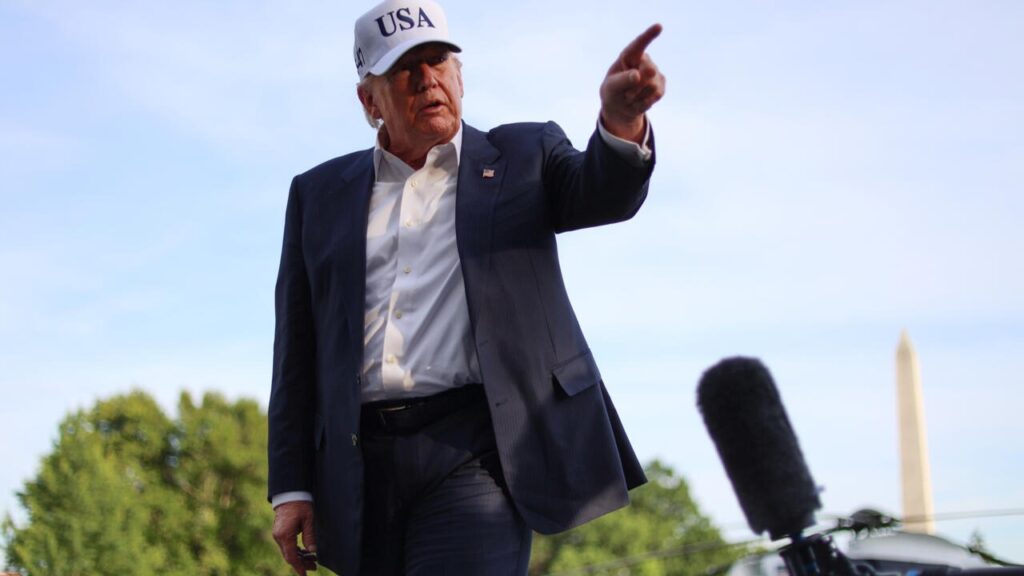
US President Donald Trump has called off a planned military strike on Iran following urgent diplomatic intervention from Saudi Arabia, Qatar and the United Arab Emirates, in a move that has temporarily averted a sharp escalation in the Middle East.
The decision comes amid an already volatile regional environment marked by drone attacks, maritime tensions in the Strait of Hormuz, and widening confrontation involving Israel, Iran and Iranian-aligned groups across multiple theatres. While the immediate strike has been paused, officials and analysts caution that the underlying crisis remains active and unpredictable, with military and diplomatic pressure continuing simultaneously.
“We were fully prepared, but they asked for time for talks and I agreed,” Trump said, while warning that US forces remain ready for a “full large-scale assault” if negotiations collapse.
Gulf Alarm
Diplomatic pressure from Gulf capitals played a decisive role in delaying the planned US strike. Saudi Crown Prince Mohammed bin Salman, Qatar’s Emir Tamim bin Hamad Al Thani and UAE President Mohamed bin Zayed Al Nahyan reportedly urged Washington to allow more time for negotiations with Tehran, warning that escalation could spill directly into Gulf territory.
The concerns are not theoretical. Recent reports from the region describe drone activity and attempted strikes near sensitive infrastructure in Saudi Arabia and the UAE, including areas close to strategic energy and nuclear facilities. Gulf officials have described such incidents as evidence that the conflict is already widening beyond Iran’s borders.
The Strait of Hormuz remains the central strategic pressure point. Nearly one-fifth of global oil shipments pass through the narrow waterway, making it one of the most sensitive economic chokepoints in the world. Any disruption in this corridor risks immediate global consequences, including supply shortages, shipping delays and higher energy prices.
Maritime risk has already increased. Commercial shipping routes are under tighter monitoring, insurance premiums have risen, and naval presence in the Gulf has expanded amid fears of miscalculation between US forces and Iranian-linked assets operating in close proximity.
Gulf governments, heavily dependent on energy exports and stable shipping lanes, are now attempting to balance their long-standing security ties with Washington against the immediate risk of becoming targets in a widening confrontation.
Regional Escalation
The crisis is unfolding against a broader and increasingly fragmented regional conflict involving Israel, Iran and multiple non-state armed groups operating across Lebanon, Syria, Iraq and the Red Sea corridor.
Israeli operations targeting Iranian-linked infrastructure have intensified regional tensions, while Iranian-aligned groups have warned that any direct US strike on Iran would trigger retaliation against American and Israeli assets across the region. This includes potential attacks on military installations, shipping routes and energy infrastructure.
The result is a multi-layered security environment in which diplomacy and military signalling are occurring simultaneously, raising the risk of rapid escalation from isolated incidents.
Air defence systems across parts of the Gulf and wider Middle East have been placed on heightened alert, while naval deployments have increased in key waterways. Analysts say even a limited strike or maritime incident could quickly escalate into a wider confrontation involving missiles, drones and cyber operations across multiple fronts.
Trump maintained a firm position on Iran’s nuclear ambitions despite halting the strike.
“Iran cannot have a nuclear weapon. They understand that,” he said. “But if talks fail, we are fully prepared.”
Iran has repeatedly denied seeking nuclear weapons and continues to argue that its programme is civilian in nature. However, Western governments remain concerned about enrichment levels and the absence of long-term verification guarantees.
Maritime Pressure
Maritime tensions in the Gulf and surrounding waters have become one of the most sensitive elements of the crisis.
The United States has increased naval activity near key shipping corridors and intensified monitoring of vessels linked to Iranian trade routes. Commercial shipping disruptions have already been reported, with operators adjusting routes and security protocols due to heightened risk.
Iran, in turn, has warned against what it describes as external interference in its maritime domain and has strengthened its strategic posture around the Strait of Hormuz. Iranian authorities have also expanded oversight mechanisms linked to transit through the waterway, signalling a more structured approach to controlling access to one of the world’s most important energy routes.
The risk of miscalculation at sea remains significant. Naval forces from multiple countries are operating in close proximity, and analysts warn that even a minor incident involving interception or misidentification could trigger rapid escalation.
Energy markets have reacted to the uncertainty, with prices remaining sensitive to developments in shipping security and potential supply disruption through Hormuz.
Pakistan Channel
Pakistan has emerged as a key diplomatic intermediary in efforts to prevent further escalation, with reports indicating that Islamabad helped transmit revised Iranian proposals to Washington during recent discussions.
Pakistan has positioned itself as a communication bridge between Tehran and Washington, seeking to maintain dialogue channels at a time when direct negotiations face significant political and strategic pressure.
The discussions reportedly include proposals around uranium enrichment limits, sanctions relief, maritime security guarantees and international oversight of Iran’s nuclear programme. Iran is believed to be seeking phased economic relief and protection of oil exports, while the United States continues to demand verifiable constraints on nuclear development.
Pakistan’s role highlights a broader shift in the crisis, where regional powers are increasingly acting as diplomatic intermediaries rather than passive observers, reflecting the complexity of modern Middle East negotiations.
Fragile Window
Despite the temporary pause in military action, the broader situation remains highly unstable, with no indication that core disputes have been resolved.
Military forces remain deployed across the region, maritime security alerts continue, and diplomatic channels are under sustained pressure. Analysts warn that the current pause may represent only a temporary de-escalation rather than a durable breakthrough.
The Gulf states continue to face a delicate balancing act between their security partnerships with Washington and their economic dependence on regional stability. At the same time, the risk of spillover from wider conflicts involving Israel, Iran and allied groups remains elevated.
For now, diplomacy has created a narrow window for negotiation. But with tensions still high across land and sea, and with no agreed framework yet in place, the Middle East remains in a state of controlled uncertainty, where both diplomacy and escalation remain active possibilities.


