

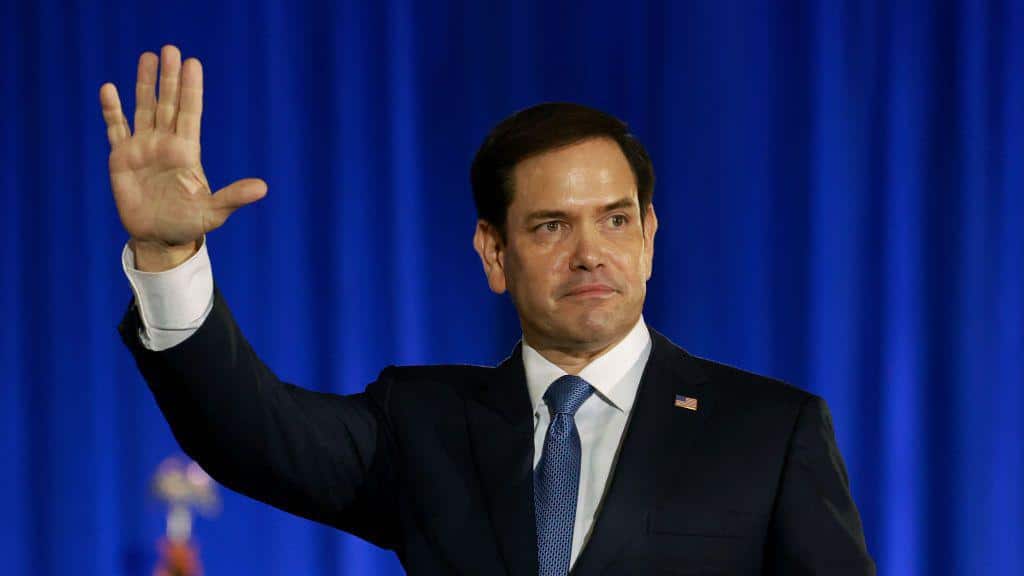
US Secretary of State Marco Rubio’s declaration that Washington is ready to sell India “as much energy as they will buy” has emerged as far more than a routine diplomatic statement. Coming at a time of escalating tensions in the Strait of Hormuz, continuing uncertainty over Russian oil supplies, and growing competition for influence across the Indo-Pacific, Rubio’s remarks reflect a wider geopolitical shift that is steadily transforming the India-US relationship.
Ahead of his India visit and meetings linked to the Quad grouping, Rubio outlined Washington’s intention to deepen energy cooperation with New Delhi while also hinting at new opportunities involving Venezuelan crude oil. The timing of the comments is significant. Global energy markets remain under pressure from the fallout of the Russia-Ukraine war, instability in West Asia, and fears that maritime disruptions in the Gulf could trigger another major supply shock.
For India, the issue carries immediate economic and strategic consequences. As the world’s third-largest oil importer, India depends heavily on overseas crude supplies to sustain industrial growth, transportation, and domestic energy demand. Nearly 85% of the country’s oil requirements are imported, much of it travelling through vulnerable maritime routes such as the Strait of Hormuz.
For Washington, India is increasingly being viewed not only as a key economic partner but also as a central strategic pillar in the Indo-Pacific region. Rubio’s remarks therefore represent a broader attempt to reposition energy cooperation as a critical element of the evolving India-US partnership, alongside defence, technology, maritime security, and supply chain resilience.
The comments also reflect how global energy diplomacy is changing rapidly. Oil and gas are no longer merely economic commodities. They are now deeply connected to sanctions policy, geopolitical competition, maritime security, and strategic influence between major powers.
Energy Partnership
Rubio’s comments marked one of the clearest signals yet that the United States wants to play a much larger role in India’s long-term energy strategy.
Speaking ahead of his India visit, Rubio said, “We want to sell them as much energy as they will buy. We are at historic levels of US production and US exports. We want to be able to do more.”
The statement comes as the United States continues to expand its position as one of the world’s leading producers of crude oil and liquefied natural gas. Washington has increasingly focused on using its energy strength not only to expand trade but also to strengthen geopolitical partnerships with key countries across Asia and Europe.
India represents a particularly important market in that strategy.
The country’s rapidly growing economy and rising industrial demand mean its energy consumption is expected to increase significantly over the coming decades. For American policymakers, securing a stronger position within India’s energy supply chain offers both commercial and strategic advantages.
Rubio reinforced that message when he said, “We want to be a bigger part of their portfolio.”
The wording reflects a broader shift in Washington’s approach toward New Delhi. The United States is no longer viewing India simply as a defence partner or regional ally. Instead, India is increasingly being positioned as a long-term strategic partner whose economic and energy choices could shape the future balance of power in Asia.
The growing emphasis on energy also highlights how India-US relations have evolved beyond traditional diplomacy. Over the last several years, both countries have expanded cooperation in areas including semiconductor manufacturing, critical minerals, artificial intelligence, cyber security, defence technology, and supply chain resilience.
Energy security is now emerging as another major pillar of that relationship.
For India, however, the calculations remain rooted in strategic autonomy and economic stability. New Delhi has consistently maintained that its energy procurement decisions are based on affordability, supply reliability, and national interest rather than geopolitical alignment.
That balancing approach has allowed India to maintain relationships simultaneously with the United States, Russia, Gulf producers, and other energy suppliers while protecting itself from overdependence on any single source.
Hormuz Pressure
The wider geopolitical significance of Rubio’s remarks becomes clearer against the backdrop of growing tensions in the Strait of Hormuz.
The narrow waterway between the Persian Gulf and the Gulf of Oman remains one of the most strategically important oil transit corridors in the world. Nearly one-fifth of global crude supplies pass through the route every day, including a major share of India’s imports from Gulf producers such as Iraq, Saudi Arabia, and the United Arab Emirates.
Recent concerns escalated after discussions emerged around possible Iranian efforts to regulate or impose costs on vessels moving through the Strait.
Responding to the issue, Rubio issued a strong warning against any attempt to control international maritime access.
“They cannot normalize who gets to use international waterways,” Rubio said while criticising proposals linked to maritime restrictions in Hormuz.
He further warned that any effort to interfere with international shipping routes could severely complicate future diplomatic engagement with Tehran.
The remarks reflect growing American concern that critical maritime corridors are increasingly becoming instruments of geopolitical leverage.
For India, the implications are particularly serious.
Any disruption in the Strait of Hormuz could sharply increase global oil prices, shipping insurance costs, freight charges, and domestic fuel inflation. Such a scenario would directly affect economic growth and place pressure on both consumers and industries dependent on stable fuel supplies.
The risks have prompted India to intensify maritime surveillance and naval coordination across the Arabian Sea and surrounding waters over recent years. Indian strategic planners increasingly view energy security and maritime security as interconnected national priorities.
Washington shares a similar assessment.
American policymakers now see the protection of shipping lanes and uninterrupted energy flows as essential to maintaining stability across the Indo-Pacific region. Rubio’s outreach to India therefore aligns with broader US efforts to strengthen maritime cooperation with regional partners amid growing uncertainty in global trade corridors.
The Hormuz issue has effectively transformed energy from a commercial matter into a strategic security challenge involving diplomacy, defence planning, and geopolitical influence.
Russia Balancing
Rubio’s remarks also come at a time when India’s energy relationship with Russia remains under close international scrutiny.
Since the outbreak of the Ukraine war and the imposition of Western sanctions on Moscow, India has significantly increased imports of discounted Russian crude. The arrangement allowed Indian refiners to secure lower-cost supplies while helping shield domestic consumers from major increases in fuel prices.
As a result, Russia quickly emerged as one of India’s largest crude suppliers.
While several Western governments initially criticised the purchases, Washington gradually adopted a more calibrated position, recognising India’s energy requirements and its strategic importance within the Indo-Pacific region.
Even so, American officials have continued encouraging India to diversify supply sources over the longer term.
Rubio’s latest comments appear designed within that framework.
Rather than directly criticising India’s Russian oil imports, the US Secretary of State focused on presenting expanded American energy exports as a viable alternative capable of strengthening India’s long-term energy security.
The strategy reflects a broader American objective of reducing global dependence on Russian energy influence without publicly pressuring New Delhi into abrupt policy shifts.
India, meanwhile, has continued defending its procurement strategy by arguing that affordable energy remains essential for a developing economy with massive consumption demands.
Indian officials have repeatedly stressed that oil purchases are driven by commercial considerations rather than geopolitical loyalties. New Delhi has also pointed out that several European countries continued maintaining economic links with Russia even after the Ukraine conflict began.
That approach reflects India’s wider foreign policy doctrine of strategic autonomy, which seeks to preserve flexibility by maintaining relationships with multiple major powers simultaneously.
Rubio’s tone suggests Washington increasingly recognises that deeper cooperation with India will require partnership and incentives rather than confrontation.
Venezuela Option
One of the most closely watched parts of Rubio’s remarks was his reference to Venezuelan crude oil.
“We also think that there are opportunities with Venezuelan oil,” Rubio said, adding that Venezuela’s interim president is expected to visit India soon.
The statement could indicate a potentially important shift in global energy diplomacy.
Venezuela holds some of the world’s largest proven oil reserves, but years of sanctions, political instability, and economic collapse sharply reduced its production capacity and export volumes. Before sanctions intensified, India had been among the key buyers of Venezuelan crude, particularly for refiners capable of processing heavier grades of oil.
Rubio’s comments now suggest Washington may be increasingly open to broader energy discussions involving Venezuelan supplies under evolving political conditions.
For India, Venezuelan crude could provide another strategically useful source of supply diversification at a time when uncertainty continues to surround both Russian exports and Gulf shipping routes.
Indian refiners already possess experience handling Venezuelan heavy crude, making future imports commercially feasible if pricing and diplomatic conditions become favourable.
For the United States, encouraging additional Venezuelan supply routes may also help stabilise global oil markets while reducing Russia’s dominance in discounted crude trade.
The development highlights how energy diplomacy is becoming increasingly tied to wider geopolitical calculations involving sanctions, maritime security, and strategic competition between major powers.
Quad Strategy
Rubio also linked his India visit directly to meetings involving the Quad grouping of India, the United States, Japan, and Australia.
“There is a lot to work on with India. They are a great ally, a great partner. We do a lot of good work with them. This is an important trip,” Rubio said.
The remarks underline Washington’s growing belief that India occupies a central role in the future strategic architecture of the Indo-Pacific.
Originally focused on maritime cooperation and regional stability, the Quad has steadily expanded its agenda to include technology, infrastructure, semiconductor production, cyber security, supply chains, and critical resource management.
Energy resilience is now becoming another key component of that framework.
American policymakers increasingly believe that protecting maritime trade routes and ensuring uninterrupted energy flows are essential for preserving economic stability across Asia.
The tensions surrounding the Strait of Hormuz have reinforced those concerns by exposing the vulnerability of global supply chains to regional conflicts and geopolitical instability.
For Washington, expanding energy cooperation with India therefore serves a larger strategic purpose beyond trade alone. It strengthens regional partnerships while helping build a more resilient Indo-Pacific security framework capable of managing future crises.
For India, however, the challenge remains maintaining strategic autonomy while simultaneously deepening cooperation with major global powers.
New Delhi has historically avoided rigid alliance structures, preferring flexible partnerships that maximise diplomatic leverage and economic independence.
Yet the scale and depth of India-US cooperation across energy, defence, technology, and maritime security increasingly suggest that the relationship is entering a new and far more consequential phase.
Rubio’s remarks ultimately capture a broader reality shaping global geopolitics today. Energy is no longer simply about economics. It has become a defining instrument of diplomacy, strategic influence, and international power competition in an increasingly fragmented world order.


