

India has intensified Ebola preparedness measures after the World Health Organization warned that the latest outbreak in Central Africa is spreading faster than containment efforts, prompting heightened surveillance across airports, hospitals, laboratories, and state health departments.
The outbreak, centered largely in parts of the Democratic Republic of Congo and Uganda, involves the Bundibugyo strain of the Ebola virus, a variant for which there is currently no fully approved vaccine. WHO officials have reported rising suspected infections and deaths as international health agencies attempt to contain transmission in affected regions.
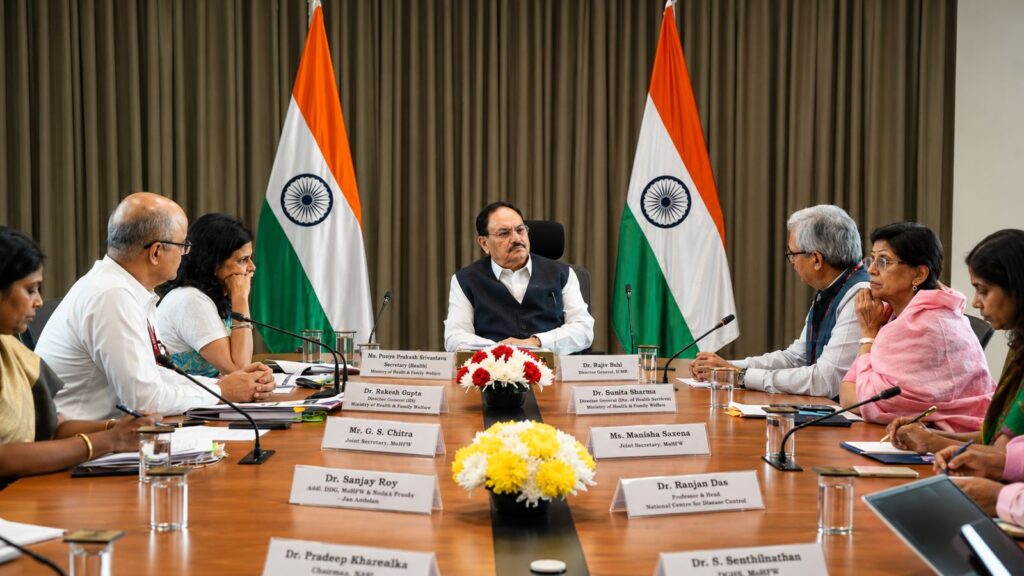
Following the WHO warning, Union Health Minister Jagat Prakash Nadda chaired a high-level preparedness review meeting with officials from the Ministry of Health and Family Welfare, the National Centre for Disease Control, the Indian Council of Medical Research, airport authorities, and emergency surveillance agencies.
“The public health system is monitoring the situation closely and preparedness measures are being reviewed at all levels,” officials said after the meeting.
India has not reported any Ebola case. However, authorities have activated enhanced monitoring systems because of international travel links and the possibility of imported infections.
The government has also issued travel advisories for Ebola-affected regions, including the Democratic Republic of Congo, Uganda, and South Sudan, while health agencies continue surveillance of travelers arriving from high-risk countries.
WHO Raises Global Concern
The World Health Organization has described the outbreak as a major international public health concern after infections continued to rise in affected areas despite ongoing response operations.
WHO Director-General Tedros Adhanom Ghebreyesus said the outbreak was spreading faster than response systems in several regions.
“The outbreak is outpacing response efforts in affected areas,” Tedros said during a recent WHO briefing.
Health agencies monitoring the outbreak said the Bundibugyo strain presents additional operational challenges because currently available Ebola vaccines were primarily developed for the Zaire strain.
The Ebola virus spreads through direct contact with infected bodily fluids, contaminated surfaces, or infected individuals showing symptoms. Early symptoms include fever, weakness, vomiting, diarrhea, and unexplained bleeding. Public health officials say early-stage infections can resemble diseases such as malaria, dengue, or typhoid, complicating rapid diagnosis.
The current outbreak has renewed global attention on infectious disease surveillance systems following lessons learned during the COVID-19 pandemic and previous Ebola epidemics in West Africa.
India Activates Surveillance Network
Indian authorities have expanded surveillance measures at airports and other international entry points handling passengers arriving from Ebola-affected regions.
Enhanced thermal screening, health declaration checks, symptom monitoring, and travel-history verification systems have been activated at major airports. Medical teams have also been instructed to isolate and report suspected Ebola-related symptoms immediately.
The Integrated Disease Surveillance Programme has directed states and district administrations to increase monitoring of unexplained fever clusters and hemorrhagic symptoms.
“States and Union Territories have been advised to maintain strict surveillance and ensure rapid reporting of suspected cases,” officials familiar with the Health Ministry review said.
Authorities said passengers arriving from affected regions may undergo medical observation if symptoms are detected during screening procedures.
Several states have also activated rapid response teams and designated nodal officers for airport surveillance and emergency coordination.
Government officials said coordination mechanisms between airports, district administrations, laboratories, and hospitals are currently under review as part of preparedness measures.
Hospitals And Laboratories
The National Institute of Virology in Pune has been designated as the country’s primary nodal laboratory for Ebola testing and sample analysis.
The institute operates under high-level biosafety containment standards capable of handling dangerous viral pathogens. RT-PCR diagnostic systems are being used for rapid confirmation of suspected Ebola infections.
Officials said laboratory preparedness reviews are underway to assess testing capacity and coordination with regional surveillance systems.
Hospitals across multiple states have also been instructed to review:
- isolation ward capacity
- infection-control protocols
- biomedical waste management systems
- patient transport procedures
- personal protective equipment availability
Healthcare workers are undergoing refresher training on infectious disease management and emergency isolation procedures.
The Health Ministry has additionally directed hospitals and emergency response teams to conduct mock drills and preparedness exercises to test operational coordination during potential infectious disease emergencies.
During previous Ebola outbreaks globally, healthcare workers accounted for significant infection numbers because of direct exposure to infected patients and delayed containment procedures.
Travel Advisory And Risk Assessment
India’s travel advisory for Ebola-affected countries has advised citizens to avoid non-essential travel to regions reporting active outbreaks.
Health authorities are also monitoring international developments related to the outbreak while maintaining coordination with global public health agencies, including the World Health Organization.
Public health experts have stated that Ebola transmission differs significantly from airborne respiratory viruses because infection typically requires direct physical contact with infected bodily fluids.
Officials said current assessments indicate no immediate domestic outbreak risk in India, though surveillance measures remain active due to the evolving international situation.
The current preparedness review is taking place amid broader global concern over infectious disease threats and cross-border public health emergencies linked to increasing international travel and urban population density.
Indian authorities said surveillance systems, laboratories, hospitals, and emergency response mechanisms remain under continuous monitoring as the Ebola outbreak develops internationally.


