

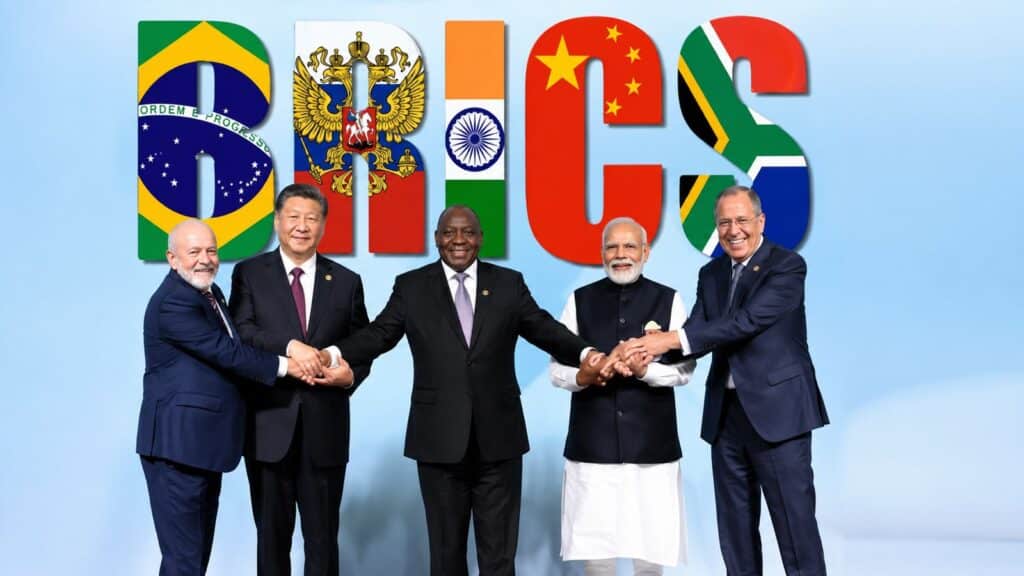
India has opened the BRICS Foreign Ministers Meeting in New Delhi on May 14-15, bringing together senior diplomats from some of the world’s most influential emerging economies at a time of rising geopolitical instability, economic uncertainty and growing demands for reform of the international order. The two-day gathering, hosted under India’s rotating BRICS chairmanship, is being closely watched as a strategic precursor to the BRICS Leaders’ Summit expected later this year.
With conflict in West Asia threatening energy markets, shipping routes under pressure, and major powers divided over sanctions and diplomacy, the New Delhi meeting has assumed significance far beyond a routine ministerial conference. For India, it is also a test of diplomatic leadership as it seeks to steer an expanded and increasingly complex BRICS bloc towards common positions on trade, security and governance reform.
India’s Opening Push
External Affairs Minister Subrahmanyam Jaishankar formally opened the meeting by urging member nations to strengthen cooperation amid what he described as a period of exceptional global turbulence. India has set the 2026 chairmanship theme as “BRICS@20: Building for Resilience, Innovation, Cooperation and Sustainability,” reflecting New Delhi’s attempt to position the grouping as a practical force for growth and reform as it enters its third decade.
Jaishankar said BRICS nations carry a special responsibility because they represent a large share of the world’s population, trade flows and future economic growth. He warned that prolonged instability in one region now rapidly affects fuel prices, food supply chains, inflation and investment sentiment worldwide.
In one of the most notable remarks of the opening session, he said “Peace cannot be piecemeal.” The statement was widely interpreted as criticism of selective responses to global conflicts and inconsistent approaches by major powers. He also emphasised that “Pressure cannot replace diplomacy.”
Officials say India wants the meeting to focus on practical outcomes, including cooperation in technology, trade facilitation, health systems, resilient supply chains and development finance.
West Asia Risks
The escalating crisis in West Asia has become the most urgent issue overshadowing the summit. India used the opening discussions to underline the importance of secure sea lanes, warning that safe and unimpeded maritime flows are vital for global economic well-being.
That language carries major strategic importance because energy shipments through the Strait of Hormuz and commercial traffic through the Red Sea remain essential to the functioning of world markets. Any sustained disruption would likely raise oil prices, freight insurance costs and inflation across both developed and developing economies.
India, one of the world’s largest crude importers, has particular concern over the economic impact of instability. Officials familiar with the talks say energy security, emergency supply planning and shipping resilience are central to private ministerial discussions.
Former US President Donald Trump has also commented on the broader regional crisis, saying “Weakness invites conflict.” Though not directly linked to BRICS proceedings, the statement reflects wider divisions shaping the diplomatic environment around the summit.
Several BRICS members maintain different strategic relationships with countries involved in the regional crisis, making a common political position difficult. That has increased the importance of carefully negotiated language in any final communiqué.
Reform Agenda
Beyond immediate crises, the New Delhi meeting is expected to focus heavily on long-standing BRICS demands for changes to global institutions created in a different geopolitical era.
Day two sessions are expected to cover the BRICS@20 vision framework, reform of multilateral governance systems, expansion of South-South cooperation, and stronger financial coordination among developing economies. India has repeatedly argued that institutions such as the United Nations, World Bank and International Monetary Fund no longer adequately reflect current demographic and economic realities.
Indian officials have said decision-making structures must become more representative, particularly for Asia, Africa and Latin America. Diplomats note that many BRICS countries see reform as essential not only for fairness but for effectiveness, arguing that outdated institutions have struggled to respond to wars, debt distress and climate-linked shocks.
Jaishankar said emerging economies should have a greater voice in shaping the rules that govern trade, development lending and technology access. “A more inclusive order is no longer optional; it is necessary.”
Unity Test
BRICS began as a five-member grouping of Brazil, Russia, India, China and South Africa. Its recent expansion to include countries such as Iran, the United Arab Emirates, Egypt, Ethiopia and Indonesia has increased its geopolitical relevance and economic reach.
However, enlargement has also introduced more competing priorities. Some members maintain close Western partnerships, others face sanctions, and several have regional rivalries or divergent security interests. Analysts say this makes consensus-building significantly more complex than in earlier years.
The presence of both Iran and the United Arab Emirates at the same table illustrates the challenge facing negotiators in New Delhi. While the grouping seeks to project unity, internal differences over conflict language, trade policy and currency cooperation remain substantial.
Russian officials have argued BRICS should accelerate alternative payment systems and reduce vulnerability to external pressure. Chinese representatives have stressed deeper trade connectivity and industrial cooperation.
India’s role as chair is therefore pivotal. New Delhi is seen by several diplomats as one of the few capitals capable of engaging multiple sides simultaneously while maintaining credibility across competing camps.
What Comes Next
Prime Minister Narendra Modi is expected to meet visiting foreign ministers and delegations on the sidelines of the summit, adding political weight to the gathering and allowing space for bilateral discussions beyond the formal BRICS agenda.
Those meetings are likely to cover trade opportunities, strategic partnerships, investment flows, technology collaboration and regional security concerns. India is also expected to use the occasion to build momentum for the BRICS Leaders’ Summit later in 2026.
For New Delhi, the broader objective is to present itself as a stabilising force in a fragmented world order. India has sought to balance ties with Western partners, maintain engagement with Russia, manage a complex relationship with China and deepen leadership credentials across the Global South.
What emerges from the New Delhi meeting will be judged on practical outcomes: whether ministers can agree common language on West Asia, whether governance reform proposals advance, and whether BRICS can demonstrate relevance during a period of global disruption.
For now, the New Delhi summit has made one point clear: BRICS is no longer a peripheral forum. It is becoming an increasingly important arena in the contest over how the next global order will be shaped.


