

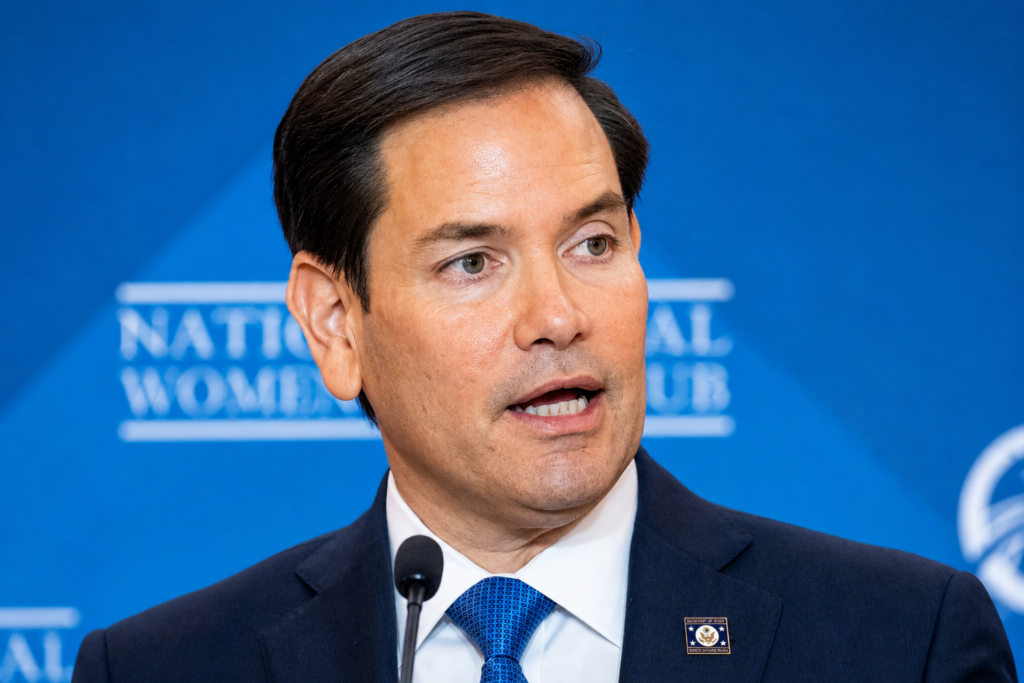
The United States has begun routing foreign aid directly to national governments rather than through non governmental organisations, a policy shift led by Secretary of State Marco Rubio that is now being cited in India as it prepares to debate its own amendments to the Foreign Contribution Regulation Act, or FCRA. Home Minister Amit Shah is expected to defend the bill when it comes up in Parliament during the ongoing Monsoon Session.
The convergence of the two developments, one in Washington and one in New Delhi, has placed renewed scrutiny on the role foreign funded organisations play in delivering aid and shaping policy within sovereign states.
Washington changes its aid model
The policy originates from the State Department’s America First Global Health Strategy, released in September, which concluded that channelling health assistance through intermediary organisations had produced inefficiency and long term dependency in recipient countries rather than functioning national systems.
The first agreement under the new framework was signed in December, when Rubio concluded a five year Health Cooperation Framework with Kenya. Under the deal, funding for HIV treatment, tuberculosis, malaria and maternal health programmes is transferred directly to Kenyan government bodies, including the Social Health Authority and the Kenya Medical Supplies Agency, rather than through international contractors or non profit intermediaries.
Rubio has described the change as a deliberate break from prior practice. “That is the model that we are breaking. We are not doing this any more,” he said, referring to what he termed the NGO industrial complex. He has also framed the policy as a long term capacity building measure, stating that the goal is for partner nations to “build their own national health systems, so that eventually they no longer are dependent on foreign aid.”
Oversight concerns from aid groups
The shift has drawn criticism from former USAID officials and humanitarian organisations, who argue that transferring funds directly to governments, some with limited financial oversight infrastructure, increases the risk of mismanagement. The concern is compounded by the dismantling of USAID earlier in the year, which removed much of the institutional capacity previously used to monitor how aid funds were spent.
Tom Hart, chief executive of InterAction, an alliance representing 170 aid organisations, has said that member groups are now facing financial strain because they can no longer access previously approved funding through systems that were taken offline. According to the organisation, roughly forty percent of its members had relied on USAID financing.
India draws a parallel
In India, the American policy shift has been received by government supporters as validation of arguments made since 2020, when FCRA rules were last tightened, that some foreign funded organisations operate with insufficient transparency and, in certain cases, act against the interests of the state. Rubio’s characterisation of an aid economy that bypasses national governments mirrors language Indian officials have used in defending stricter FCRA oversight, and the comparison has circulated widely following renewed attention to Rubio’s December statement.
The two policies are not directly analogous. The US measure concerns how Washington disburses its own aid budget abroad, while the FCRA governs the inflow of foreign contributions to organisations operating inside India. The common thread cited by observers is a shared argument that unregulated intermediary organisations reduce state control and accountability over how funds are used.
What the FCRA amendment bill contains
The Foreign Contribution Regulation Amendment Bill, 2026, introduced in the Lok Sabha on March 25, represents the most substantial revision to India’s foreign funding law since 2020. It proposes establishing a Designated Authority to manage the funds and assets of organisations whose FCRA registration is cancelled, surrendered or allowed to lapse, with provisions for administrative review and judicial appeal.
The bill also proposes reducing the maximum prison term for FCRA violations from five years to one and revising procedures for investigations involving state agencies. According to government data presented during the debate, approximately sixteen thousand organisations currently hold active FCRA registration, while more than thirty seven thousand have had registrations cancelled or allowed to lapse since 2011. Annual inflows through the FCRA framework have averaged roughly eighteen thousand six hundred crore rupees in recent years.
Union Minister Kiren Rijiju, responding to concerns raised by faith based organisations during a visit to Kerala, said the government would address misunderstandings surrounding the bill. “Violations will invite strict action, but organisations working for the country’s welfare will not be disturbed,” he said.
Parliament’s narrow window
The bill was previously deferred in March following opposition objections and returns to a Monsoon Session already disrupted by unrelated protests. The session is scheduled to conclude on August 13, and Parliamentary Affairs Minister Kiren Rijiju has confirmed there are no plans for an extension, leaving the government a limited period to secure passage.
Shah is expected to lead the government’s defence of the bill if it is taken up for debate. Opposition parties and several NGOs continue to argue that the proposed Designated Authority would concentrate excessive discretionary power over foreign funded organisations, while government officials maintain the changes are necessary to address gaps identified over fifteen years of implementation.
Outlook
Whether the bill reaches a vote before the session ends or is deferred again for further consultation remains unresolved. In Washington, the government to government aid model is expected to expand beyond Kenya to additional partner countries in the coming months, according to State Department officials. Both developments are being closely watched as indicators of how governments are recalibrating the balance between state control and independent civil society activity in the delivery of aid and the regulation of foreign funding.
Analysts tracking both processes note that the outcomes are unlikely to be settled quickly. In the United States, the expansion of direct government funding will depend on how the initial Kenya framework performs and whether Congress raises further objections over oversight. In India, the FCRA bill’s fate will be shaped by the level of opposition resistance in the remaining days of the Monsoon Session and by how the government responds to continued objections from religious and civil society organisations. Both processes are expected to remain under close observation from international donors, rights groups and foreign governments with an interest in how aid and funding regulations evolve in each country.


