

A fragile ceasefire between the United States and Iran has come under immediate strain after US President Donald Trump accused Tehran of launching four one-way attack drones at commercial ships transiting the Strait of Hormuz, one of the world’s most strategically critical waterways. Trump said one drone struck a cargo vessel while three others were intercepted, calling the attack a “foolish violation” of the truce reached only days ago. The incident has reignited fears of military escalation in the Gulf, a region central to global oil supplies and maritime trade, while exposing the deep mistrust that continues to define US-Iran relations despite the temporary pause in hostilities.
The reported strike comes at a delicate moment. The ceasefire, brokered after weeks of direct and indirect confrontation involving Iran, Israel and US forces, was intended to prevent further attacks on shipping lanes and reduce the risk of a wider regional conflict. Instead, the latest incident has pushed that agreement into uncertainty, with Washington warning of consequences and Tehran defending its authority over maritime routes in the region.
Trump’s warning
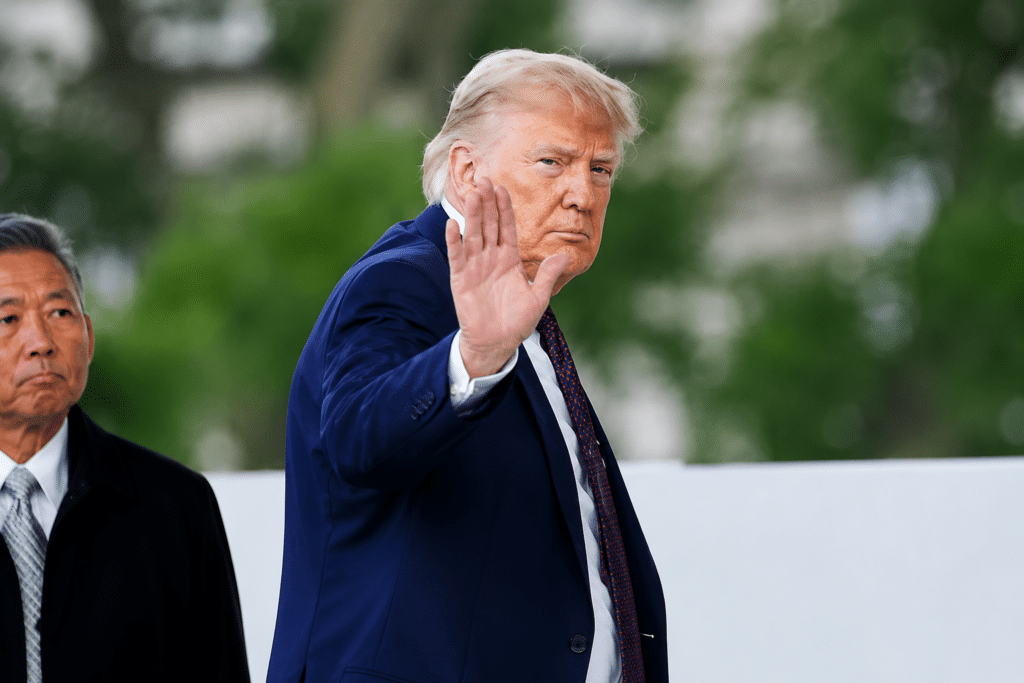
President Trump made the allegation in a post on Truth Social, saying Iran had launched “at least four” drones at ships passing through the Strait of Hormuz. According to Trump, one of the drones “solidly hit” the upper deck of a cargo vessel, while US or allied defensive systems intercepted the other three.
“Iran has violated the agreement in a very foolish way. Four drones were launched. One hit a ship. Three were taken out. This should not have happened,” Trump wrote.
The vessel was later identified as Ever Lovely, a Singapore-flagged cargo ship owned by Taiwan-based Evergreen Marine. The company confirmed the ship sustained damage to the bridge windows on its starboard side but remained operational. No injuries were reported among the crew.
Trump did not announce immediate retaliation, but his language signaled growing frustration within the White House over what it views as a direct challenge to the ceasefire framework. Senior US officials have reportedly linked the drones to Iranian-controlled launch points along the coastline, though no public evidence has yet been released.
The strike marks the first significant maritime incident since the ceasefire came into effect, making it a key test of whether the truce can survive even its earliest phase.
The ship at the centre
The Ever Lovely was not moving through a standard shipping lane when it was hit. According to regional shipping intelligence reports, the vessel was part of a temporary US-Oman backed humanitarian corridor created to allow dozens of commercial ships stranded during recent fighting to leave the Gulf safely.
That corridor has become a major source of dispute.
Iran had warned earlier this week that vessels using routes not coordinated with Tehran would not be guaranteed safe passage. Officials in Tehran argued that any alternative corridor undermined Iranian maritime authority in nearby waters.
That warning has now taken on greater significance.
The fact that Ever Lovely was using one of these alternative routes has led analysts to suggest the vessel may have been deliberately targeted as a message to both Washington and regional allies. The strike also raises questions over whether commercial operators can trust newly arranged routes if they fall outside Iranian-approved channels.
Evergreen Marine said the vessel would continue its journey after emergency repairs, but maritime experts say the attack has increased anxiety across the shipping sector.
Why Hormuz matters
The Strait of Hormuz is one of the most important maritime chokepoints in the world. Nearly 20 percent of global oil and gas shipments pass through the narrow waterway every day, connecting producers in the Gulf to markets in Asia, Europe and beyond.
Even limited disruption in Hormuz can have global consequences.
In previous crises, attacks on tankers or threats to block the strait have caused oil prices to surge and insurance costs to rise sharply. This latest incident follows months of heightened tension in the Gulf, where Iranian naval units, US warships and regional forces have all maintained an unusually high operational tempo.
The ceasefire had briefly reduced fears of open conflict. Shipping firms had begun restoring routes, and energy traders were cautiously stabilising their outlook.
But the drone strike has reversed much of that optimism.
Several shipping companies are now reassessing transit schedules, while security advisers have urged vessels to increase defensive readiness while passing through the region.
The International Maritime Organization also temporarily paused evacuation operations for stranded vessels after the attack, underlining the seriousness of the security situation.
Iran’s response
Iran has not formally claimed responsibility for the strike, but officials have strongly defended Tehran’s right to oversee maritime movement near its coast.
Deputy Foreign Minister Kazem Gharibabadi said Iran would continue protecting what it considers its strategic waters and rejected outside interference.
“Security in this region cannot be dictated by outsiders. Iran will continue to safeguard its waters and interests,” he said.
Iranian officials have repeatedly argued that the presence of foreign military forces in the Gulf has contributed to instability rather than reducing it. Tehran maintains that alternative shipping routes arranged without Iranian approval amount to a violation of regional security understandings.
The United States and its allies reject that position.
Washington insists the Strait of Hormuz remains an international waterway where freedom of navigation is protected under international law. This legal and strategic disagreement has been at the heart of repeated stand-offs between both countries over the past decade.
The latest attack has brought that dispute back into sharp focus.
What happens next
The future of the ceasefire now appears uncertain.
US Secretary of State Marco Rubio warned that any attempt by Iran to threaten commercial shipping would provoke a serious response.
“If Iran threatened or blocked ships in the strait, then we’re going to have a problem,” Rubio said.
His statement suggests Washington is preparing for possible diplomatic, economic or military action if further attacks take place.
Financial markets reacted quickly to the incident. Brent crude rose in early trading as fears of wider disruption spread, before falling more than 3 percent later in the day as investors judged the attack to be isolated and not yet a sign of full-scale war.
But the risk remains.
US naval patrols in the Gulf remain at elevated levels, while shipping insurers are expected to increase war-risk premiums for vessels entering Hormuz.
For now, the waterway remains open. But with one commercial ship damaged, evacuation operations paused and both Washington and Tehran hardening their positions, the latest drone strike has turned the Strait of Hormuz back into one of the world’s most dangerous flashpoints.
What happens in the coming days may determine not only the future of the ceasefire, but the stability of global trade and energy markets far beyond the Gulf.


