

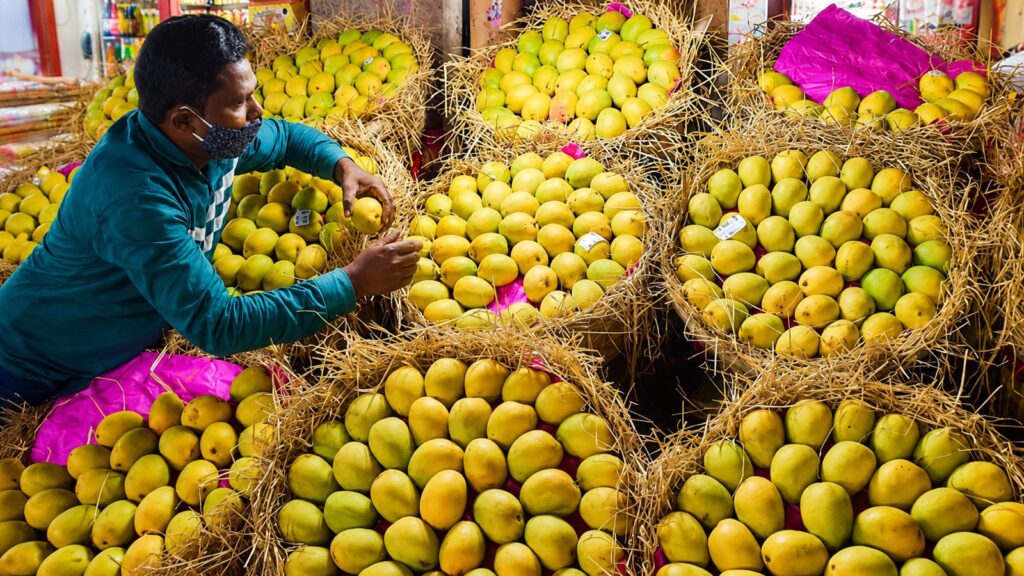
India’s mango trade with Japan has suffered its biggest disruption in two decades after Tokyo suspended imports of fresh Indian mangoes for the 2026 season, citing deficiencies in quarantine and pest-control procedures at Indian treatment facilities.
The suspension affects premium Indian varieties including Alphonso, Kesar, Langra and Banganapalli during the peak April-to-June export window. The decision has triggered concern across India’s agricultural export sector because Japan is regarded as one of the world’s strictest food-import markets.
The development marks the first major restriction imposed by Japan on Indian mangoes since 2006, when Tokyo lifted an earlier two-decade ban linked to fruit fly infestations.
The Trigger
Every year before the mango export season begins, Japan dispatches quarantine officials to India to inspect Vapour Heat Treatment facilities, commonly known as VHT plants. These centres are mandatory under the bilateral export agreement between India and Japan.
The treatment process is designed to eliminate pests and fruit fly larvae without using chemicals. Mangoes are exposed to controlled heat and humidity conditions to ensure they meet Japan’s phytosanitary standards before export.
According to multiple reports, Japanese quarantine inspectors visited a VHT facility in Rehmanpur, Uttar Pradesh, in March 2026. During the inspection, officials reportedly identified deficiencies in fumigation systems and operational disinfection protocols.
The Yokohama Plant Protection Association later informed importers that mango shipments carrying Indian inspection certificates issued on or after March 25, 2026, would no longer be accepted. The association further stated that imports would remain suspended until operational standards improved.
Japan follows one of the world’s toughest quarantine frameworks and maintains a zero-tolerance approach toward invasive agricultural pests, particularly fruit flies, which are considered a major biosecurity threat to domestic farming systems.
Neither Indian authorities nor Japanese regulators have publicly disclosed the complete technical findings behind the suspension.
A History Repeating Itself
The suspension has revived memories of Japan’s earlier ban on Indian mangoes that began in 1986. At the time, concerns surrounding fruit fly infestations led Tokyo to completely halt imports from India.
That restriction remained in place for nearly 20 years before being lifted in 2006 after prolonged scientific studies, pest surveys and diplomatic negotiations between the two countries.
The reopening of the Japanese market was viewed as a major breakthrough for India’s agricultural export industry. India subsequently upgraded quarantine infrastructure and established several Vapour Heat Treatment plants to comply with Japanese standards, beginning with the Tirupati VHT facility in 2007.
Following the reopening, Japan approved imports of Alphonso, Banganapalli, Kesar, Langra, Chausa and Malika mangoes from approved growing regions across Andhra Pradesh, Gujarat, Maharashtra, Uttar Pradesh and West Bengal.
For nearly two decades, Indian mangoes secured a premium presence in Japanese supermarkets and speciality fruit markets where consumers paid significantly higher prices for imported Indian varieties.
The latest suspension is therefore being viewed not merely as a seasonal disruption, but as a setback to years of regulatory coordination and export trust-building between the two countries.
Exporters Raise Questions
The suspension has also exposed growing tensions within India’s mango export industry over Japan’s inspection standards and treatment requirements.
Some exporters questioned whether the restrictions were entirely technical or whether broader commercial interests were influencing the process.
“There is a completely new treatment system to increase the quality of Indian mangoes. If only Japanese-made systems are approved, then it raises questions about monopoly and diplomacy rather than technical compliance,” Uttar Pradesh-based exporter Akram Baig told ThePrint.
Baig, who exported around 2.5 tonnes of mangoes to Japan in 2025, also questioned why multiple facilities were affected simultaneously.
“How can every facility’s mangoes be rejected? It almost seems as though the inspection team arrived with the intention of failing these facilities regardless of their actual performance,” he said.
Exporters have also pointed to the absence of publicly released technical findings from Japanese authorities regarding the deficiencies identified during inspections.
At the same time, industry groups confirmed that discussions are underway between Indian officials and Japanese authorities.
However, with the export season already nearing its final phase, industry stakeholders believe any immediate reversal of the suspension remains unlikely.
A Difficult Season
The timing of the suspension has intensified pressure on growers already facing one of the most difficult mango seasons in recent years.
Several mango-producing regions across India have reported lower yields because of extreme heat and erratic weather conditions associated with the El Niño climate pattern.
In Maharashtra’s Alphonso-producing belt, government-backed surveys reviewed by Reuters estimated crop losses of between 85 and 90 percent in parts of Devgad, one of the country’s most important Alphonso-growing regions.
Officials linked the losses to unusual temperature fluctuations during flowering months and extreme heat later in the season, which damaged fruit quality and yield.
“If we don’t deliver on our orders, the big clients will not return next year,” horticulturist Komal Walke told Reuters after her family’s orchards produced almost no Alphonso mangoes this season.
The export disruption has added another layer of uncertainty for growers and exporters already struggling with declining output and volatile freight costs.
Exporters reported that air cargo charges for Gulf shipments had more than doubled because of geopolitical instability and disruptions linked to the Iran conflict.
Some consignments originally intended for export markets have now been redirected into domestic markets, increasing supply pressure despite reduced overall production.
“The economy in this region is sustained by mangoes and fishes,” carton manufacturer Sanjay Nare told Reuters. “Without our seasonal mangoes in summer, we have very little else.”
Why Japan Matters
Japan is not India’s largest mango buyer by volume. The United States, the United Arab Emirates, the United Kingdom, the Netherlands and Saudi Arabia import larger quantities of Indian mangoes.
Yet Japan remains one of the most strategically important destinations because of its premium pricing structure and exceptionally strict food-safety standards.
According to reports, India exported nearly two million dollars’ worth of mangoes to Japan last year, particularly Gujarat’s Kesar variety. Trade estimates also valued exports of fresh and processed mango products to Japan at around 1.54 million dollars during the 2025-26 period.
Access to the Japanese market has long been viewed as an international benchmark for agricultural quality assurance. Exporters say acceptance into Japan helps strengthen credibility in other high-value markets.
India remains the world’s largest mango producer, generating nearly 28 million metric tonnes annually. According to APEDA, the country is home to nearly 1,000 mango varieties grown across tropical and subtropical regions.
Mangoes also hold deep nutritional and commercial importance within India’s agricultural economy. APEDA states that a single mango can provide up to 40 percent of daily dietary fibre requirements and contains high levels of potassium, beta-carotene and antioxidants.
Despite India’s massive production scale, only a small portion of total output is exported internationally. Yet overseas markets remain financially important because export-grade mangoes generate significantly higher returns for growers and traders.
Uncertainty Ahead
There is currently no official timeline for the restoration of Indian mango exports to Japan.
The suspension has renewed scrutiny over India’s agricultural export infrastructure, regulatory oversight and compliance enforcement at treatment facilities responsible for meeting international phytosanitary standards.
The episode has also highlighted the fragility of global agricultural trade, where even minor procedural lapses can disrupt export corridors built over decades.
For India’s mango exporters, the 2026 season now stands as one of the most difficult periods in recent years. Climate-linked crop losses, rising freight costs, geopolitical shipping disruptions and renewed quarantine restrictions have collectively placed pressure on a sector that depends heavily on precision, timing and international confidence.
Twenty years after India regained access to the Japanese market, one inspection has once again altered the trajectory of one of the country’s most globally recognised agricultural exports.


