

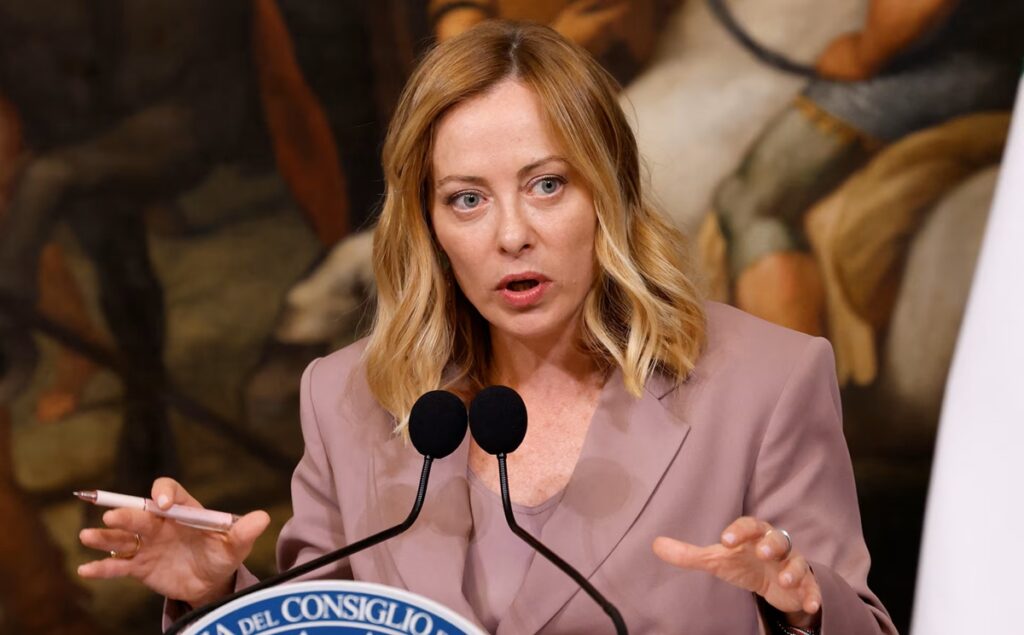
Tensions between Giorgia Meloni and Donald Trump have escalated into a significant diplomatic dispute, moving beyond rhetoric into questions of war strategy, nuclear risk, and the role of religious authority. The disagreement, which has unfolded through a series of public statements and sharp exchanges, reflects a growing divergence between Washington and key European allies at a moment of heightened global instability. It also signals a shift in the political dynamics that once underpinned strong ideological alignment between the two leaders, raising concerns among diplomats about the future coherence of Western policy on major international crises.
What began as a disagreement over remarks directed at Pope Leo XIV has developed into a broader test of Western unity amid the ongoing Iran conflict.
Pope Clash
The dispute was sparked after Trump criticised Pope Leo XIV for opposing the Iran war and urging restraint. His remarks, widely circulated, questioned the Pope’s authority on geopolitical matters and drew sharp reactions across Europe. The controversy intensified further after the circulation of provocative imagery linked to Trump, which critics said disrespected religious sentiment and inflamed tensions with the Vatican.
Meloni responded firmly, defending the Pope and distancing herself from Trump’s comments. “The attacks against the Holy Father are unacceptable,” she said, underlining the Vatican’s moral standing in global debates. Officials in Rome indicated that her remarks reflected both institutional respect for the papacy and concern over the tone of international political discourse.
The Pope maintained his position, reiterating calls for peace and humanitarian protection. Vatican sources said he had no intention of stepping back from public engagement on global conflicts, reinforcing the moral dimension of the crisis.
Alliance Strain
The fallout quickly escalated into a direct political confrontation. Trump responded on Truth Social, expressing shock at Meloni’s stance and accusing her of failing to recognise the threat posed by Iran. He suggested that her position risked allowing Iran to acquire nuclear weapons that could endanger European nations, including Italy.
In the same exchange, Trump argued that Iran had killed “42,000 protesters” and should not be allowed to obtain nuclear capability, framing his position as both a security and human rights imperative.
Meloni, while avoiding personal escalation, made clear that Italy’s decisions would remain sovereign. “Italy makes its choices based on its national interest and its principles,” she said, signalling a firm but measured response.
Diplomatic sources say the exchange reflects a deeper shift in relations, with European leaders increasingly unwilling to align automatically with Washington’s strategic approach.
Iran Divide
At the centre of the dispute lies the Iran conflict, which has exposed clear differences in strategy between the United States and key European allies. Washington has pushed for broader military and logistical support, while Rome has opted for a more restrained approach.
The Meloni government has declined to allow the use of Italian bases for offensive operations and has limited its role to maritime security and the protection of shipping routes. Officials say the aim is to prevent escalation while maintaining international commitments.
“We support every initiative that guarantees freedom of navigation, but we do not believe in an escalation of the conflict,” Meloni said, outlining Italy’s position.
In a significant policy move following the dispute, Italy also suspended the automatic renewal of a defence cooperation agreement with Israel, signalling a broader reassessment of its strategic posture in relation to the conflict and its allies.
Nuclear Tensions
The disagreement has been further intensified by references to nuclear risk and alliance responsibilities. Trump has framed the Iran crisis in terms of deterrence, warning that failure to act decisively could increase global security threats. He has also criticised NATO allies for insufficient support.
Meloni responded by urging restraint in both rhetoric and policy. “We must lower the tone and act with responsibility,” she said, emphasising the risks of escalation.
In a pointed observation, she added: “Nine countries possess nuclear weapons, but only one has used them in war,” a reference widely understood to highlight the historical consequences of nuclear conflict and the need for caution.
European diplomats say such exchanges risk exposing divisions within NATO at a time of heightened global tension.
Economic Pressure
The dispute is unfolding against a backdrop of economic strain and domestic political pressure. Disruptions in the Strait of Hormuz have affected global oil shipments, contributing to rising fuel costs across Europe and increasing public concern in Italy.
Meloni’s government is also navigating internal political challenges, making stability a central priority. Her defence of the Pope has received broad support across Italy’s political spectrum, with opposition figures backing her stance and criticising Trump’s remarks.
“Respect for our institutions and our values is not negotiable,” Meloni said, reinforcing her position amid growing international scrutiny.
The dispute between Meloni and Trump highlights a broader transformation in Western relations, where shared political alignment no longer guarantees consensus on strategy. As the Iran conflict continues, the ability of allies to manage differences while maintaining cooperation will remain a critical test for global diplomacy.


