

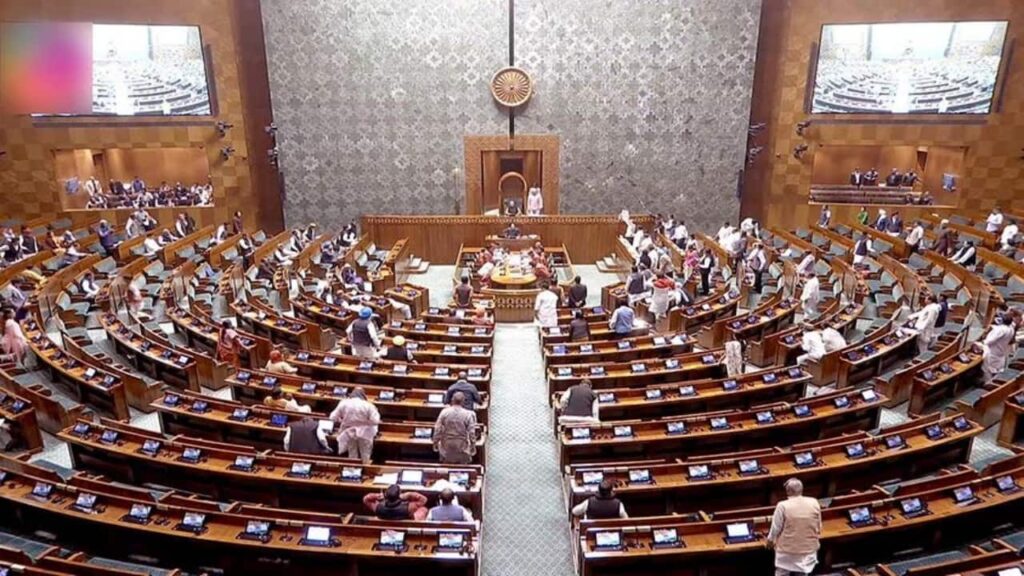
India’s effort to expand women’s representation in its legislatures has entered a new phase of uncertainty after a key proposal linking the implementation of reservation to delimitation failed to pass in Parliament during a special session in April 2026. The development followed days of debate over a set of constitutional and electoral reforms that sought to combine gender representation with a broader restructuring of parliamentary constituencies.
The outcome has drawn national attention not only because of its implications for women’s political participation, but also because it has highlighted deep disagreements over how and when these reforms should be implemented. While the women’s reservation framework already exists in law, the failure of the latest proposal has delayed clarity on its operational timeline and brought the issue of delimitation back to the centre of political debate.
Existing Law and Conditions
The provision for reserving one-third of seats for women in the Lok Sabha and state legislative assemblies was enacted through the Constitution (106th Amendment) Act, 2023. The law marked the culmination of decades of political debate and legislative attempts to increase women’s participation in lawmaking bodies. However, the amendment includes specific conditions for its implementation. It states that the reservation will come into effect only after the completion of a national census and a subsequent delimitation exercise to redraw constituency boundaries based on updated population data.
As a result, although the legal framework for women’s reservation is already in place, it has not yet been implemented in practice. The April 2026 proposal was intended to create a pathway for this implementation by aligning it with upcoming electoral and demographic processes. With the failure of that proposal, the original conditions under the 2023 amendment remain unchanged, and no immediate mechanism has been approved to accelerate the rollout.
Combined Reform Proposal
During the special session, the government introduced a set of interconnected legislative measures designed to address multiple aspects of electoral reform. These included a constitutional amendment aimed at enabling the implementation of women’s reservation after delimitation, the Delimitation Bill, 2026, and changes affecting the representation of Union Territories.
The proposal also included plans to expand the strength of the Lok Sabha, with discussions indicating a significant increase in the number of seats to reflect population changes. The delimitation exercise was intended to redraw constituency boundaries in line with updated demographic data, and the women’s reservation provisions were linked to this process to determine which constituencies would be reserved.
The combined proposal required a two-thirds majority in the Lok Sabha but did not secure sufficient support. Following the vote, the government did not proceed with the delimitation bill, effectively setting aside the broader reform framework for the time being. The outcome marked a legislative setback for the combined approach and left the implementation pathway for women’s reservation unresolved within the existing constitutional framework.
Political Positions
The debate in Parliament reflected differing views on whether women’s reservation should be linked to delimitation and seat expansion.
Rahul Gandhi stated that the law providing for women’s reservation had already been passed and questioned the need to connect its implementation to delimitation. During the debate, he said, “The women’s reservation bill has already been passed. Why are you linking it with delimitation?” He also alleged that the linkage raised broader concerns about electoral restructuring.
Priyanka Gandhi Vadra described the outcome of the vote as a decision taken by Parliament on the combined proposal. Reacting to the result, she said, “This is a victory of democracy,” adding that the House had rejected the attempt to bring the measures together.
Narendra Modi said the government remained committed to increasing women’s representation in legislatures and expressed regret that the proposal did not pass in the House. He also stated that efforts would continue to advance the objective of greater participation by women in political institutions.
Leaders from several regional parties also participated in the debate and raised concerns about the linkage between reservation and delimitation. Their positions reflected broader questions about representation, timing, and the structure of electoral reforms.
Delimitation Debate
Delimitation is a constitutionally mandated process that redraws electoral constituencies based on population data to ensure balanced representation. The next delimitation exercise is expected to take place after the completion of a fresh census, which has not yet been conducted. The issue has gained prominence because of its potential impact on the distribution of parliamentary seats among states.
States with higher population growth are expected to gain a larger share of seats, while states with slower population growth may see a relative decline in representation. This has led to concerns among several political parties about how delimitation could affect the balance of representation across regions.
Mamata Banerjee said the issue has implications for how representation is structured and highlighted concerns about its impact on different states. The discussions in Parliament reflected these concerns, particularly in relation to how updated population figures could influence future seat allocation and the composition of the Lok Sabha.
The linkage of women’s reservation to this process has added another dimension to the debate, as it connects gender representation with broader questions about electoral distribution and demographic change.
The Road Ahead
Following the outcome in the Lok Sabha, the government has not advanced the delimitation proposal further in the current session. The combined reform package introduced during the special sitting remains unapproved, and no revised proposal has yet been placed before Parliament.
The women’s reservation law enacted in 2023 continues to remain in force. Its implementation is still tied to the completion of a national census and the subsequent delimitation exercise, as originally specified in the amendment. In the absence of new legislative changes, this sequence remains the only approved pathway for bringing the reservation provisions into effect.
No specific timeline has been formally announced for the next steps. However, earlier indications have linked the process to the period before the next general elections, depending on when the census is conducted and delimitation is completed.
The developments in April 2026 have therefore left the legal framework intact but the implementation timeline uncertain, with further legislative or administrative action required to move the process forward.


