


Cyclone Montha has intensified into a severe cyclonic storm over the southeast Bay of Bengal and is rapidly advancing toward the Andhra Pradesh coast. The India Meteorological Department (IMD) has warned that the storm will make landfall between Machilipatnam and Kalingapatnam on October 28 evening, packing sustained winds of 90–100 km/h, gusting up to 110 km/h. Heavy to very heavy rainfall is expected in coastal Andhra Pradesh, Telangana, and Odisha, with authorities on high alert across the region.
The IMD has also predicted storm surges, flooding, and potential damage to crops, houses, and power infrastructure. Officials have urged residents in vulnerable zones to move to safer areas as Montha continues its approach toward the coast.
Andhra Pradesh Braces for Impact
Andhra Pradesh is at the epicenter of Montha’s fury. Districts including Kakinada, Visakhapatnam, Srikakulam, Vizianagaram, East and West Godavari, Krishna, and Guntur have been placed under red alert. The state government has activated disaster response teams, relocated more than 50,000 residents from low-lying areas, and set up 1,900 relief camps equipped with food, water, and medical aid.
Fishermen have been strictly advised not to venture into the sea, as waves as high as 4.7 meters have been forecast. The South Central Railway has canceled or diverted several trains, while flight operations in Visakhapatnam and Vijayawada are being closely monitored. Schools and colleges in coastal districts remain closed until further notice.
The storm’s outer bands have already caused heavy rain in Visakhapatnam and Kakinada, flooding roads and disrupting power supply in several localities.
Chennai and Tamil Nadu Experience Spillover Effects
Although the main impact is centered on Andhra Pradesh, Chennai and parts of northern Tamil Nadu have already felt Montha’s outer influence. The city recorded 20–70 mm of rainfall, leading to school closures and localized flooding. Traffic congestion was reported across major roads, but the IMD expects drier conditions to return once the cyclone moves inland.
Meteorologists note that the vast size of Montha means its rainbands will continue to affect parts of Tamil Nadu, Telangana, and coastal Karnataka even after landfall, before gradually weakening over central India.
Widespread Red Alerts Across Southern and Eastern States
Beyond Andhra Pradesh, Odisha, Telangana, and Jharkhand are also bracing for the storm’s aftermath. Odisha’s southern districts—Malkangiri, Koraput, Rayagada, Ganjam, and Nabarangpur—are under red and orange alerts due to predictions of extremely heavy rainfall. In Telangana, districts such as Khammam, Nalgonda, and Warangal could witness intense showers and squally winds.
The IMD has further warned that Jharkhand might experience heavy rainfall between October 30 and 31, as the weakened system travels northwest.
Agriculture and Economy on the Line
Cyclone Montha poses a severe threat to the agriculture sector in Andhra Pradesh. The state’s agriculture department estimates that over 6.32 lakh hectares of paddy and cotton crops may suffer due to high winds and waterlogging. Low-lying delta regions near the Godavari and Krishna rivers are especially vulnerable to flooding and crop loss.
Officials have advised farmers to harvest mature crops early and move produce to safer storage facilities. Post-cyclone compensation and damage assessments are expected once the storm subsides.
Emergency Response and Safety Guidelines
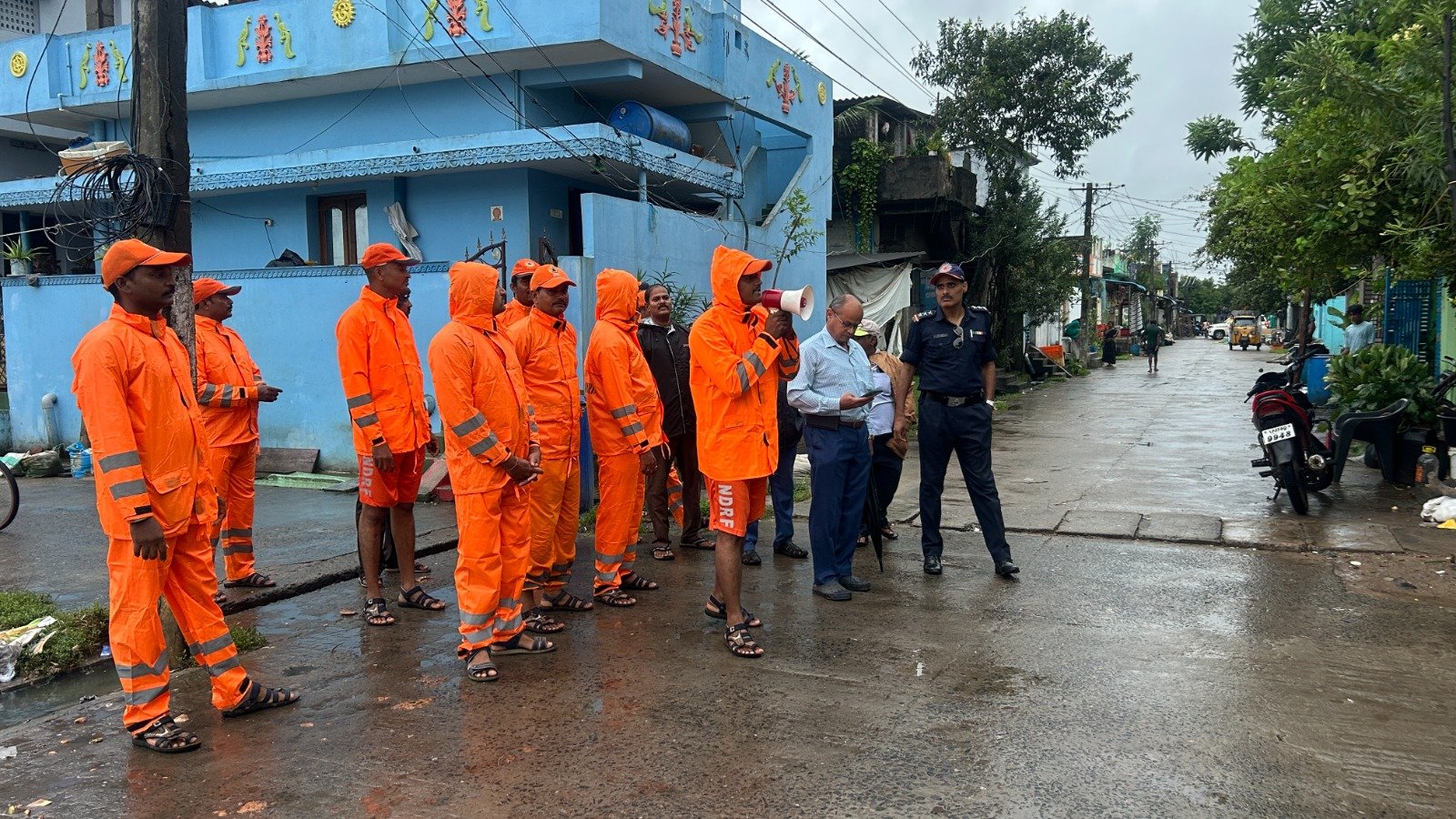
The National Disaster Response Force (NDRF) and State Disaster Response Forces (SDRF) have deployed rescue units along the coast, equipped with boats, generators, and emergency kits. Medical teams are stationed in high-risk districts, while control rooms are operating round the clock.
Residents have been advised to:
- Follow official evacuation instructions without delay.
- Avoid traveling near beaches, rivers, or flooded roads.
- Keep emergency supplies, torches, and important documents ready.
- Stay tuned to IMD advisories and local news updates for real-time alerts.
Authorities warn that power disruptions and uprooted trees are likely, and citizens should exercise extreme caution during and after landfall.
Climate Scientists Warn of Rising Cyclone Intensity
Experts link Cyclone Montha’s rapid intensification to the warming Bay of Bengal, which provides abundant heat and moisture to fuel storms. Climate studies show an increasing trend of late-season cyclones in the region, posing growing risks to India’s eastern coastline.
Montha underscores how climate change is amplifying weather extremes, threatening densely populated coastal zones and critical infrastructure.
Next 24 Hours Critical for Coastal States
The next 24 hours will be crucial for millions living along India’s east coast as Cyclone Montha moves closer to landfall. With wind speeds expected to touch 110 km/h and the possibility of torrential rains, authorities are racing against time to secure vulnerable zones and minimize damage. Coastal Andhra Pradesh, Telangana, and Odisha remain on high alert as flood risks rise and infrastructure faces strain. The IMD has warned that the storm’s intensity could peak during the evening hours, making it vital for residents to stay indoors, avoid unnecessary travel, and follow official advisories closely. Every precaution taken now could save countless lives!


