

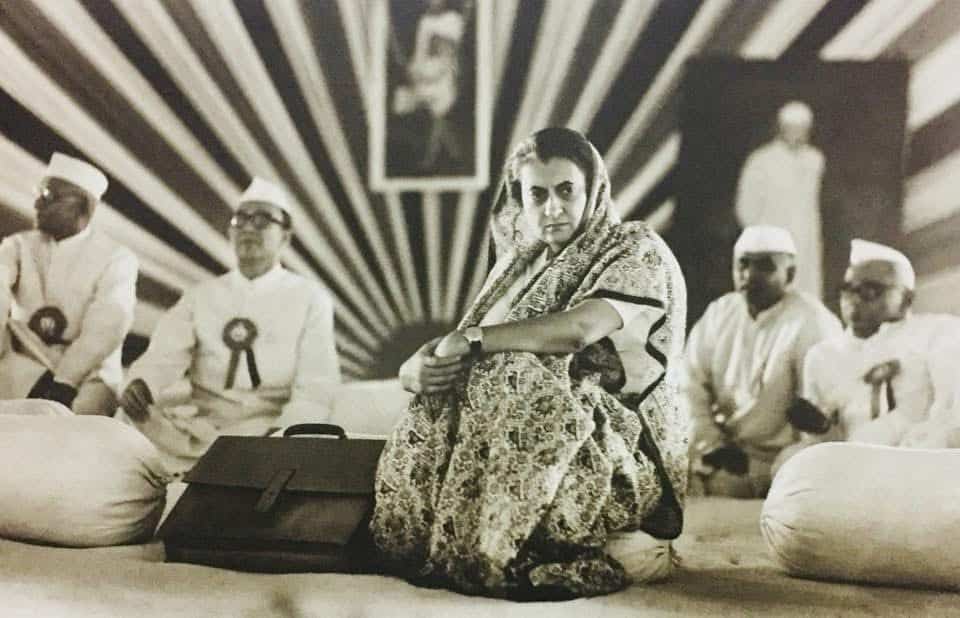
Indira Gandhi is remembered today on her birth anniversary as a leader whose political conviction, national vision and global influence continue to shape India’s identity even decades after her passing. Born on November 19, 1917, she emerged from the heart of India’s freedom movement to become the nation’s first and only woman Prime Minister, a milestone that redefined the possibilities of Indian leadership.
Her long journey in public life was marked by historic decisions, groundbreaking reforms, uncompromising resolve and a remarkable ability to guide India through moments of profound challenge and national transformation.
Serving from 1966 to 1977 and again from 1980 to 1984, Indira Gandhi’s tenure included some of the most defining chapters in India’s post-independence history. From steering the Green Revolution that strengthened India’s food security to navigating complex geopolitical crises that tested India’s strategic maturity, she proved her capability to lead with clarity and firmness.
Her leadership style, shaped by bold foreign policy choices, national security priorities and a strong central vision, earned her the global title of the Iron Lady of India — a tribute to her enduring influence on India’s political and strategic evolution.
A Timeline Marked by Defining Decisions
Indira Gandhi’s political rise was influenced by her early exposure to national affairs as the daughter of Jawaharlal Nehru. After serving as Congress President and later as Information and Broadcasting Minister, she took office as Prime Minister in 1966.
Her early governance was transformative. The Green Revolution moved India towards agricultural independence, while bank nationalisation reshaped the financial framework to empower the masses.
Her dramatic political comeback in 1980, after her 1977 electoral loss, showcased her resilience and her unmatched ability to reconnect with the electorate.
The Iron Lady in the Bangladesh Liberation War
The 1971 Bangladesh Liberation War stands as the cornerstone of Indira Gandhi’s legacy. With millions of refugees pouring into India following atrocities in East Pakistan, she launched an assertive global diplomatic campaign to expose the crisis and rally international support.
Her government extended unwavering support to the Mukti Bahini, strengthened military strategy and led India to a historic victory on December 16, 1971, resulting in the creation of Bangladesh.
This moment established India as a regional power and highlighted Indira Gandhi’s blend of humanitarian leadership and sharp geopolitical foresight.
Eye to Eye With the United States
Indira Gandhi’s foreign policy was defined by firmness and strategic independence. During the 1971 conflict, India faced pressure from the United States, which supported Pakistan. The movement of the USS Enterprise into the Bay of Bengal was seen as an attempt to intimidate India.
But Gandhi did not yield. She strengthened India’s ties with the Soviet Union and maintained a steadfast focus on protecting India’s sovereignty. Her ability to stand eye to eye with a global superpower cemented her global reputation as a fearless and uncompromising leader.
Strategic Modernisation and Nuclear Capability
In 1974, she authorised India’s first nuclear test, Pokhran I (Smiling Buddha). Conducted under deep secrecy, the test showcased India’s technological advancement and nuclear ambitions, marking a turning point in India’s strategic posture.
This decision underlined her commitment to India’s long-term security, signaling that India would not be dictated by global power dynamics.
PM Narendra Modi’s Tributes to Indira Gandhi
Prime Minister Narendra Modi has often acknowledged Indira Gandhi’s contributions on her birth anniversary. His tributes have highlighted her service to the nation, her leadership in difficult moments and her role in shaping India’s political and global direction.
Modi’s remarks reflect a broader principle that the contributions of former Prime Ministers, including Indira Gandhi, remain integral to India’s democratic heritage, regardless of political differences.
A Complex Yet Monumental Legacy
Indira Gandhi’s legacy is powerful, layered and deeply influential. While the Emergency of 1975 stands as a contested chapter, her wider contributions to agriculture, regional security, foreign policy, national reforms and institutional strengthening have left a permanent mark on Indian history.
She redefined the authority of the Prime Minister’s Office, expanded India’s international role and built a political persona defined by courage, charisma and strategic depth.
On her birth anniversary, India salutes Indira Gandhi- the Iron Lady whose courage protected the nation, whose vision transformed its future and whose leadership still echoes as a timeless symbol of India’s strength, resilience and pride!


