

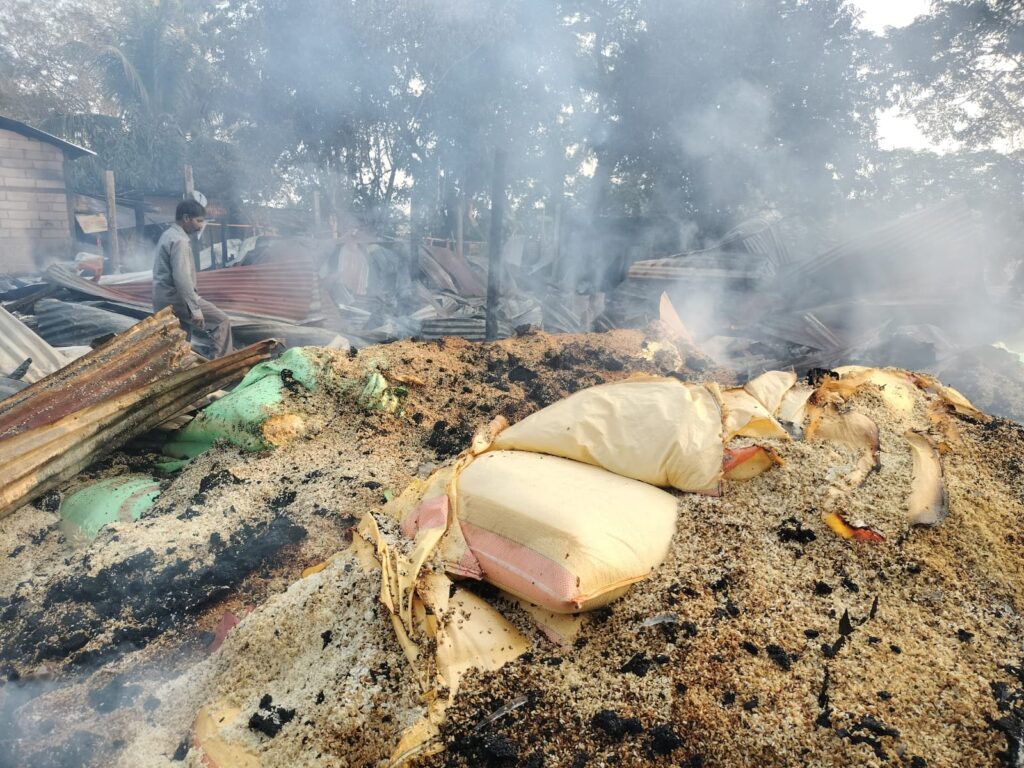
Assam’s hill districts of Karbi Anglong and West Karbi Anglong are witnessing one of the most serious law-and-order crises in recent years as protests over tribal land rights spiralled into deadly violence, police firing, arson and sweeping security restrictions. What began as a peaceful hunger strike by indigenous Karbi groups demanding eviction of alleged encroachers has now exposed deep-rooted tensions over land, identity and governance in a Sixth Schedule region.
The unrest has left two people dead, dozens injured including over 40 police personnel, public and private property destroyed and normal life disrupted across West Karbi Anglong, particularly in Kheroni, the epicentre of the violence.
How the Protests Began
The protests originated from a 15-day hunger strike at Felangpi in West Karbi Anglong, where indigenous Karbi protesters demanded the eviction of non-tribal settlers from Professional Grazing Reserves and Village Grazing Reserves. These lands are constitutionally protected for tribal use and are crucial for grazing, agriculture and sustaining traditional livelihoods.
Protesters accused the administration of failing to act despite repeated petitions and warnings that continued encroachment was shrinking access to land meant exclusively for indigenous communities. As the hunger strike stretched on without concrete assurances, frustration mounted, drawing wider support from nearby villages and tribal organisations.
Eviction of Hunger Strikers Sparks Outrage
Tensions escalated after authorities forcefully removed the hunger-striking protesters from the Felangpi protest site, citing health concerns. While officials described the move as a humanitarian intervention, tribal groups perceived it as an attempt to suppress dissent rather than address demands.
Rumours of detention spread rapidly, triggering spontaneous protests across West Karbi Anglong. Roads were blocked, slogans raised and crowds gathered in defiance, setting the stage for confrontation between demonstrators and security forces.
December 22 Violence in Kheroni
The situation deteriorated sharply on December 22, when violence broke out in the Kheroni area as protesters attempted to intensify their agitation. Demonstrators reportedly tried to take control of a key local bridge, a strategic route connecting several parts of the district.
Security forces moved in to prevent the takeover, leading to fierce clashes. Protesters allegedly attacked police using crude bombs, stones, bows and arrows, forcing authorities to resort to tear gas and rubber bullets to disperse the crowd.
When the situation went out of control, police opened fire.
Police Firing Claims Karbi Protester’s Life

During the clashes, Karbi protester Singthi Timung was killed in police firing, marking a critical turning point in the unrest. His death intensified anger among indigenous groups, who accused the administration of excessive force and insensitivity toward tribal concerns.
The killing led to an immediate escalation in protests, with crowds pouring onto streets across Kheroni and nearby areas, defying prohibitory orders.
Arson and Attack on Political Property
Following the police firing, anger spilled into widespread violence. Protesters allegedly set fire to the residence of Karbi Anglong Autonomous Council Chief Executive Member Tuliram Ronghang, a major political escalation that underscored the intensity of public outrage.
Several shops were torched, motorcycles vandalised and public infrastructure damaged. An ambulance was also destroyed, severely hampering emergency response at a time when injuries were mounting.
Markets shut down abruptly as fires spread, and residents reported panic as smoke filled the streets.
48 Policemen Injured, DGP Hurt While Appealing for Calm
Assam Director General of Police Harmeet Singh confirmed that 48 police personnel were injured during the violence, highlighting the scale of the confrontation. Among the injured was the DGP himself, who was hit by a projectile while personally addressing protesters and urging restraint.
“The government is talking to them, and a date has been set. They have burnt shops, and 48 policemen have been injured until now,” the DGP said, warning that strict legal action would be taken against those involved in violence and arson.
Authorities stressed that force was used only after repeated warnings failed and police positions were attacked.
Death of Suraj Dey Deepens Tensions
The unrest also claimed the life of 25-year-old non-tribal resident Suraj Dey, a specially-abled man who was trapped inside a shop that was set ablaze by miscreants during the violence. His death added a tragic communal dimension to the crisis.
Following his death, fresh protests erupted in Kheroni, with placard-wielding demonstrators blocking roads and demanding justice. Protesters called for the arrest of the main accused, Litsong Rongphar, warning that delays would further inflame tensions.
Appeals for Peace Amid Communal Strain
Amid escalating unrest, some community voices called for restraint. One protester publicly urged Karbi brothers to choose peace, stating that non-Karbis should be allowed to live harmoniously in the district.
Civil society groups and local elders cautioned that continued violence could deepen communal divisions in an already sensitive region, stressing that land disputes should not fracture long-standing coexistence.
Section 163 Imposed, Internet Suspended
In response to the violence, the Assam government imposed Section 163 of the Bharatiya Nyaya Suraksha Sanhita, effectively enforcing curfew-like restrictions across Karbi Anglong and West Karbi Anglong. Public gatherings were banned, and movement was restricted in sensitive zones.
Authorities also suspended mobile internet services to prevent the spread of misinformation and curb mobilisation through social media. While officials defended the move as necessary, residents reported disruptions to daily life, businesses and communication.
Why Land Is at the Core of the Crisis
Land rights lie at the heart of the Karbi Anglong unrest. As a Sixth Schedule area, the district enjoys constitutional protections that empower autonomous councils to regulate land ownership and safeguard tribal identity.
Tribal organisations argue that unchecked encroachment into grazing reserves has steadily eroded these safeguards. For many indigenous communities, the dispute is not merely administrative but existential, tied to survival, culture and political autonomy.
Legal Stalemate Fuels Frustration
Previous eviction efforts by the Karbi Anglong Autonomous Council were stalled due to court stays, creating a legal deadlock. Protesters argue that prolonged delays have emboldened illegal occupation, while administrative inaction has deepened mistrust.
The absence of a transparent, time-bound resolution process contributed significantly to the explosion of anger seen on the streets.
Chief Minister’s Intervention
Chief Minister Himanta Biswa Sarma appealed for calm, urging all sides to respect the court stay on eviction drives and emphasising that any action must follow due legal process.
He announced that tripartite talks involving the state government, Karbi Anglong Autonomous Council and protest representatives will be held on December 26, after protesters agreed to end their hunger strike. The talks are expected to focus on land rights, legal safeguards and long-term solutions.
Impact on Civilians and Local Economy
The violence severely disrupted civilian life. Markets remained shut, transport services were hit and daily wage earners lost income. Fear of renewed clashes forced families indoors, while shop owners faced heavy losses from arson and vandalism.
The destruction of emergency vehicles raised serious concerns about public safety during unrest.
Current Situation on the Ground
As of now, authorities say the situation is under control but remains tense. No major fresh violence has been reported, but security forces continue flag marches and patrols in vulnerable areas, especially around Kheroni.
Restrictions are being reviewed based on ground assessments, with officials urging residents to cooperate and maintain peace.
What Lies Ahead for Karbi Anglong
The Karbi Anglong unrest has laid bare the consequences of unresolved land disputes, legal uncertainty and administrative delays. While violence has subsided for now, the underlying grievances remain.
Whether the district moves toward lasting peace or renewed instability will depend on the outcome of upcoming talks and the government’s ability to balance law enforcement with justice, dialogue and constitutional safeguards.


