

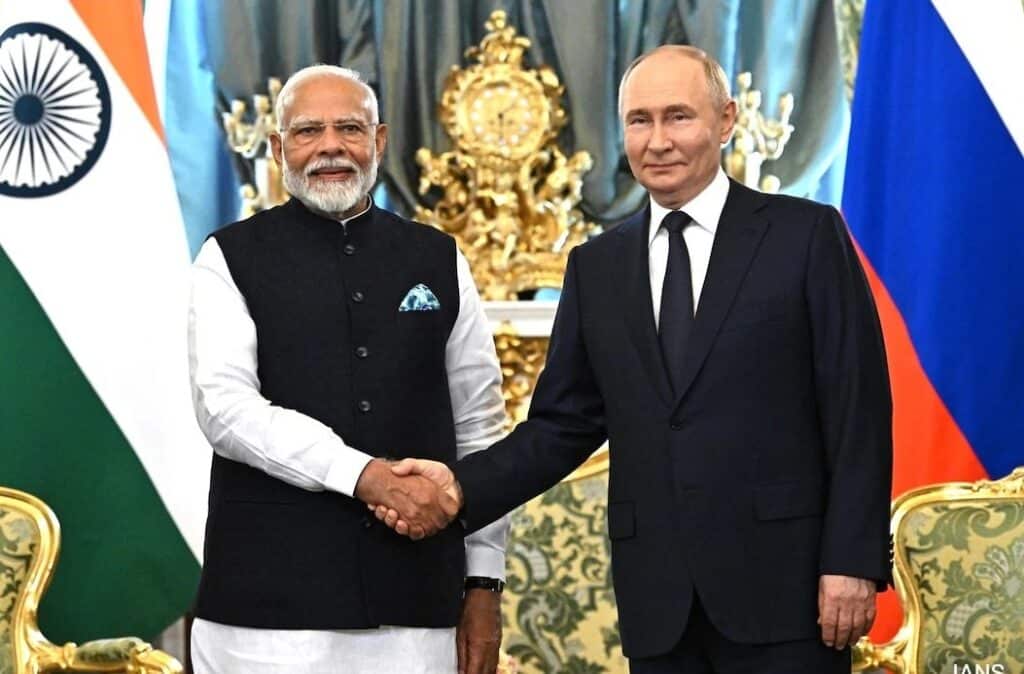
The expiry of the United States’ 30 day sanctions waiver on Russian energy transactions has marked a significant shift in the global energy landscape. The waiver, which had temporarily allowed certain transactions involving Russian oil and gas to proceed with limited restrictions, ended without extension. This has effectively tightened the compliance environment for countries continuing to engage with Russian energy exports.
India, however, has maintained a consistent position. Officials have reiterated that decisions on crude oil and LPG imports will be guided by national interest, with a focus on affordability, availability, and energy security. Government sources have indicated that purchases from Russia will continue where commercially viable.
Russia has reinforced this stance through diplomatic messaging. Ambassador Denis Alipov stated that Moscow would ensure uninterrupted supplies of crude oil and LPG to India under all circumstances, adding that Russia is prepared to meet India’s full energy demand if required.
Prime Minister Narendra Modi has previously underscored that India’s energy policy is driven by the needs of its population, particularly in the context of rising global fuel prices. His position reflects a broader policy framework in which energy access and affordability remain central to economic stability.
Supply lines recalibrated
India’s response to the post waiver environment has been operational as well as strategic. State run refiners such as Indian Oil Corporation, Bharat Petroleum, and Hindustan Petroleum have continued sourcing Russian crude while adapting procurement mechanisms to align with evolving restrictions.
India relies on imports for more than 80 percent of its crude oil requirements, according to data from the Petroleum Planning and Analysis Cell. Within this structure, Russian oil has gained a dominant position since 2022, following a redirection of global oil flows after Western sanctions reduced European demand.
Russian crude, particularly the Urals grade, has been offered at a discount to global benchmarks such as Brent. This pricing advantage, combined with availability, has made it an attractive option for Indian refiners. Industry estimates suggest that Russian supplies could account for close to 40 percent of India’s total crude imports under current conditions.
The mechanics of this trade have also evolved. Indian companies have increasingly relied on alternative payment arrangements, including transactions in national currencies, to reduce exposure to dollar based restrictions. Shipping routes have been recalibrated, and a network of intermediaries, insurers, and tanker operators has adapted to sustain flows despite sanctions.
This reflects not a temporary adjustment but a structural shift in India’s sourcing strategy, shaped by both economic and geopolitical considerations.
LPG supply under strain
While crude oil imports have remained relatively stable, the LPG segment has come under increasing pressure. India consumes approximately 33 million tonnes of LPG annually, with nearly 60 percent of its demand met through imports. A significant share of these imports has traditionally come from the Middle East.
Recent disruptions have exposed vulnerabilities in this system. Supply constraints linked to geopolitical tensions, combined with a decline in domestic production, have tightened LPG availability. This has raised concerns given the fuel’s importance in household consumption.
LPG is a key component of India’s welfare architecture, particularly through schemes aimed at expanding access to clean cooking fuel. The growth in demand has been driven in part by government initiatives that have increased LPG penetration across rural and low income households.
Any disruption in supply therefore has direct implications not only for energy markets but also for social welfare delivery. In response, Indian refiners have begun exploring alternative sourcing strategies.
Hindustan Petroleum Corporation Limited recently issued a rare tender to import LPG from Russia’s Ust Luga port. The cargo includes propane and butane, signalling a shift towards diversifying supply beyond traditional suppliers.
This development indicates that Russia’s role in India’s energy mix is expanding beyond crude oil, positioning it as a potential stabilising source in the LPG segment during periods of disruption.
Hormuz disruption impact
The Strait of Hormuz remains a central factor influencing current supply challenges. As one of the world’s most critical maritime corridors, it facilitates the movement of a large share of global oil and gas shipments. Any disruption in this route has immediate consequences for import dependent countries.
Recent tensions in the region have led to reduced tanker movements, higher freight costs, and increased insurance risks. For India, which sources a majority of its LPG imports from suppliers dependent on this route, the impact has been significant. Import volumes have declined in recent months, reflecting the scale of disruption.
The situation has accelerated India’s diversification strategy. In addition to Russia, Indian companies are exploring alternative supply sources from the United States, Norway, and Canada. However, these options involve longer transit times and higher costs, limiting their short term viability.
Russia’s ability to maintain supply through alternative routes, combined with its willingness to commit volumes, has provided India with a degree of stability. This has reinforced the importance of diversified sourcing in managing geopolitical risk.
Strategic and economic implications
The continuation of Russian energy imports after the expiry of the sanctions waiver reflects a broader strategic calculation by India. The approach is anchored in balancing energy security with economic stability while maintaining diplomatic flexibility.
From an economic perspective, access to discounted crude oil has helped reduce import costs and manage inflationary pressures. Stable fuel prices are critical for sustaining economic growth in a country with high energy demand and significant dependence on imports.
At the same time, ensuring adequate LPG supply remains essential for household consumption and welfare programmes. The move to source LPG from Russia highlights a pragmatic response to immediate supply constraints.
On the strategic front, the India Russia energy partnership has deepened significantly since 2022. Bilateral trade has expanded, with energy forming the core of this engagement. Alternative payment mechanisms and logistical adjustments have enabled continued trade despite sanctions related challenges.
India continues to maintain strong economic and diplomatic ties with Western countries, making its position a careful balancing act. The decision to continue importing Russian energy reflects an effort to preserve strategic autonomy while safeguarding domestic priorities.
Globally, these developments point to an evolving energy order in which supply chains are being reshaped rather than disrupted. The redirection of Russian oil flows towards Asia, particularly India, illustrates how markets adapt to geopolitical constraints.
As global energy demand continues to grow, especially in emerging economies, partnerships based on economic logic and supply reliability are likely to play an increasingly important role. In this context, the India Russia energy corridor is expected to remain a key component of global energy dynamics.


