

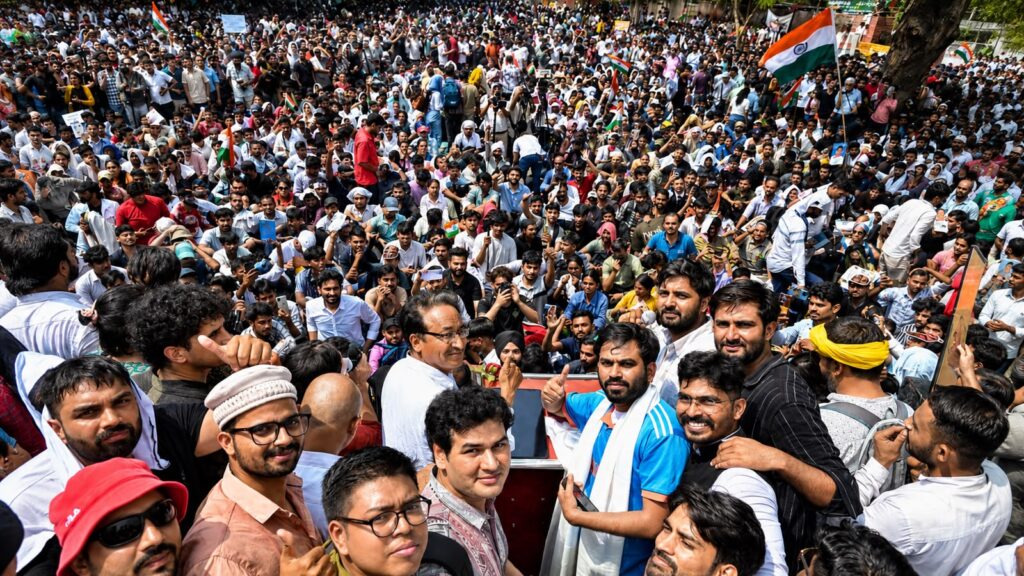
The Cockroach Janta Party (CJP) has announced plans to expand its campaign across India before returning to Delhi for its next major protest, escalating pressure on the government over the NEET UG 2026 paper leak controversy. The announcement comes days after the movement’s June 6 demonstration at Jantar Mantar, where students and supporters demanded the resignation of Union Education Minister Dharmendra Pradhan and called for accountability in India’s examination system.
With a June 13 deadline now in place, the protest movement has moved beyond a single examination controversy into a broader debate over transparency, institutional responsibility and education reforms. The development marks a significant escalation in the campaign, which organisers say will now focus on building support among students, aspirants and young people across multiple states before returning to the national capital.
CJP Takes Protest Nationwide
The key development emerging from the June 6 protest is CJP’s decision to take its campaign nationwide before returning to Delhi for a larger demonstration. Organisers say the next phase will involve outreach programmes, public meetings and coordinated protests aimed at expanding the movement’s footprint beyond the capital and transforming it into a broader national campaign.
Addressing supporters, founder Abhijeet Dipke said the movement would now focus on mobilising students across multiple states and cities. He said growing frustration over examination controversies and accountability issues had created momentum for a wider movement that extends beyond Delhi and resonates with young people nationwide.
“We will mobilize across India before returning to Delhi for our next big protest,” Dipke said.
Describing the June 6 gathering as the beginning of a larger campaign, he added: “This was just a trailer.”
The organisation has given the government until June 13 to respond to its demand for Pradhan’s resignation but has indicated that the agitation will continue beyond the deadline if no action is taken. Organisers say the campaign now centres on examination accountability, student welfare and institutional reform. They maintain that the movement will continue through peaceful democratic means until meaningful action is taken on the concerns raised by students.
From Social Media to Streets
The Jantar Mantar protest marked the first major on-ground mobilisation by the Cockroach Janta Party, which has gained significant traction on social media in recent weeks. The demonstration represented an important test of whether the movement could convert its online popularity into sustained public participation and real-world political engagement.
Dipke travelled from the United States to lead the demonstration, highlighting its importance for the movement. Delhi Police granted permission for the event and deployed additional security personnel around the protest site. Authorities also implemented traffic arrangements and closely monitored the gathering to ensure that the demonstration remained peaceful and orderly throughout the day.
Organisers repeatedly emphasised peaceful participation. Supporters carried copies of the Constitution, flowers and national flags, while volunteers urged demonstrators to maintain discipline and avoid confrontation. The symbolism was intended to project the movement as a constitutional campaign focused on accountability rather than political confrontation.
The movement has also begun formalising its structure through spokesperson appointments and expanded outreach efforts, signalling its transition from an online campaign to a more organised national platform. Supporters believe these developments will help sustain momentum as the organisation expands its activities into multiple states and cities.
Why the NEET Leak Matters
The immediate trigger for the protest was the cancellation of NEET UG 2026 after allegations that examination questions had circulated on Telegram before the test. The controversy quickly became one of the most discussed education issues in the country, drawing reactions from students, parents and education experts.
Around 2.2 million medical aspirants were affected, sparking anger among students and parents across the country. Many candidates had spent months or years preparing for the examination, making the cancellation a major setback for those hoping to secure admission to medical colleges.
However, CJP leaders argue that the issue extends beyond a single paper leak. According to organisers, the controversy reflects wider concerns over recurring examination irregularities, recruitment test controversies and administrative failures that have weakened confidence in India’s education and recruitment systems. They argue that repeated incidents have created uncertainty among students preparing for highly competitive examinations.
The movement has increasingly framed its campaign around accountability and systemic reform, arguing that investigations alone are insufficient to restore public trust. Organisers have called for stronger safeguards, greater transparency and long-term reforms designed to prevent future examination-related controversies.
Wangchuk Backs CJP Protest
Education reform advocate Sonam Wangchuk joined protesters at Jantar Mantar, lending support to the movement and amplifying its message. His participation attracted considerable attention and provided additional visibility to the campaign’s demands for accountability and reform.
“Students deserve a system they can trust,” Wangchuk said while expressing solidarity with those affected by examination controversies.
The government has defended its response, pointing to ongoing investigations, including a CBI probe, and proposed reforms aimed at strengthening examination security. Officials have maintained that those responsible for the leak will be identified and prosecuted. Authorities have also indicated that technological and administrative measures are being considered to prevent similar incidents in the future.
However, protest organisers argue that accountability must extend beyond criminal investigations. The movement has also faced criticism from some BJP leaders, who have questioned its significance, while CJP insists it remains focused on student concerns rather than partisan politics. Organisers maintain that their demands are centred on institutional accountability rather than political confrontation.
What Happens After June 13?
The organisation has already announced a protest in Pune on June 11 and says additional demonstrations are planned across multiple states and cities. These events are expected to serve as the foundation for a broader nationwide campaign in the weeks ahead.
While June 13 remains a key deadline, CJP leaders have made clear that the campaign will continue if their demands are not met. Organisers say they are prepared for a sustained movement rather than a short-term protest centred solely on one issue.
“Our agitation will continue until accountability is fixed,” Dipke said.
What began as anger over a leaked examination paper has evolved into a wider debate about trust in public institutions and the future of India’s education system. With nationwide mobilisation now underway, the coming weeks are likely to determine whether the movement can sustain its momentum beyond Delhi. The outcome could influence broader discussions about examination governance, transparency and public confidence in educational institutions.


