

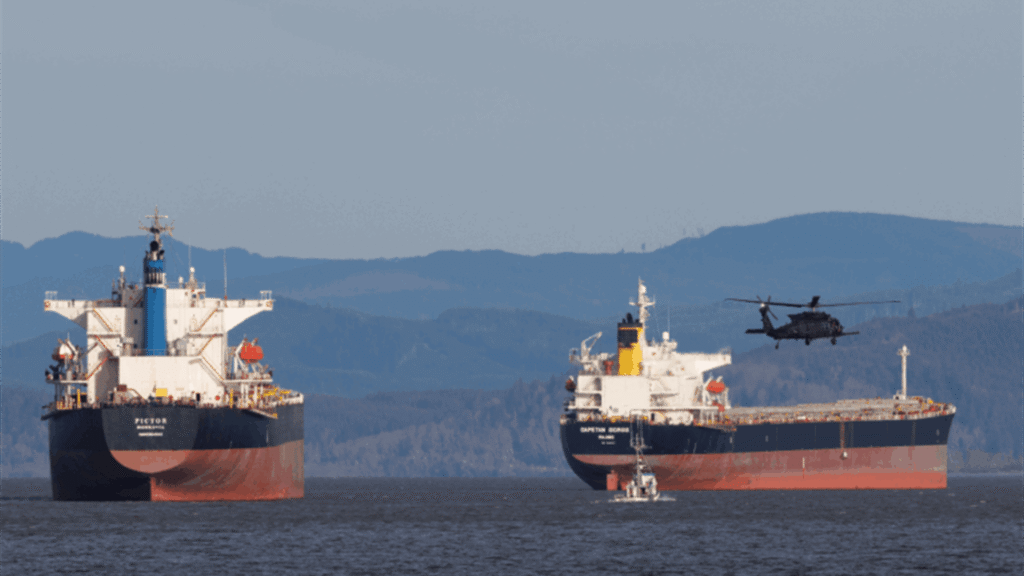
The United States has turned back more than 20 vessels attempting to approach Iranian-linked shipping routes since launching its blockade in mid-April, according to U.S. Central Command, marking a sharp escalation in efforts to control maritime traffic through the Strait of Hormuz.
The move follows the collapse of ceasefire talks in the ongoing Iran conflict, which began on February 28, and comes amid growing concern over the stability of one of the world’s most critical energy chokepoints. Iranian actions, including the reported mining of key shipping lanes and heightened naval activity, have significantly raised risks for commercial vessels attempting to enter the Persian Gulf.
What began as a geopolitical standoff is now rapidly evolving into a disruption with tangible consequences for global trade, energy flows, and economic stability.
Blockade Tightens
U.S. efforts to restrict Iran-linked maritime activity have significantly reduced shipping movement in the region. While the waterway has not been formally closed, the operational environment has deteriorated to the point where commercial shipping is being effectively deterred.
Several vessels have been redirected before entering the Gulf, while others remain anchored outside the region, awaiting clarity on security conditions. Shipping companies and insurers are increasingly reluctant to allow tankers into high-risk zones, leading to a sharp drop in maritime traffic through the corridor.
Industry observers say the blockade represents a shift from diplomatic pressure to direct economic disruption. By limiting access to a critical trade route, the United States is exerting pressure not only on Iran but also on the broader network of energy exports that depend on the passage.
This has created a growing backlog of vessels and cargo, with ripple effects now being felt across global supply chains.
Kuwait Declares Force Majeure
The disruption has forced Kuwait Petroleum Corporation to invoke force majeure on its oil exports, a significant legal step that allows it to suspend contractual obligations under extraordinary circumstances.
The company has formally notified customers that shipments of both crude oil and refined products may be affected, stating that the blockade has hindered its ability to meet contractual commitments. With vessels unable to safely access Gulf export routes, the normal flow of shipments has been severely constrained.
Force majeure declarations are typically reserved for extreme events such as conflict or natural disasters, and Kuwait’s move underscores the seriousness of the current disruption. It signals that the issue is no longer confined to geopolitical tension but has entered the realm of operational breakdown.
However, officials indicate that the declaration is not expected to completely halt exports. Instead, it reflects an attempt to manage contractual risk while navigating unprecedented logistical challenges.
Kuwait produces around 2.6 million barrels of oil per day roughly 3% of global supply making any sustained disruption a significant concern for energy markets.
Tankers Stranded
The crisis is increasingly being driven by physical and logistical bottlenecks rather than political developments alone. Millions of barrels of oil are estimated to be stranded in the region, with a large number of tankers unable to load or depart due to restricted access to the Gulf.
The shortage of available vessels is compounding the situation. As risks increase, fewer ships are willing to enter the region, creating a supply chain bottleneck that is difficult to resolve quickly. Storage facilities are reportedly nearing capacity in some areas, raising the possibility that producers may soon be forced to cut output.
This dynamic highlights the fragility of global energy logistics. Even if production remains steady, the inability to transport oil effectively can create shortages in international markets.
Analysts warn that clearing the backlog will take time, even if tensions ease. Tankers will need to be repositioned, cargoes rescheduled, and shipping confidence restored—a process that could extend the disruption well beyond the immediate crisis.
Markets on Edge
The Strait of Hormuz handles roughly a fifth of global oil and liquefied natural gas flows, making it one of the most strategically vital energy corridors in the world.
Even partial disruption has had an immediate and pronounced effect on markets. Brent crude prices have surged sharply in recent days, reflecting fears that supply constraints could persist or worsen.
The impact is not limited to oil. Qatar has also signalled disruptions to liquefied natural gas shipments, pointing to a broader breakdown in energy exports from the region. Given Qatar’s role as one of the world’s leading LNG suppliers, any sustained disruption could tighten supply conditions in key markets across Asia and Europe.
Market participants say the situation underscores how dependent the global economy remains on stable flows through the Strait of Hormuz. Even limited interruptions can trigger volatility, and prolonged disruption could have far-reaching economic consequences.
Risks Rise
Tensions have intensified further following Iran’s seizure of a U.S.-linked vessel, a move widely seen as retaliation against the blockade. Tehran has accused both United States and Israel of escalating the conflict and destabilising regional trade routes.
U.S. President Donald Trump has taken a firm stance, warning that Washington will not allow Tehran to exploit control over the waterway. He said Iran “cannot blackmail the United States” by threatening to close the Strait of Hormuz.
The remarks highlight a broader U.S. strategy of sustained pressure, with the blockade expected to remain in place until a wider agreement is reached. Earlier, Trump also indicated that the measures would stay “in full force” until Iran agrees to terms, reinforcing expectations of a prolonged standoff.
While the blockade does not amount to a total shutdown, the risk environment has shifted dramatically. Commercial operators are now weighing security threats, insurance costs, and operational feasibility, leading to a sharp decline in shipping activity.
Analysts caution that even if tensions ease, restoring normal flows will not be immediate. Clearing stranded cargo, repositioning vessels, and rebuilding confidence among shipping companies could take weeks or longer.
As diplomatic efforts remain stalled and maritime risks persist, the crisis in the Strait of Hormuz is increasingly being viewed as a critical test of global energy resilience, with consequences that extend far beyond the region.


