

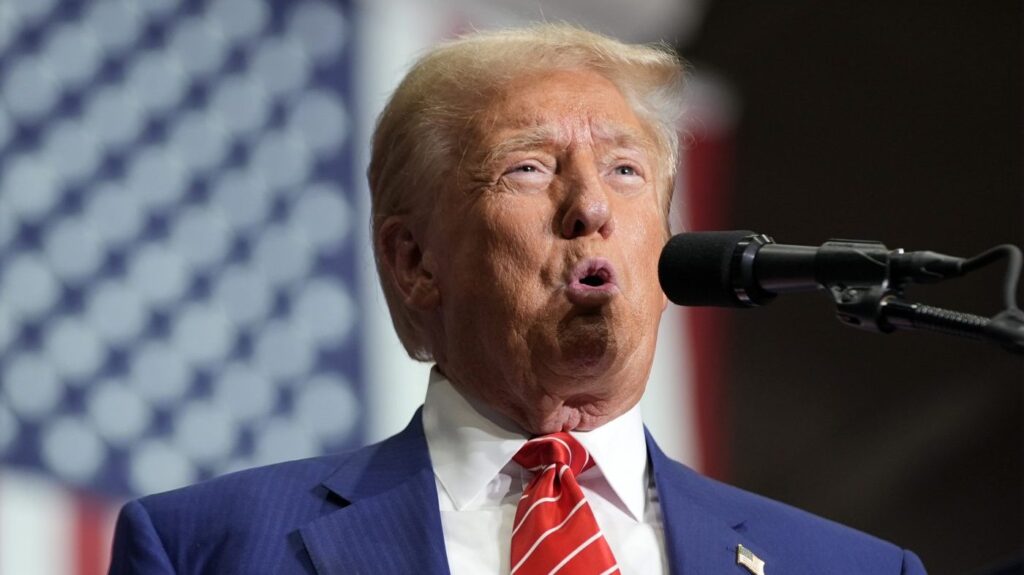
A repost by Donald Trump has triggered a sharp international reaction after amplifying a controversial message targeting immigrants and questioning the foundations of birthright citizenship in the United States. The development has drawn attention not only because of the language used, but also because of its timing and broader political implications.
The message, shared on Truth Social, referenced migrants from countries including India and China, placing the issue within a global context. While debates around immigration policy are not new in American politics, the tone and framing of this post have pushed the issue back into international headlines.
The controversy unfolds at a time when immigration remains a central issue in U.S. political discourse. Birthright citizenship, in particular, continues to be a subject of legal and ideological debate, including ongoing legal scrutiny in U.S. courts. Trump’s decision to amplify the message has been viewed as part of a broader pattern of communication that focuses on immigration enforcement, demographic concerns, and constitutional interpretation.
What the post said
The reposted message, originally written by Michael Savage, presents a critical view of birthright citizenship and its perceived misuse. It suggests that migrants travel to the United States, sometimes late in pregnancy, to give birth, thereby securing citizenship for their children and eventually enabling family migration.
“People come from China, India, or some other hell-hole on the planet, drop a baby, and suddenly that child is a U.S. citizen who can bring in the whole family later.”
The post also raises broader claims about immigration, arguing that the system is being exploited and framing the issue as one driven by public sentiment rather than strictly legal interpretation. Additional assertions in the message question immigrant assimilation, including references to language and national identity.
The language used in the post has drawn attention due to its direct reference to specific countries and its characterization of them. The repost does not introduce new policy measures but reinforces an argument that has been present in segments of political discourse for several years.
Separately, Trump has also argued that the United States is unique in granting automatic citizenship by birth, a claim that has been disputed, as several other countries also follow similar principles of jus soli citizenship.
India’s response
India responded cautiously through the Ministry of External Affairs, acknowledging the reports without escalating the situation publicly. The response was delivered by MEA spokesperson Randhir Jaiswal.
“We have seen some reports. That is where I leave it.”
The response reflects a measured diplomatic approach. India and the United States maintain a wide-ranging strategic partnership that includes cooperation in defense, trade, and technology. Statements of this nature can generate public attention, but official reactions often aim to prevent immediate diplomatic strain.
The restrained tone also aligns with past instances where governments have chosen to address sensitive remarks through internal channels rather than public confrontation. At the same time, the issue has generated discussion within India, particularly in the context of the large Indian diaspora in the United States.
Citizenship law explained
The debate highlighted by the repost centers on the Fourteenth Amendment to the United States Constitution, which guarantees citizenship to individuals born on U.S. soil. This legal principle has been consistently upheld and forms a key part of the country’s constitutional framework.
Under current law, a child born in the United States becomes a citizen at birth. However, the process of sponsoring family members for immigration is governed by strict regulations. A U.S. citizen must be at least 21 years old to sponsor parents, and such applications require financial documentation, background checks, and compliance with immigration procedures.
Family-based immigration is structured into categories, each with its own requirements and waiting periods. Immediate relatives may receive priority, but extended family sponsorship involves longer timelines and additional restrictions. These factors complicate the assumption that citizenship at birth directly enables rapid family migration.
The issue of birth tourism has been raised in policy discussions, including claims that individuals travel specifically for childbirth late in pregnancy, although authorities have taken steps to regulate visa misuse. It remains a limited phenomenon in comparison to overall immigration patterns.
US political context
The timing of the repost has attracted attention in political circles. Immigration remains a key issue in U.S. elections, and statements related to citizenship and border policy often resonate with specific voter groups. The repost aligns with a broader narrative that emphasizes stricter immigration controls and a re-examination of existing policies.
In recent years, Trump has consistently questioned the interpretation of birthright citizenship and has explored potential legal avenues to modify or restrict it. The issue has also intersected with ongoing legal debates in U.S. courts, including challenges linked to executive actions.
Some reports linked to the controversy also reference broader concerns about the role of foreign workers in the U.S. economy, particularly in the technology sector. Professionals from India and China are highly represented in industries such as software development and engineering. This has contributed to ongoing discussions about global talent mobility and domestic employment dynamics.
The intersection of immigration policy, economic considerations, and political messaging makes the issue complex and multi-layered. Public statements often reflect these overlapping concerns, even when they focus on a single aspect such as citizenship.
Ongoing developments
The repost has added to ongoing discussions in the United States regarding immigration policy and constitutional interpretation. Birthright citizenship remains a subject of legal and political debate, with differing views on its scope and future.
India and the United States continue to engage across multiple sectors, including defense, trade, and technology. No formal diplomatic escalation has been announced following the remarks. The situation remains under observation as reactions and political responses continue to emerge.


