

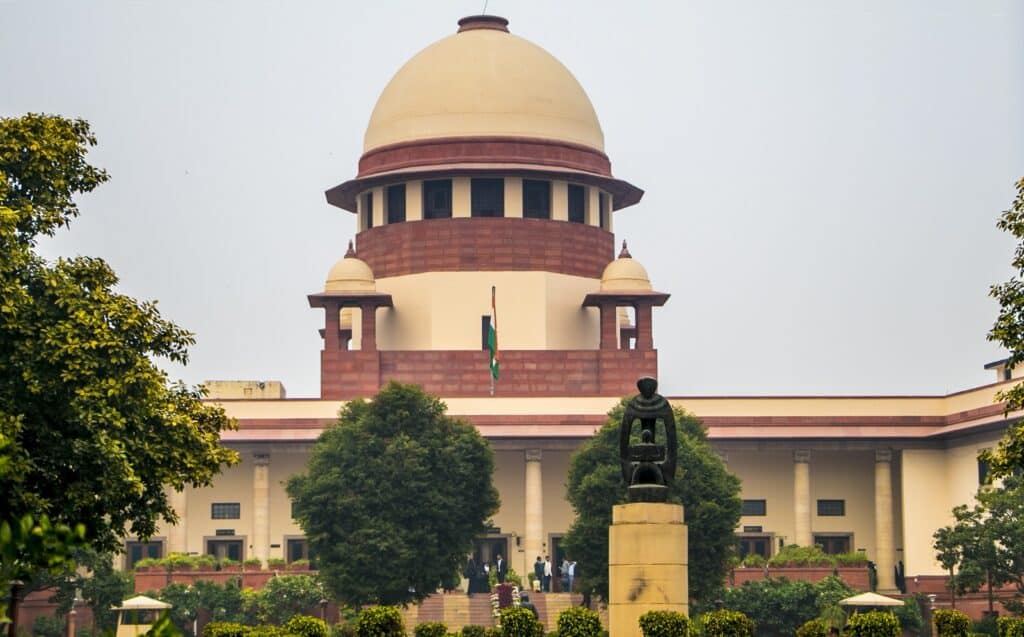
India’s top court has delivered one of its strongest interventions yet on reproductive rights, sharply questioning the Union government’s opposition in a case involving a 15-year-old rape survivor seeking termination of a 28–31 week pregnancy. What began as an individual plea has now evolved into a wider constitutional confrontation, exposing tensions between statutory limits under abortion law, medical ethics, and the fundamental right to personal liberty.
The Supreme Court of India not only allowed termination in this case but also delivered a sharp institutional rebuke to the Centre, signalling that reproductive autonomy is deeply rooted in Article 21 of the Constitution. The bench made it clear that law, medicine, and state policy cannot override the lived trauma of a minor rape survivor.
Court rebukes Centre
The hearing witnessed unusually direct exchanges between the bench and the Union government. The Chief Justice and other judges questioned the Centre’s insistence on challenging the court’s earlier permission for termination, despite medical and psychological assessments supporting the survivor’s request.
“Give respect to citizens,” the Chief Justice observed, stressing that the state cannot override the personal decision of the victim and her family. In a stronger remark, the bench noted that the government had “no locus” to interfere in a matter where the survivor’s rights were central.
Justice Joymalya Bagchi reinforced this position, stating: “We respect individual choices, so should you.” He further criticised the attempt to reopen the matter, warning that the state must not turn such deeply personal cases into institutional disputes.
The court also rejected the Centre’s reliance on procedural objections, making it clear that constitutional courts exist precisely to intervene when rigid administrative interpretation risks injustice.
No forced motherhood
A central principle reiterated by the bench was that no woman, particularly a minor, can be compelled to continue an unwanted pregnancy. The court stated that forcing continuation would directly violate constitutional protections under Article 21.
“No court ought to compel any woman, more so a minor,” the judges observed, clearly establishing reproductive autonomy as part of the right to life and dignity.
The bench also described the consequences of forced pregnancy in strong terms, noting the “grave mental, emotional and physical trauma” faced by survivors of sexual violence. Judges emphasised that in such cases, trauma is not a single event but a continuing condition that worsens with each day of forced gestation.
The court further rejected the Centre’s suggestion that the pregnancy could be carried to term and the child given up for adoption. The judges observed that adoption cannot be used as a legal substitute for consent, as it ignores the physical and psychological burden imposed on the survivor.
Limits under scrutiny
The case has placed renewed scrutiny on the Medical Termination of Pregnancy Act, which generally restricts abortion beyond 20 weeks, extendable to 24 weeks for specific categories.
However, the court questioned whether such limits are constitutionally sustainable in cases involving rape survivors, particularly minors. “Why should there be a time limit in such cases?” the bench asked, signalling that rigid gestational caps may not reflect ground realities.
The judges highlighted systemic delays in reporting pregnancies, often caused by fear, stigma, or lack of awareness. In such circumstances, strict legal timelines can effectively deny access to justice.
The court indicated that the law must be “organic” and responsive to evolving realities, suggesting that exceptions or reforms may be necessary where pregnancy results from sexual violence.
Medical evidence and ethical balance
Medical opinion played a significant role in the proceedings. Experts from All India Institute of Medical Sciences warned that termination at such an advanced stage carries clinical risks, including complications for both the minor and the foetus.
The Union government relied heavily on this assessment, arguing that continuation followed by adoption was the safer option. However, the court rejected this framing as incomplete.
The bench clarified that medical risk cannot be viewed in isolation from constitutional rights. Judges emphasised that mental health, dignity, and autonomy are equally decisive factors in such cases.
Importantly, the court also warned that denying termination in extreme cases may push survivors towards unsafe procedures outside the legal system, increasing overall health risks.
Expanding rights and constitutional direction
The ruling is part of a broader judicial evolution in India that has consistently expanded reproductive rights. Building on the precedent set in Justice K.S. Puttaswamy vs Union of India, the court has repeatedly held that bodily autonomy is integral to the right to privacy and dignity.
In this case, the bench went further by explicitly linking reproductive choice to constitutional liberty under Article 21, reinforcing that the state cannot impose motherhood on a minor survivor of rape.
The judges also underscored the urgency of compliance with their orders, making it clear that medical authorities must act without procedural delay once judicial permission is granted.
At a broader policy level, the court’s remarks suggest that India may need to reconsider the structural limits of its abortion framework, particularly in cases involving sexual violence and minors.
The underlying constitutional message is direct and unambiguous: the burden of a crime cannot be transferred onto its victim. In reaffirming this principle, the Supreme Court has not only resolved a sensitive individual case but also reshaped the legal and moral contours of reproductive rights in India.


