

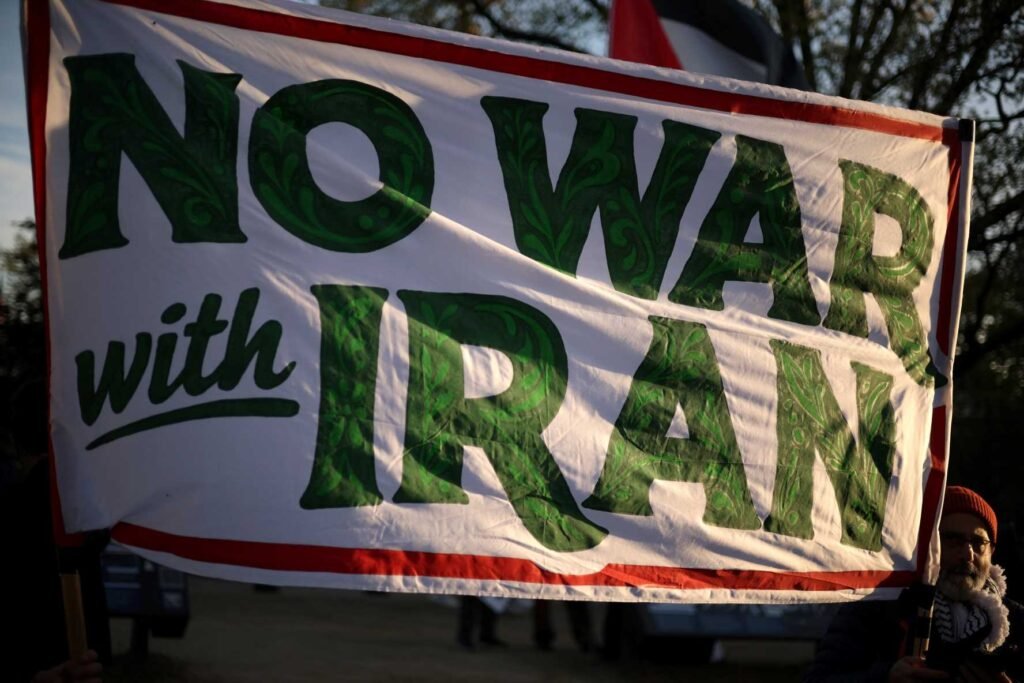
The war that began as an attempt to reshape Iran’s political and military order is moving toward a ceasefire centred on one of the world’s most strategically important shipping lanes. After more than three months of escalating strikes, regional retaliation and global economic disruption, the United States and Iran have reached the framework of an agreement that would reopen the Strait of Hormuz and halt hostilities across multiple fronts.
The emerging deal represents a narrowing of Washington’s original objectives. At the outset of the conflict in February, U.S. and Israeli officials described the campaign as an effort to weaken Iran’s military leadership, disrupt its nuclear capability and apply sustained pressure that could destabilise the Islamic Republic. Those ambitions have now shifted toward a more immediate goal of restoring energy flows and containing regional escalation.
The agreement, expected to be formalised in Switzerland, brings a pause to a conflict that has reshaped Middle East security dynamics. However, it leaves unresolved questions over Iran’s nuclear programme, Israel’s military posture and the long-term regional balance of power.
Maximum Pressure to Compromise
At the beginning of the war, the United States pursued what officials described as a campaign of maximum pressure involving coordinated strikes on Iranian military infrastructure, command centres and senior security personnel. The objective, according to Western assessments, was to significantly degrade Iran’s operational capacity and force strategic concessions.
Trump’s public statements during the early phase of the conflict repeatedly referenced political change inside Iran, contributing to wider speculation that the campaign carried elements of regime destabilisation. However, despite sustained strikes, Iran’s core institutions remained functional.
The Revolutionary Guard continued missile operations across the Gulf and against Israeli positions, while allied groups in Lebanon and Syria maintained regional activity. Rather than collapsing, Iran widened the conflict, turning it into a broader regional confrontation that increased pressure on all parties to de-escalate.
Why Hormuz changed the calculation
The closure of the Strait of Hormuz marked a decisive shift in the conflict. The waterway, through which nearly 20% of global oil and liquefied natural gas passes, is critical to the international energy system. Its closure immediately disrupted global shipping routes and triggered sharp price volatility.
Brent crude rose above $118 a barrel at the peak of the crisis. Insurance costs for tankers increased, shipping schedules were disrupted and major energy-importing economies across Asia and Europe faced supply concerns. The shock extended into global financial markets, raising fears of prolonged instability.
The economic impact forced a recalibration of priorities in Washington. While military objectives remained in place, restoring navigation through Hormuz became the central condition for de-escalation. Maritime authorities have warned that even after a formal agreement, shipping may not resume immediately due to inspections and possible mine-clearing operations in affected areas.
Pakistan’s role in mediation
Pakistan played a significant behind-the-scenes role in facilitating communication between Tehran and Washington. Prime Minister Shehbaz Sharif’s government acted as an intermediary during key stages of the negotiations, carrying messages between both sides and hosting technical discussions.
Islamabad’s involvement reflected its geographic proximity to Iran and its strategic relationship with the United States. Pakistani officials were also seeking to prevent spillover instability along their western border, including potential refugee flows and security disruption.
Diplomatic sources say Pakistan helped shape the framework under which Iran agreed to reopen Hormuz in exchange for a phased easing of pressure and the beginning of structured nuclear negotiations.
What the deal includes
Under the preliminary agreement:
- Iran will reopen the Strait of Hormuz to commercial shipping
- The United States will suspend its naval blockade
- An immediate and open-ended ceasefire will take effect
- A 60-day negotiation period will begin on Iran’s nuclear programme
- The phased release of up to $25 billion in frozen Iranian assets remains under negotiation
- Sanctions relief discussions will begin
- Nuclear talks will restart under international supervision
- The ceasefire includes an end to hostilities linked to Lebanon, though implementation remains uncertain
The framework reflects mutual concessions. Washington secures the reopening of a vital energy corridor, while Tehran retains its political structure and gains a pathway toward potential economic relief and renewed diplomacy.
Humanitarian impact across the region
The conflict has resulted in significant civilian casualties and displacement across multiple countries. Regional health authorities estimate that thousands have been killed since February in Iran, Lebanon and Syria. Infrastructure damage has been reported in several cities, while hospitals in Lebanon have faced sustained pressure from mass casualty incidents.
Large-scale displacement has occurred in southern Lebanon and parts of western Iran. Aid agencies have reported shortages of medical supplies, fuel and emergency shelter in affected areas, with access remaining limited in several conflict zones.
Although the ceasefire reduces immediate violence, humanitarian needs are expected to remain severe as reconstruction efforts begin and casualty figures are further verified.
Nuclear negotiations remain unresolved
The most significant unresolved issue remains Iran’s nuclear programme. While the ceasefire halts active hostilities, it does not resolve long-standing disagreements between Tehran and Western governments.
A 60-day technical negotiation period will focus on enriched uranium stockpiles, centrifuge activity, inspection mechanisms and the sequencing of sanctions relief. The International Atomic Energy Agency is expected to play a central role in monitoring compliance.
Both sides remain far apart. Western governments are seeking verifiable restrictions on Iran’s nuclear capabilities, while Tehran is demanding guarantees against the reimposition of sanctions. The collapse of the 2015 nuclear agreement continues to shape the mistrust between the two sides.
Israel remains a key uncertainty
Israel has not formally endorsed the agreement. Prime Minister Benjamin Netanyahu has maintained that Iran’s nuclear infrastructure must be fully dismantled, not limited through negotiation.
Israeli officials also continue to express concern over Hezbollah activity in Lebanon and the broader network of Iran-aligned groups in the region. These issues are not fully covered by the current ceasefire framework, leaving open the possibility of continued Israeli military activity.
This creates a potential point of friction for Washington, which must balance de-escalation efforts with maintaining strategic alignment with Israel.
International reaction and political impact
The agreement has been broadly welcomed by global leaders. European governments have described it as a necessary step toward regional stabilisation, while China has emphasised the importance of uninterrupted energy flows through the Gulf.
Oil prices fell following the announcement, reflecting market expectations that shipping through Hormuz may gradually resume. Global equity markets also recorded gains amid reduced geopolitical risk.
In the United States, the political response remains divided. Trump has presented the agreement as evidence that military pressure forced Iran to negotiate. Opposition lawmakers have raised concerns about transparency, legal authorisation for the conflict and the terms of any financial concessions.
A pause rather than an end
The agreement marks a significant reduction in hostilities but does not resolve the broader strategic confrontation between Washington and Tehran. Iran’s leadership remains in place, its nuclear programme continues, and regional alliances remain active.
For the United States, reopening Hormuz restores immediate economic stability and removes a major risk to global energy markets. For Iran, the ceasefire provides relief without political surrender.
The conflict has shifted from military escalation to diplomatic negotiation. The outcome of the next phase will depend on whether nuclear talks can bridge long-standing divisions between both sides.
For now, the war has paused. The underlying crisis remains unresolved.


