

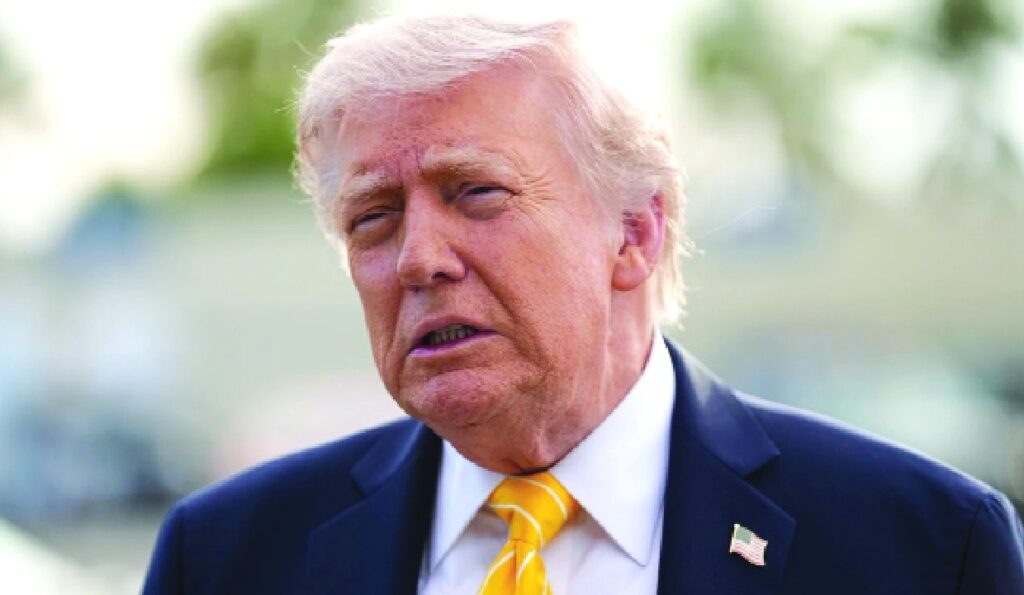
President Donald Trump has warned that Iran will “pay the price” for delaying a peace agreement after a fresh round of military exchanges pushed Washington and Tehran closer to direct confrontation. The warning followed Iranian missile and drone attacks on U.S. military facilities in Bahrain, Kuwait and Jordan, launched in response to American strikes on Iranian military targets near the Strait of Hormuz.
The latest escalation comes at a critical moment for regional diplomacy. While mediators continue efforts to revive negotiations, both sides have adopted increasingly hardened positions. Trump has shifted from expressing optimism about a potential agreement to issuing direct threats against Tehran, while Iranian officials have accused Washington of undermining diplomacy through military action.
Although no casualties were reported in the latest attacks, the confrontation has heightened concerns about the risk of a wider regional conflict. The crisis is unfolding around the Strait of Hormuz, a strategic waterway through which a significant portion of the world’s oil supplies pass, making any escalation a matter of global economic and security concern.
Apache Downing Sparks Escalation
The immediate trigger for the latest crisis was the downing of a U.S. Army AH-64 Apache helicopter operating near the Strait of Hormuz. Washington blamed Iranian forces for the incident, while Tehran disputed aspects of the American account. Both pilots survived and were successfully rescued, but the episode quickly became a turning point in an already fragile relationship between the two countries.
In response, U.S. Central Command launched a four-hour military operation targeting Iranian military infrastructure. American officials said nearly 20 targets were struck, including radar installations, surveillance systems, command centres and air-defence facilities believed to be linked to operations in and around the strategic waterway. The strikes represented one of the most significant direct American military actions against Iranian assets in recent months.
Reports from Iran indicated explosions and military activity in Bandar Abbas, Qeshm Island, Sirik Port and Jask, all key locations near the Strait of Hormuz. Washington described the operation as a proportionate response designed to protect U.S. personnel and ensure freedom of navigation. The exchange underlined how quickly tensions in the Gulf can escalate from isolated incidents into broader military confrontations with regional implications.
Trump Hardens His Position
The strongest message from Washington came from Trump himself, whose rhetoric has become noticeably more confrontational in recent days. Posting on social media after the latest exchange, the U.S. president accused Tehran of failing to engage seriously in negotiations and warned that the opportunity for a favourable settlement may have passed.
“Iran is all talk and no action. They’ve taken too long to negotiate a deal that would have been great for them, now they will have to pay the price,” Trump wrote. The statement marked a significant departure from his earlier suggestions that a breakthrough remained possible and signalled growing frustration within the White House over the pace of negotiations.
Trump later reinforced that message while speaking to reporters. “They should have made a deal. They waited too long,” he said, arguing that Iran had missed a chance to avoid further escalation. He also suggested that future military action could become more severe if talks continue to stall. Reports from Washington indicate that discussions have included potential strikes on critical infrastructure, including power plants and bridges, a prospect that has alarmed diplomats and security experts concerned about the consequences of a wider conflict.
The president also claimed that months of military pressure had significantly weakened Iran’s capabilities. “Iran has taken a tremendous beating,” Trump said, arguing that Tehran’s naval assets and air-defence systems had suffered extensive damage. While independent verification of those claims remains difficult, the comments underscored the administration’s belief that continued pressure could strengthen its negotiating position.
Diplomacy Under Pressure
Despite the military escalation, diplomatic efforts have not collapsed. Qatar has emerged as one of the principal mediators attempting to preserve communication between Washington and Tehran. According to reports, Qatari officials travelled to Tehran after consultations with U.S. representatives in an effort to keep negotiations alive and prevent the crisis from spiralling further.
The talks are understood to focus on several major issues, including ending the current conflict, reducing tensions around the Strait of Hormuz, addressing concerns over Iran’s nuclear programme and establishing broader security arrangements in the Gulf. Diplomats say these discussions remain difficult, but they continue to represent the most realistic path toward de-escalation.
Iran, however, has signalled growing frustration with the process. Officials have indicated that Tehran is reassessing its participation in negotiations following recent American strikes, arguing that military action has undermined trust and complicated efforts to reach a settlement. Iranian Foreign Ministry spokesman Esmaeil Baghaei reflected that position when he said, “Any diplomatic process requires a minimum stable environment.” His remarks highlighted Tehran’s view that meaningful diplomacy becomes increasingly difficult while military operations continue.
The two sides also remain divided on the substance of any future agreement. Iran continues to seek sanctions relief, access to frozen assets and recognition of what it describes as its legitimate security interests in the region. The United States, meanwhile, insists that any deal must address concerns surrounding Iran’s nuclear activities and regional military posture. Those competing demands remain the central obstacle to a breakthrough.
Gulf States Drawn Into Crisis
The latest confrontation has expanded beyond Washington and Tehran, placing Gulf states under growing pressure. Following the American strikes, Iran warned neighbouring countries that they have a legal and moral responsibility to prevent the United States and Israel from using regional territory, airspace or military facilities for operations against Iran.
The statement reflects Tehran’s concern about the role of countries that host major American military installations. Several Gulf states provide logistical support and basing arrangements that are central to U.S. operations in the region. Iranian officials have suggested that any country facilitating military action risks becoming increasingly entangled in the conflict.
Those concerns intensified after Iran launched missile and drone attacks against U.S. military facilities in Bahrain, Kuwait and Jordan. Although regional air-defence systems intercepted most of the incoming threats and no casualties were reported, the attacks demonstrated Tehran’s willingness to strike American-linked targets across multiple countries.
The wider significance extends beyond security considerations. The Strait of Hormuz remains one of the world’s most important maritime chokepoints, and any disruption could affect global energy markets. Rising tensions have already prompted concerns among investors and policymakers who fear that prolonged instability could affect oil supplies, shipping routes and broader economic confidence.
What Happens Next?
The coming days are likely to be critical for both diplomacy and regional security. Qatari mediators continue to push for negotiations, but the gap between diplomatic efforts and military developments appears to be widening. Neither Washington nor Tehran has formally abandoned talks, yet both sides increasingly appear to be relying on pressure tactics to strengthen their bargaining positions.
Trump has made clear that patience within the White House is diminishing. “Iran is taking too long to negotiate,” he said, reiterating his warning that Tehran would face consequences if progress remains stalled. The administration’s increasingly forceful rhetoric suggests that Washington believes additional pressure could force Iran back to the negotiating table.
Iran, meanwhile, insists it will not negotiate under military pressure and has signalled that it remains prepared to respond to future attacks. With both sides determined to avoid appearing weak, the risk of miscalculation remains significant. A single incident resulting in major casualties or damage to critical infrastructure could rapidly transform the current standoff into a much broader conflict.
For now, the Middle East remains on edge. A downed Apache helicopter, retaliatory missile strikes, stalled negotiations and increasingly hostile rhetoric have pushed the United States and Iran closer to direct confrontation than at any point in the current crisis. Whether diplomacy can regain momentum or military escalation takes precedence may determine not only the future of U.S.-Iran relations but also the stability of a region central to global security and energy markets.


