

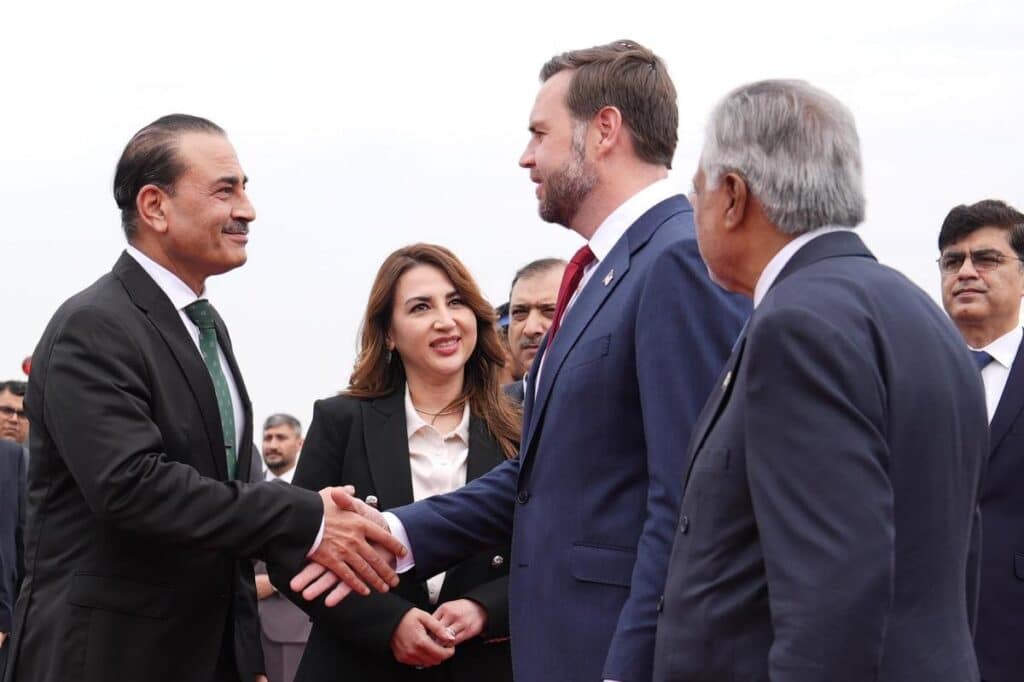
Efforts to stabilise the ongoing Iran–Israel conflict have entered a critical diplomatic phase, with Pakistan hosting US talks as a central venue for indirect negotiations between Iran and the United States. The talks come at a time when a fragile ceasefire has reduced direct confrontation but has not eased broader regional tensions.
Senior US envoys in Pakistan have arrived in Islamabad to explore diplomatic options, while Iran’s Foreign Minister is engaging with Pakistani leadership to convey Tehran’s position through intermediaries. The absence of direct dialogue between Iran and the US continues to define the process, reflecting deep-rooted mistrust and unresolved policy differences.
The situation remains complex and fluid. While military escalation has slowed, strategic pressure continues through economic restrictions, maritime disruptions, and proxy activity across the region. Diplomatic engagement involving Pakistan and the US is active, but the gap between both sides remains significant, limiting the chances of an immediate breakthrough.
Pakistan Role
Pakistan is hosting indirect discussions between Iranian and US representatives, facilitating communication at a time when direct engagement remains politically unviable. Officials in Islamabad are relaying messages between both sides as part of a structured diplomatic process.
Iran’s Foreign Minister has been holding consultations with Pakistani authorities, using these meetings to present Tehran’s conditions and responses. Communication between Iran and the US through Pakistan remains deliberate and controlled.
Pakistan’s Foreign Office said, “Pakistan supports all efforts aimed at de-escalation and peaceful resolution through dialogue.”
The involvement of Pakistan reflects its strategic position and diplomatic ties across competing blocs. Its ability to engage both Western powers and regional actors has enabled it to facilitate sensitive discussions at a critical moment.
However, indirect diplomacy has limitations. Without face-to-face engagement between Iran and the US, progress tends to be slower and more cautious, with each proposal passing through intermediaries.
No Direct Talks
Iran has firmly ruled out direct negotiations with the US, maintaining that all communication will take place through intermediaries such as Pakistan. Officials in Tehran have cited ongoing sanctions and security concerns as key reasons for this position.
Iran’s Foreign Minister Abbas Araghchi said, “There will be no direct talks with the United States. Communication, if necessary, will be conducted through intermediaries.”
This position reflects a strategy of controlled engagement, allowing Iran to remain diplomatically active while maintaining its policy stance.
On the US side, officials have acknowledged the limitations of indirect dialogue but continue to participate in talks hosted in Pakistan. US President Donald Trump said, “We are open to talks, and we will see what happens, but it has to be fair.”
The divergence between Iran and the US remains significant, particularly regarding the format and conditions of negotiations, which continues to slow progress.
Ceasefire Strain
The current diplomatic efforts involving Pakistan and the US are taking place under a ceasefire that has reduced large-scale hostilities but remains fragile. The pause in direct confrontation has created space for negotiations but has not resolved underlying tensions.
Despite the ceasefire, regional tensions persist. Israeli military operations linked to Iranian-backed groups have continued in parts of Lebanon, highlighting the ongoing risk of escalation.
Israeli officials have stated that operations targeting hostile groups will continue as necessary to ensure national security.
Military deployments, surveillance activities, and strategic positioning continue across the region, contributing to a volatile environment. These developments complicate efforts by Pakistan and the US to stabilise the situation through diplomacy.
The ceasefire has provided temporary relief but has not addressed the core drivers of the conflict, leaving the situation vulnerable to renewed escalation.
Shipping Crisis
Disruptions in the Strait of Hormuz have intensified, with maritime traffic declining sharply in recent days. Only a limited number of vessels have been able to pass through the critical waterway within a 24 hour period, reflecting heightened security risks.
The strait is a vital route for global energy supplies, and reduced shipping activity has raised concerns about supply stability and market volatility.
Iranian officials have warned that continued pressure could affect maritime security in the region, emphasising the strategic importance of the waterway.
The situation highlights the broader strategic dimension of the conflict, where control over key maritime routes is being used as a form of pressure. Reduced shipping activity has already contributed to fluctuations in global energy markets.
The disruption underscores the urgency of diplomatic efforts led by Pakistan and the US, as prolonged instability in the strait could have far-reaching economic consequences.
Global Stakes
The broader implications of the conflict extend beyond the immediate region, affecting global economic stability and international security. Rising energy prices and disrupted trade routes have increased pressure on ongoing Pakistan and US diplomatic efforts.
Countries dependent on energy imports are closely monitoring developments linked to the US–Iran conflict being mediated through Pakistan. Continued instability could lead to inflationary pressures and economic uncertainty.
US officials have indicated that maintaining stability in the region remains a priority, particularly given the global economic implications.
At the same time, multiple countries are engaged in parallel diplomatic efforts, supporting dialogue and seeking to prevent escalation. Pakistan remains central to US negotiations, while other international actors continue to encourage de-escalation.
The coming days will be critical in determining whether Pakistan-hosted US talks can produce tangible outcomes or whether tensions will rise again.


