

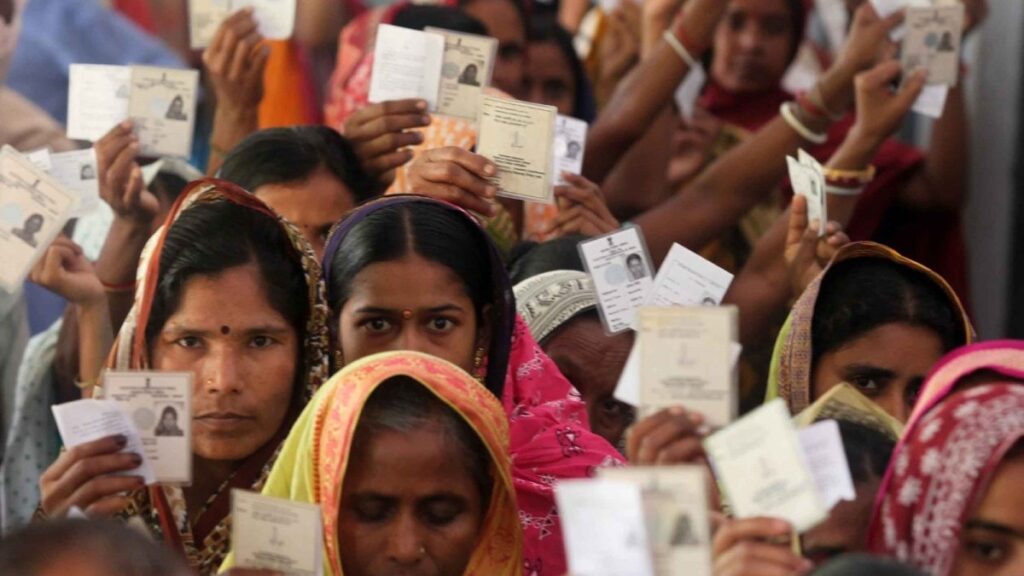
The West Bengal Assembly Elections 2026 have entered a decisive phase where the contest is no longer confined to polling booths or campaign speeches. Instead, the focus has shifted to a broader institutional and political landscape involving security deployment, judicial intervention, and sharply contrasting campaign narratives from the state’s two principal political forces. With high voter turnout recorded across phases and scattered reports of tension in select constituencies, the emphasis is now on how the state navigates the critical period between polling and the declaration of results.
At the centre of this evolving situation is Union Home Minister Amit Shah’s announcement that central forces will remain in West Bengal for seven days after polling concludes, irrespective of which party forms the government. The statement has brought post-election stability into focus, reflecting concerns rooted in past electoral experiences. At the same time, campaign messaging from Prime Minister Narendra Modi and responses from Chief Minister Mamata Banerjee have further intensified the political narrative, even as institutions such as the Election Commission of India and the Calcutta High Court continue to shape the conduct of the election.
Security Focus After Polling
Union Home Minister Amit Shah’s announcement on the continued deployment of central forces has emerged as one of the most significant developments in the current election cycle. The decision to retain forces for seven days after polling ends marks a shift from standard practice, where security presence is typically scaled down once voting concludes.
Shah stated, “Central forces will remain for seven days after the elections. Even if the BJP forms the government, they will not be withdrawn immediately.” The emphasis on maintaining deployment regardless of the electoral outcome is being projected as a measure to ensure neutrality and continuity in maintaining law and order.
The move reflects concerns about the immediate post-result phase, which has historically been sensitive in West Bengal. Security officials often consider the period following the declaration of results as one where tensions can escalate, particularly in closely contested constituencies. By extending the presence of central forces, authorities appear to be aiming to stabilise the situation during the transition from election to governance.
BJP Campaign and Modi’s Message
The campaign strategy of the Bharatiya Janata Party has placed strong emphasis on governance, security, and the need for political change in the state. This messaging was reinforced by Prime Minister Narendra Modi through a direct appeal to voters in the form of an open letter during the final phase of campaigning.
In his message, Modi framed the election as a decisive moment for the state, stating, “West Bengal needs freedom from fear and corruption, and a path towards development and opportunity.” The language used in the appeal reflects the BJP’s broader narrative that the state requires structural change in governance.
The party has consistently highlighted concerns over political violence and administrative functioning, positioning itself as an alternative capable of delivering stability and economic progress. The use of direct communication through a written appeal indicates an effort to reach voters beyond traditional campaign platforms, particularly in the final stages of the election.
Mamata Banerjee and TMC Stand
Chief Minister Mamata Banerjee and the Trinamool Congress have responded by reinforcing their governance record and emphasising continuity. The party’s campaign has focused on welfare schemes, administrative delivery, and the protection of regional identity.
Mamata Banerjee, addressing public meetings during the campaign, stated, “We have worked for the people of Bengal, and we will continue to stand with them. Peace and development will not be disturbed.” The statement reflects the party’s attempt to project stability and counter allegations raised by the opposition.
At the same time, the Trinamool Congress has questioned the prolonged deployment of central forces, maintaining that law and order is a state subject. The issue has become part of a wider political debate over the role of central agencies in the electoral process and the extent of their involvement in state-level governance matters.
Court Intervention and Ground Impact
The role of the judiciary has added another dimension to the election, particularly through the intervention of the Calcutta High Court in matters related to polling-day restrictions. The court modified an earlier directive concerning the movement of motorcycles, allowing individual use while maintaining restrictions on group activities such as rallies.
The court observed that restrictions must remain proportionate, noting that blanket limitations could affect ordinary citizens. The decision highlighted the need to balance security considerations with individual rights during elections.
This intervention had a direct impact on daily life, especially in rural and semi-urban areas where motorcycles are a primary mode of transport. Restrictions had affected commuters, workers, and small-scale service providers, bringing attention to how election-related measures influence everyday activity. The episode illustrates the broader reality that elections are not only political events but also administrative exercises with real-world consequences for citizens.
Election Commission and Final Phase
The Election Commission of India continues to oversee the conduct of the election, including security deployment and enforcement of guidelines. Campaigning for the final phase has concluded, marking the transition from active political mobilisation to the administrative process leading up to vote counting.
The Commission’s role remains central in coordinating between state authorities and central forces, ensuring that polling is conducted in a structured and monitored manner. However, recent developments, including judicial scrutiny of certain decisions, indicate that its actions are being closely examined within the broader institutional framework.
As the state moves toward the declaration of results, attention is increasingly focused on the immediate aftermath. The coming days will test the effectiveness of security arrangements, the coordination between institutions, and the ability of political actors to navigate the transition without escalation.
Final Phase
The West Bengal Assembly Elections 2026 have unfolded as a complex interplay of political contest, administrative planning, and judicial oversight. The security assurance by Amit Shah, the campaign messaging from Narendra Modi, and the response from Mamata Banerjee collectively reflect the intensity of the electoral battle.
At the same time, the involvement of institutions such as the Calcutta High Court and the Election Commission of India underscores the layered nature of the process. As the state approaches the final stage of counting and government formation, the focus remains not only on the outcome but also on the stability and order with which the transition is managed.


